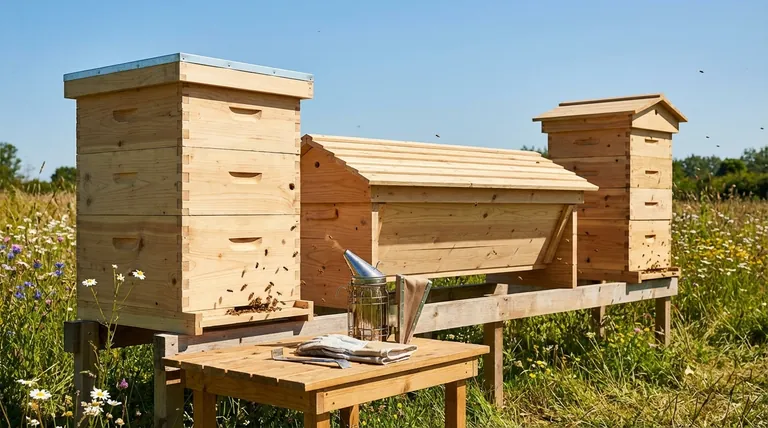
Selecting the ideal beehive isn’t just about aesthetics—it’s about aligning your choice with your environment, resources, and long-term goals. Whether you’re a hobbyist, urban beekeeper, or commercial honey farmer, understanding the trade-offs between Langstroth, Warre, and Top Bar hives ensures a thriving colony and sustainable practice.
Key Features of Major Hive Types
Langstroth Hives: The Industry Standard
- Modular Design: Vertical stacking of interchangeable boxes (brood chambers and honey supers) allows for scalable colony growth.
- Frame System: Pre-made frames with wax foundations guide comb construction, simplifying inspections and honey extraction.
- Heavy Lifting: Requires regular management (e.g., adding/removing boxes seasonally) and specialized tools like extractors.
Top Bar Hives: Simplicity Meets Natural Beekeeping
- Horizontal Layout: Single, elongated box with top bars where bees build freestyle comb—no frames or foundations.
- Low-Tech Harvesting: Honey is cut directly from combs using basic tools, ideal for small-scale or hobbyist beekeepers.
- Ergonomic Benefits: No heavy lifting; ideal for urban settings or those with physical limitations.
Warre Hives: The Sustainable Middle Ground
- Vertical but Minimalist: Smaller boxes than Langstroth, designed to mimic natural tree cavities.
- Self-Sufficient Design: Bees build downward as boxes are added below, reducing intrusive inspections.
- Limited Commercial Use: Lower honey yields but favored by eco-conscious beekeepers.
Pros, Cons, and Ideal Use Cases
| Hive Type | Best For | Challenges |
|---|---|---|
| Langstroth | Commercial apiaries, high honey production | Heavy equipment needs, steep learning curve |
| Top Bar | Urban beekeepers, natural comb advocates | Lower honey yield, comb fragility |
| Warre | Sustainable practices, low-intervention | Slow expansion, less standardized |
Climate Considerations:
- Cold Regions: Langstroth’s insulated boxes protect against freezing temperatures.
- Warm Climates: Top Bar hives’ ventilation reduces heat stress.
Budget & Philosophy:
- Cost-Effective: Top Bar hives require minimal investment (under $200 for DIY setups).
- Time vs. Reward: Langstroth offers higher productivity but demands more labor.
Real-World Applications
Urban Beekeeping Success with Top Bar Hives
City beekeepers report higher colony survival rates due to the hive’s compact footprint and ease of management. One rooftop apiary in Portland maintained 5 Top Bar hives with just weekly 10-minute checks.
Sustainable Honey Farming Using Warre Systems
A Vermont beekeeper switched to Warre hives to align with permaculture principles, noting healthier bees despite 30% lower honey yields.
Langstroth Hives in Commercial Apiaries
California’s almond growers rely on Langstroth setups for efficient pollination and honey production, with some apiaries managing 500+ hives per season.
Ready to Start Your Beekeeping Journey?
HONESTBEE equips commercial apiaries and distributors with durable, high-performance beekeeping supplies—from Langstroth frames to Top Bar hive kits. Explore our wholesale solutions to find the perfect fit for your operation.
"The right hive doesn’t just house bees—it fosters a partnership between keeper and colony."
Next Steps:
- Assess your space and honey production goals.
- Consult local beekeeping communities for climate-specific advice.
- Contact HONESTBEE for bulk pricing on hive components.
By matching your hive to your environment and ambitions, you’ll create a sustainable, productive apiary that thrives for seasons to come.
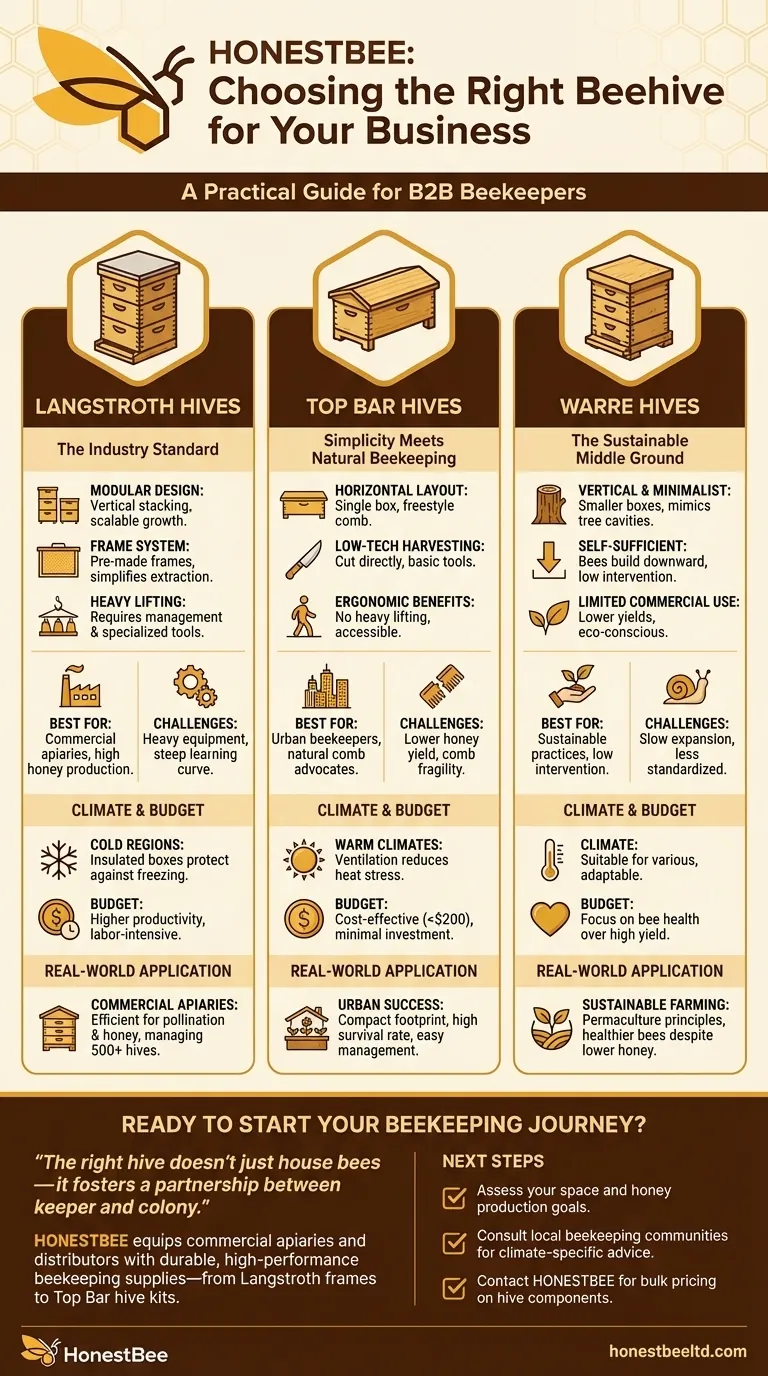
Visual Guide
Related Products
- Stainless Steel Round Beehive Air Vents for Ventilation
- Wholesales Dadant Size Wooden Bee Hives for Beekeeping
- Metal Hive Feet Bee Hive Stand for Ant Protection
- Metal Bee Hive Stand Bee Box Stand for Beekeeping
- Wooden Bee Hive Frames for Beekeeping and Wholesale
Related Articles
- How to Optimize Beehive Ventilation: Prevent Disease and Boost Colony Health
- Beyond the Bee Box: Why Your First Apiary Investment Determines Your Success
- The Silent Killer in the Hive: Why Moisture, Not Cold, Is Winter's Greatest Threat
- The Precision of Chaos: Navigating the Biological Risks of Commercial Beehive Transportation
- Beyond the Box: Why Hive Architecture Is Your Apiary's Core Operating System













