Preserving honey’s natural benefits while heating requires precision. This guide reveals temperature thresholds, enzyme protection strategies, and practical applications—backed by research—to maintain honey’s nutritional integrity.
The Science of Honey and Heat Sensitivity
Honey’s health benefits hinge on delicate enzymes and compounds that degrade under excessive heat. Understanding these vulnerabilities ensures optimal preservation.
Enzymes at Risk: Diastase, Invertase, and Glucose Oxidase
- Diastase: Breaks starches into sugars; begins degrading above 40°C (104°F).
- Invertase: Converts sucrose to glucose/fructose; loses activity at sustained high heat.
- Glucose Oxidase: Produces antibacterial hydrogen peroxide; heat-sensitive above 50°C (122°F).
Research shows heating honey beyond 40°C (104°F) disrupts these enzymes, reducing digestibility and functional properties.
Nutritional Degradation: Antioxidants and Vitamins
- Antioxidants like flavonoids decline by ~30% when heated above 60°C (140°F).
- Vitamin C and B-complex vitamins are heat-labile, diminishing honey’s nutritional profile.
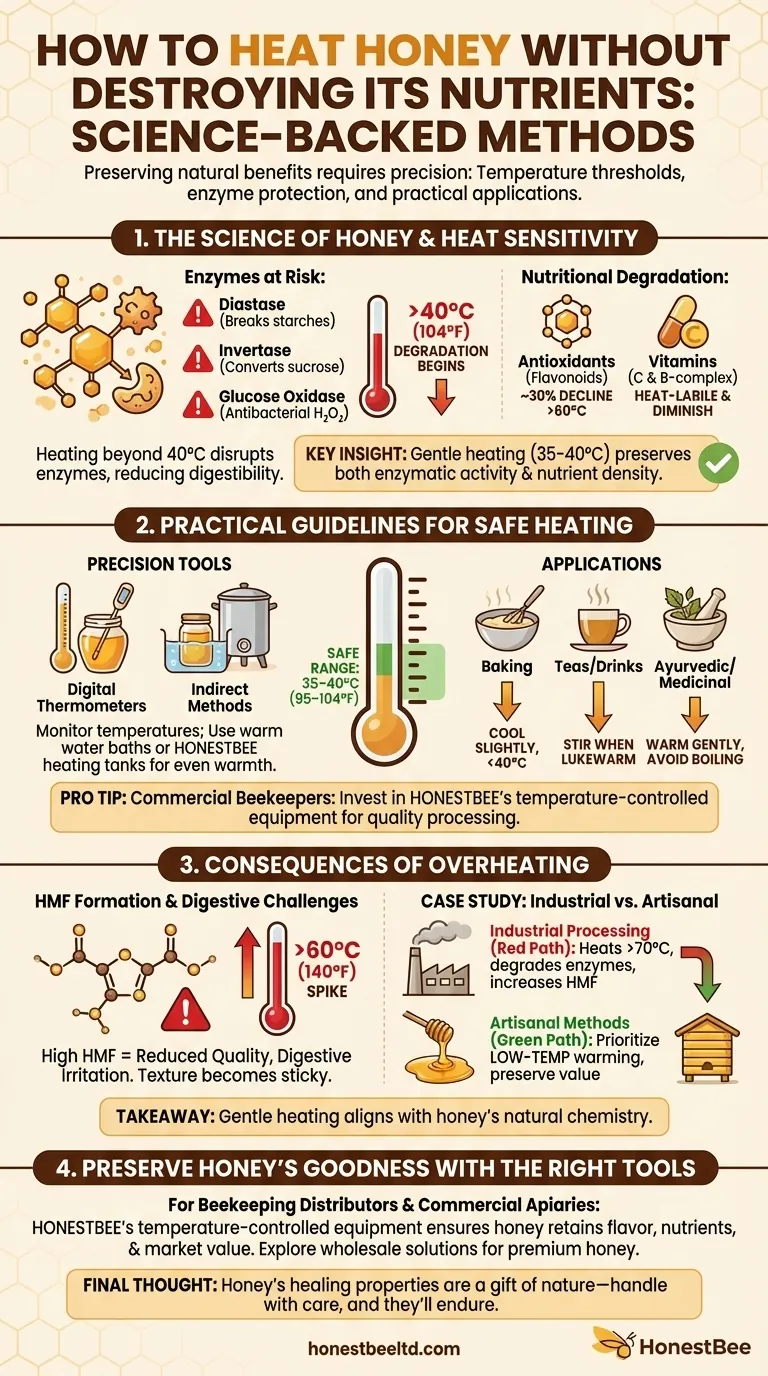
Key Insight: Gentle heating (35–40°C) preserves both enzymatic activity and nutrient density.
Practical Guidelines for Safe Honey Heating
Precision Tools: Thermometers and Indirect Heating
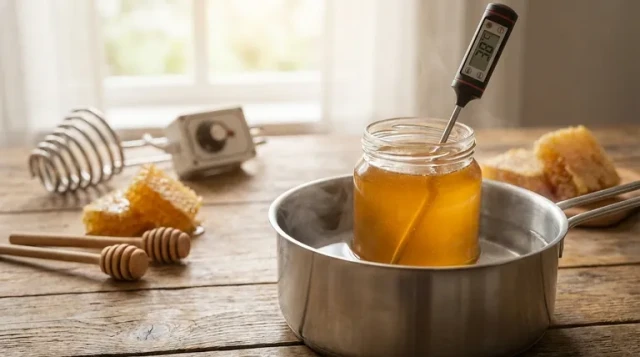
- Digital Thermometers: Essential for monitoring temperatures within the 35–40°C range.
-
Indirect Methods:
- Warm water baths (container placed in warm water).
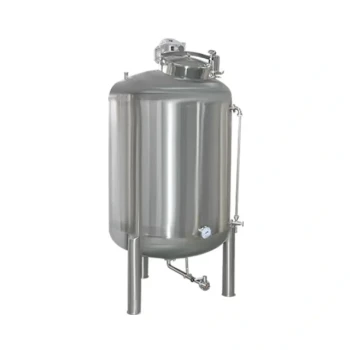
- Honey heating tanks (for commercial use) ensure even, controlled warmth.
Applications in Cooking, Baking, and Traditional Remedies
- Baking: Add honey after cooling batter slightly (below 40°C).
- Teas/Drinks: Stir in honey when liquid is lukewarm.
- Ayurvedic/Medicinal Uses: Avoid boiling honey-based remedies; warm gently to retain therapeutic effects.
Pro Tip: For commercial beekeepers, investing in temperature-controlled equipment like HONESTBEE’s heating tanks minimizes quality loss during large-scale processing.
Consequences of Overheating
HMF Formation and Digestive Challenges
- Hydroxymethylfurfural (HMF): A byproduct of overheating; levels spike above 60°C (140°F). High HMF correlates with reduced honey quality and potential digestive irritation.
- Texture Changes: Overheated honey becomes sticky and less palatable.
Case Study: Industrial vs. Artisanal Practices
- Industrial Processing: Often heats honey to 70°C+ for filtration, degrading enzymes and increasing HMF.
- Artisanal Methods: Prioritize low-temperature warming, preserving nutritional value.
Takeaway: Whether for home or commercial use, gentle heating aligns with honey’s natural chemistry.
Preserve Honey’s Goodness with the Right Tools
For beekeeping distributors and commercial apiaries, HONESTBEE’s temperature-controlled equipment ensures honey retains its flavor, nutrients, and market value. Explore our wholesale solutions to deliver premium, nutrient-rich honey to your customers.
Final Thought: Honey’s healing properties are a gift of nature—handle with care, and they’ll endure.
Visual Guide
Related Products
- Honey Tank Heater Drum Heating Blanket for Honey Barrel
- Stainless Steel Heated Honey Tank Warming Heating Tank
- Silicone Rubber Honey Drum Heating Belt
- Professional Thermostatic Conical Honey Melter
- HONESTBEE Commercial Upright Honey Melter
Related Articles
- Is Your Honey Tank a Hidden Hazard? Why Poor Sanitation Can Spoil Your Harvest
- Why Your Honey Heating Blankets Keep Failing—And What True Durability Looks Like
- How Honey Heating Tanks Preserve Quality and Efficiency in Modern Beekeeping
- Heat, Honey, and Haste: The Physics of Preserving Liquid Gold
- More Than Melting: Why Your Honey Heating Method Is Silently Costing You Money