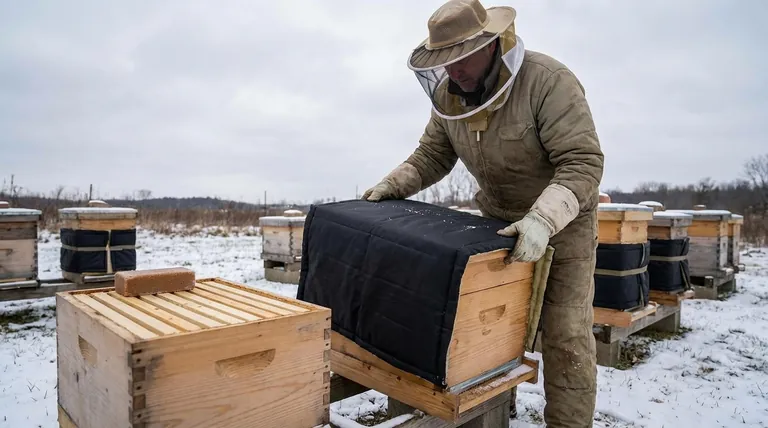
Winter poses one of the greatest challenges to honeybee survival. With no nectar flow and freezing temperatures, colonies rely entirely on their stored honey and pollen—and your vigilance as their keeper. This guide delivers actionable methods to assess food supplies, spot starvation risks, and implement life-saving interventions.
Winter Colony Survival Essentials
Hefting Hives and Other Food Assessment Methods
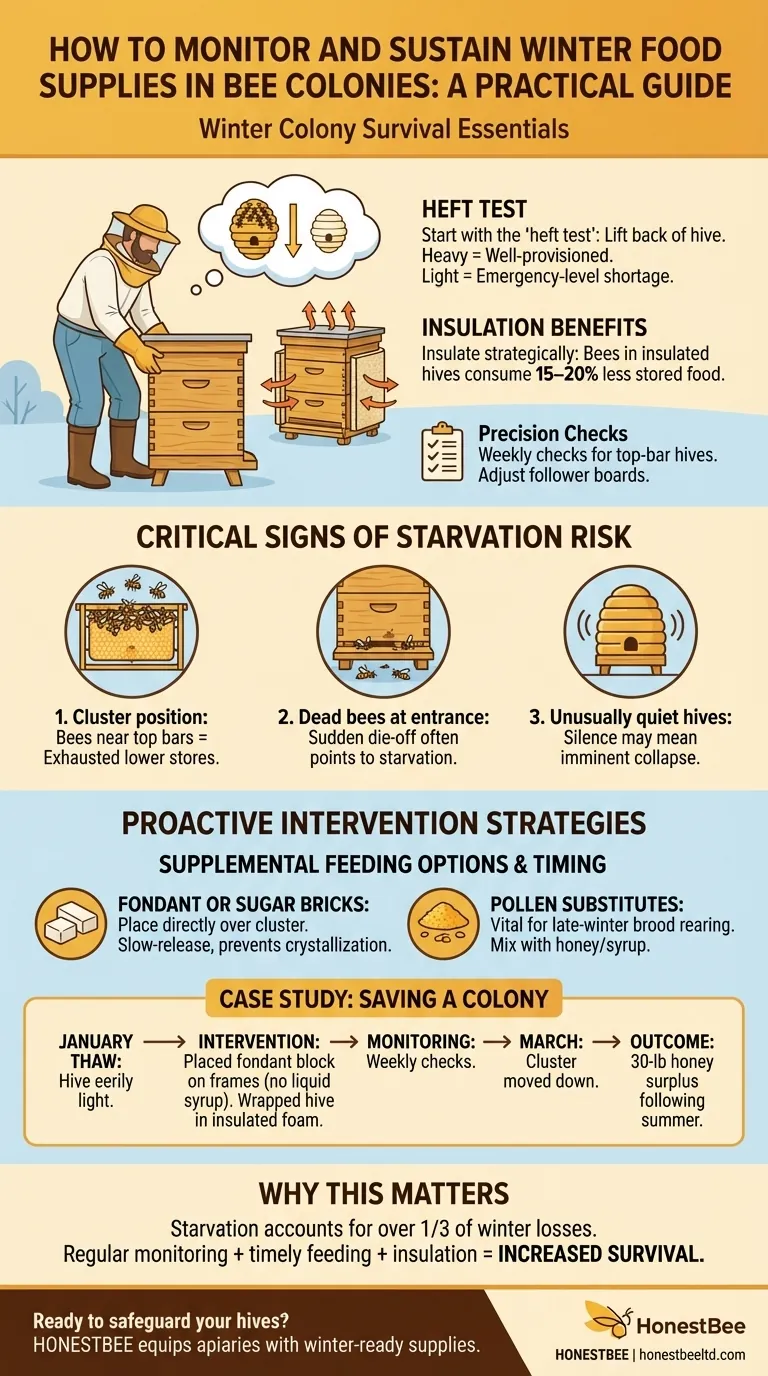
Start with the "heft test." Lift the back of the hive slightly. A well-provisioned colony will feel substantially heavy (like lifting a box of books), while a light hive signals emergency-level shortages. For precision:
- Weekly checks are ideal for top-bar hives (adjust follower boards if space is excessive).
- Insulate strategically to reduce energy expenditure. Research shows bees in insulated hives consume 15–20% less stored food by maintaining stable cluster temperatures.
Critical Signs of Starvation Risk
- Cluster position: Bees congregating near the top bars indicate they’ve exhausted lower honey stores.
- Dead bees at the entrance: A sudden die-off often points to starvation, not cold.
- Unusually quiet hives: Healthy winter clusters emit a faint hum; silence may mean collapse is imminent.
Pro Tip: On warmer days (>50°F/10°C), briefly peek under the inner cover. If bees are clinging to empty comb, intervene immediately.
Proactive Intervention Strategies
Supplemental Feeding Options and Timing
When natural stores run low, offer:
- Fondant or sugar bricks: Placed directly over the cluster, these slow-release options prevent crystallization.
- Pollen substitutes: Vital for late-winter brood rearing; mix with honey or sugar syrup for uptake.
Case Study: Saving a Colony from Winter Starvation
A Vermont beekeeper noticed her hive was eerily light during a January thaw. She:
- Placed a fondant block atop the frames (avoiding liquid syrup, which can chill bees).
- Wrapped the hive in insulated foam, reducing cold stress.
- Monitored weekly—by March, the cluster had moved downward into replenished comb.
The colony survived to produce a 30-lb honey surplus the following summer.
Why This Matters for Your Apiary
Starvation accounts for over a third of winter colony losses. Regular monitoring and timely feeding—paired with insulation—can tip survival odds in your favor.
Ready to safeguard your hives? HONESTBEE equips commercial apiaries and distributors with winter-ready supplies—from insulated hive wraps to high-energy fondant. Invest in solutions that keep your bees thriving beyond the frost.
Visual Guide
Related Products
- Durable Plastic Hive Number Set for Beekeeping
- Stainless Steel Round Beehive Air Vents for Ventilation
- HONESTBEE Professional Hive Top Bee Feeder Feeding Solution
- Professional Large-Format Hive Number Set for Beekeeping
- HONESTBEE Professional Long Handled Hive Tool with Precision Cutting Blade
Related Articles
- Hive Thermodynamics: The Unseen Clock Governing Winter Survival
- How Beekeepers Can Diagnose Queen Issues and Prevent Colony Collapse
- The Material Calculus: A Beekeeper's Choice Between Nature and Durability
- Rethinking the Beehive: Why Material Choice is a Bet on Your Time and Sanity
- The Tipping Point: How the 7/10 Rule Prevents a Beehive's Silent Collapse


















