The Unspoken Conversation
Imagine standing over an open hive. The air hums with the energy of fifty thousand lives, a superorganism operating with a logic all its own. You need to inspect the brood or clear a frame for harvest, but the comb is a living, moving carpet of bees.
How do you ask them to move?
This is the central question for every beekeeper, and the answer often lies in one of the simplest tools: the bee brush. But to see it as just a brush is to miss the point entirely. It is an instrument of negotiation, and a clumsy negotiation can quickly turn a calm hive into a defensive uproar.
A Threat from an Alien World
From our perspective, a brush with soft bristles seems gentle. From a bee’s perspective, it is a massive, hairy, and unpredictable force.
Bees dislike being brushed for a simple, primal reason: it mimics the attack of a predator, like a bear swiping at the comb. This perceived threat triggers an immediate defensive response.
A single bee, agitated by aggressive brushing, may sting the bristles. In doing so, it releases an alarm pheromone—a chemical signal that screams danger to the rest of the colony. This is how a minor disturbance on one frame can escalate into a full-scale defensive alert across the entire hive.
The challenge, then, isn't simply to move bees. It's to move them without starting this chain reaction.
A Tool of Surgical Precision
A bee brush is not a broom for sweeping. It's a surgical tool, reserved for specific moments where finesse is paramount. Its value is defined by the restraint with which it's used.
The Honey Harvest
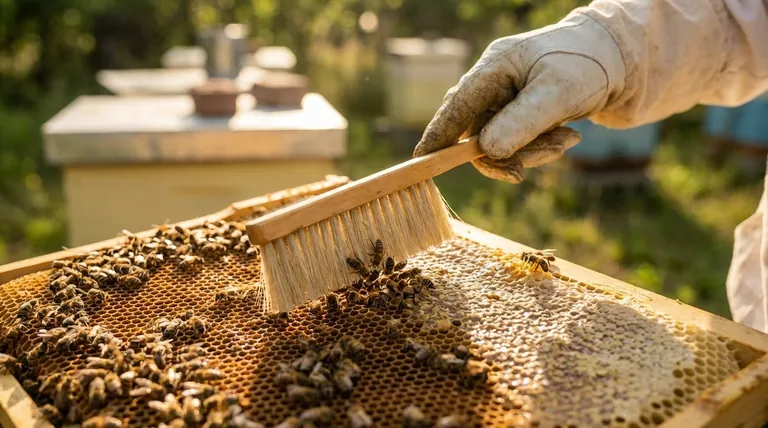
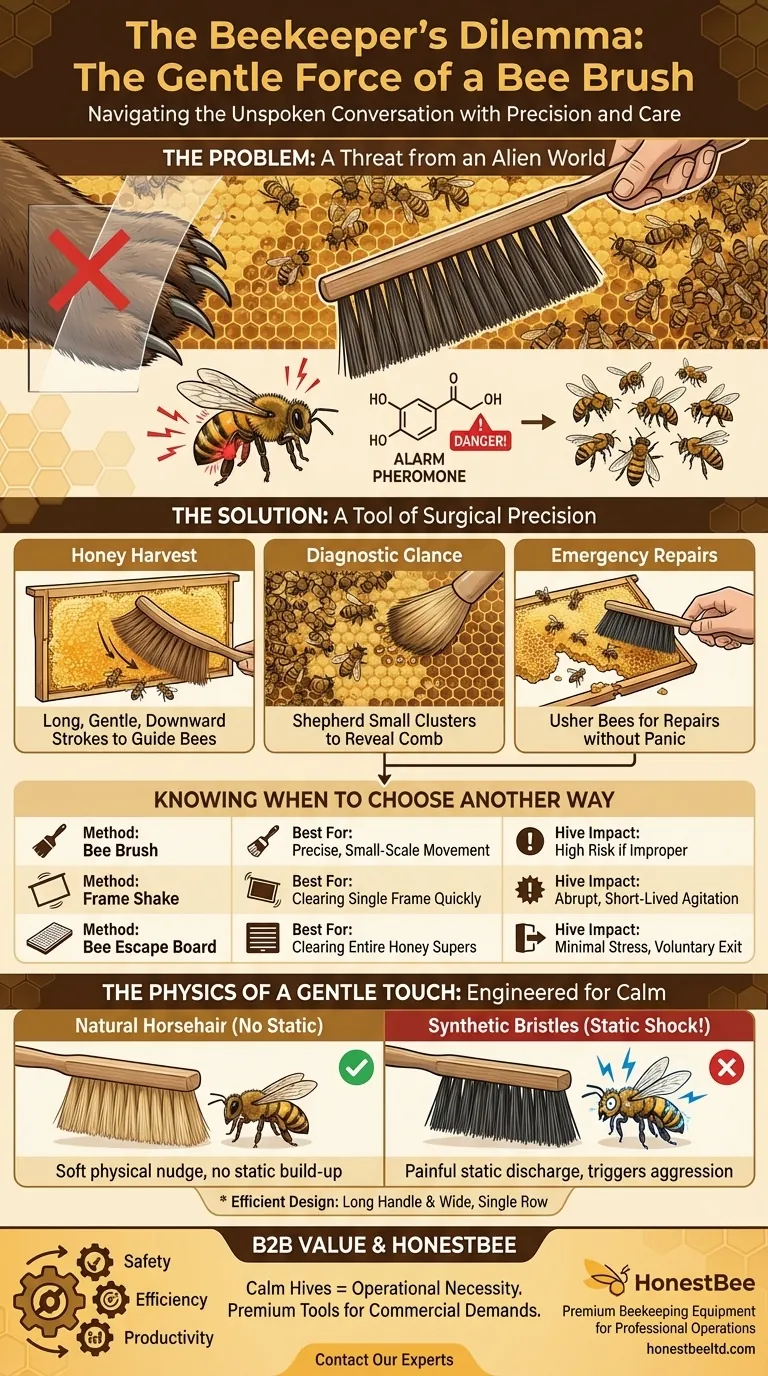
This is the brush's most iconic role. To extract honey, frames must be completely clear of bees. A few long, gentle, downward strokes are all that's needed. The goal is to nudge, not to scrub, guiding the bees back toward the hive entrance.
The Diagnostic Glance
During an inspection, you might need to see if the queen has laid eggs in a specific patch of cells. Instead of clearing the whole frame, a skilled beekeeper uses just the tip of the brush to gently shepherd a small cluster of bees aside, revealing the comb beneath without disturbing their neighbors.
Emergency Repairs
When a piece of comb breaks or a swarm needs to be gently guided, the brush helps usher bees without causing panic. It allows you to make repairs or capture a colony with minimal stress to the insects.
Knowing When to Choose Another Way
The wisest beekeepers know that the best tool is often no tool at all.
Sometimes, a sharp, firm shake of the frame is a better first choice. It dislodges most of the bees at once, dropping them safely back into the hive body with less irritation than repeated brushing.
For clearing entire honey supers, nothing beats the passive elegance of a bee escape board. It allows bees to leave the super but prevents them from re-entering—a slow, calm, and stress-free method that requires no direct intervention.
| Method | Best For | Psychological Impact on Hive |
|---|---|---|
| Bee Brush | Precise, small-scale bee movement | High risk of agitation if used improperly |
| Frame Shake | Quickly clearing a single frame | Abrupt, but agitation is short-lived |
| Bee Escape Board | Clearing entire honey supers | Minimal stress; bees leave voluntarily |
The Physics of a Gentle Touch
The design of a bee brush is not accidental; it is engineered for calm. The difference between a quality brush and a poor one lies in understanding the bee's physical world.
The Problem of Static
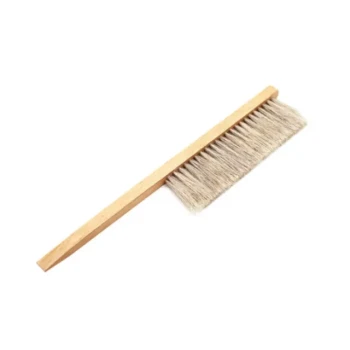
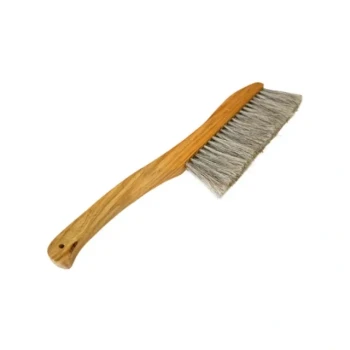
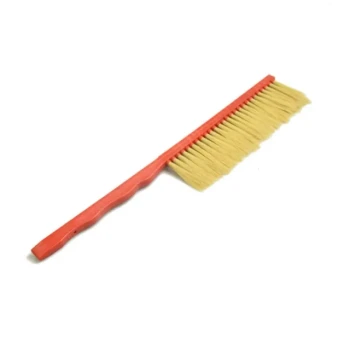
Synthetic bristles can build up static electricity. To a bee, this static discharge is a painful and confusing shock. It’s an invisible attack that guarantees an aggressive response. This is why the gold standard for bee brushes is natural horsehair. It doesn't accumulate static, ensuring the only thing the bee feels is a soft, physical nudge.
Designed for Calm Efficiency
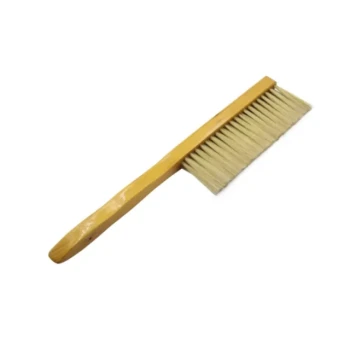
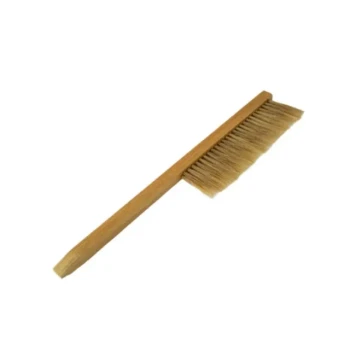
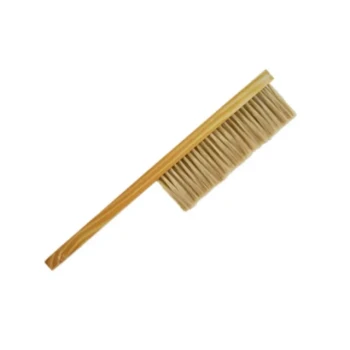
A professional-grade brush features a long handle and a wide, single row of soft bristles. This design allows you to clear a large section of the frame in one or two smooth, deliberate motions, minimizing the duration of the disturbance.
For commercial apiaries and beekeeping equipment distributors, managing hive temperament isn't just a preference; it's a critical factor in safety, efficiency, and productivity. Agitated hives are difficult and slow to work, and every minute counts. Using equipment designed to maintain calm is an operational necessity. This is why professionals rely on tools built with the bee's biology in mind.
At HONESTBEE, we supply premium beekeeping equipment, including perfectly balanced horsehair bee brushes, designed for the rigorous demands of commercial operations. We understand that the right tool is one that respects the delicate psychology of the hive.
If you're ready to equip your operation with tools that prioritize colony health and operational efficiency, Contact Our Experts
Visual Guide
Related Products
- Wooden Bee Brush with Triple Row Artificial Fiber for Beekeeping
- Classic Wooden Bee Brush with Double-Row Boar Bristles
- Double Row Artificial Fiber Bee Brush for Beekeeping
- Wooden Bee Brush with Double-Row Horsehair Bristles
- Premium Triple-Row Horsehair Bee Brush
Related Articles
- Your Bee Brush Is Slowing You Down. Here’s What Commercial Apiaries Use Instead.
- The Silent Profit Killer: Why a Simple Bee Brush Can Make or Break Your Harvest
- The Gentle Command: Why the Bee Brush is a Masterclass in Hive Psychology
- Gentleness Has a Price: The Engineering Trade-off in Bee Brushes
- A Beekeeper's Oath: The Biosecurity and Ethics Engineered into a Bee Brush