The Keeper's Fallacy
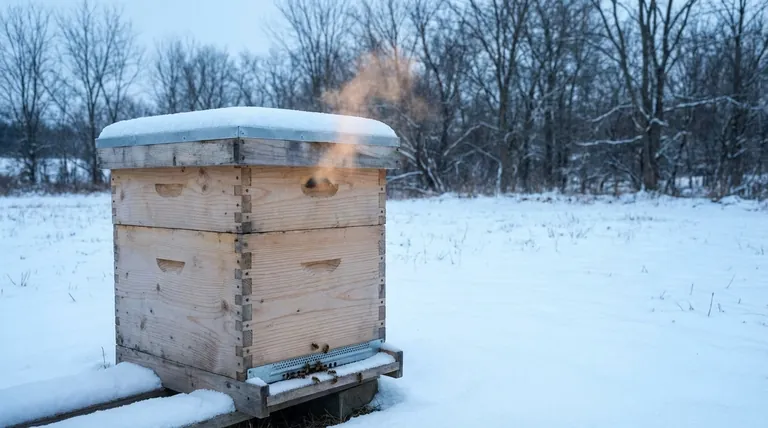
A beekeeper’s instinct in winter is to seal every crack, to wrap the hive in a thick, impenetrable layer. We see it as a warm coat. This impulse, born from a deep desire to protect, is a dangerous psychological trap.
We equate "sealed" with "warm." In our homes, we weather-strip doors and caulk windows to stop drafts and save on heating bills. We apply the same logic to our bees, believing a fortress against the cold is the greatest gift we can offer.
But a beehive is not a house. It's a living, breathing superorganism. And by sealing it shut, we are not creating a cozy shelter; we are designing a death trap.
The Engine Inside the Box
To understand why, we must see the winter cluster for what it is: a biological engine.
This engine's sole purpose is thermoregulation. Through the constant, coordinated vibration of their flight muscles, tens of thousands of bees generate immense heat, keeping the cluster's core at a stable 95°F (35°C), even as temperatures outside plummet.
Like any engine, this one has an exhaust. The bees' metabolic process releases two primary byproducts: carbon dioxide (CO2) and a staggering amount of warm, water-laden vapor. A single colony can release over a gallon of water into the hive's atmosphere during a cold winter.
In an uninsulated hive, this heat and moisture quickly escape through the thin wooden walls. The system is inefficient, forcing the bees to burn through honey stores at a frantic pace. But it is, at least, dry.
The Condensation Trap
Insulation changes the physics of the system entirely.
High-quality insulated hives, like those built with components from HONESTBEE, dramatically reduce heat loss. The engine doesn't have to work as hard. The bees consume far less honey, preserving precious energy. This is the profound benefit of insulation.
However, the insulation that traps heat also traps the exhaust.
That warm, moist air rises from the cluster. When it hits the cold inner surface of the hive cover, it reaches its dew point. The vapor instantly condenses into liquid water. What happens next is brutal.
- The Cold Rain: Droplets form and rain back down on the very bees that produced the warmth.
- The Chilled Cluster: Wet bees are chilled bees. A chilled bee's flight muscles seize up, and it can no longer vibrate to generate heat.
- System Failure: As more bees get wet and cold, the cluster's ability to thermoregulate collapses. They become unable to move to new frames of honey. The colony can starve to death, surrounded by food, simply because it is wet and paralyzed.
This damp, stagnant environment also becomes a perfect breeding ground for mold and mildew, fouling the combs and spoiling their remaining food stores.
Ventilation: The Hive's Respiratory System
This is where the paradox is solved. Ventilation in an insulated hive is not about letting cold air in; it's about letting wet air out.
It is the hive's respiratory system. It provides a controlled, passive pathway for the engine's exhaust to escape without creating a draft that robs the cluster of its hard-won heat.
A System of Two Parts
Insulation and ventilation are not opposing forces. They are a symbiotic pair.
- Insulation reduces the energy demand on the system.
- Ventilation removes the system's harmful waste products.
You cannot have one without the other. An insulated hive without ventilation is a coffin. A ventilated hive without insulation is an energy sink.
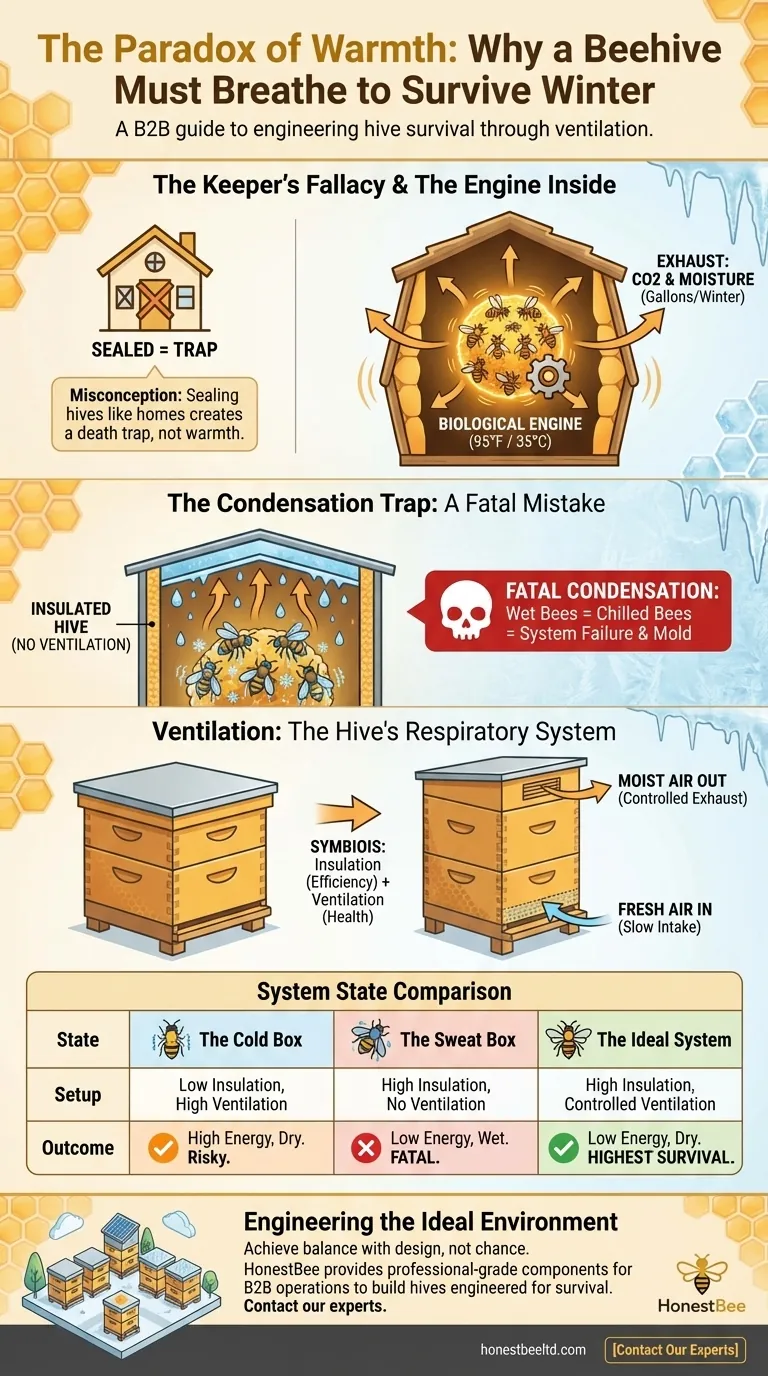
| System State | Insulation | Ventilation | Outcome |
|---|---|---|---|
| The Cold Box | Low | High | High energy use, but dry. Risky in long winters. |
| The Sweat Box | High | None | Low energy use, but wet. Fatal condensation. |
| The Ideal System | High | Controlled | Low energy use, dry interior. Highest survival rate. |
Engineering the Ideal Environment
Achieving this balance is a matter of design, not chance. The goal is gentle, convective airflow.
A small upper entrance, a ventilation port, or a quilt box allows the warm, moist, CO2-rich air to rise and exit, while fresh, dry air is slowly drawn in from a reduced bottom entrance. This slow, continuous exchange flushes moisture without creating a chilling draft.
Building a hive that masters these forces is an act of engineering. It requires materials and components designed for performance and durability—precisely the kind of professional-grade beekeeping supplies HONESTBEE provides to commercial apiaries. By focusing on wholesale operations, we help large-scale beekeepers and distributors implement systems that ensure colony health and productivity.
The difference between a winter dead-out and a thriving spring colony often lies in this unseen architecture of airflow. To build hives truly engineered for survival, you need equipment that meets the standard. Contact Our Experts
Visual Guide
Related Products
- Stainless Steel Round Beehive Air Vents for Ventilation
- Inner Beehive Cover for Beekeeping Bee Hive Inner Cover
- Professional Insulated Plastic Bee Hives
- Professional Insulated Winter Hive Wrap for Beekeeping
- Professional Reversible Beehive Hive Entrance
Related Articles
- How to Optimize Beehive Ventilation: Prevent Disease and Boost Colony Health
- The Silent Killer in the Hive: Why Moisture, Not Cold, Is Winter's Greatest Threat
- Beyond the Bee Box: Why Your First Apiary Investment Determines Your Success
- The Precision of Chaos: Navigating the Biological Risks of Commercial Beehive Transportation
- How to Choose the Best Beehive Type for Your Climate and Terrain