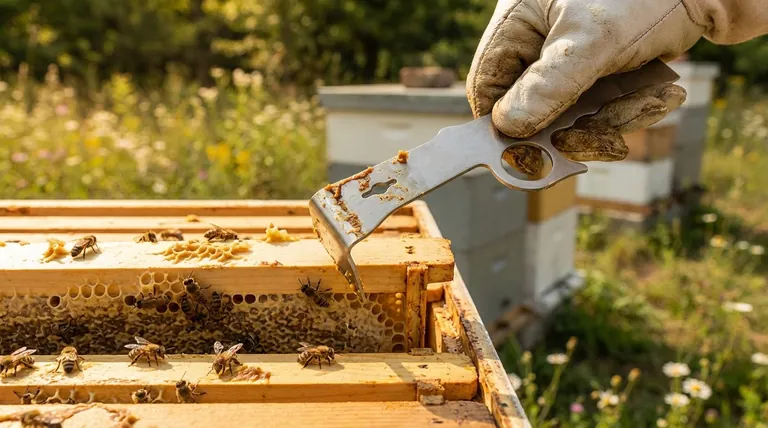
The High Cost of a Simple Switch
Imagine this: you're inspecting a hive on a hot afternoon. You pry the inner cover loose. Then you need to lift the first frame, but it’s welded with propolis. You put down your standard hive tool and reach for a dedicated frame lifter. In that small moment of searching and switching, the rhythm is broken. The bees become more agitated. The sun feels hotter.
This isn't a failure of skill; it's a failure of workflow. The true cost of using separate, specialized tools isn't monetary—it's the constant, small interruptions. It's the cognitive load of juggling equipment when your focus should be on the colony.
The goal isn't just to complete tasks, but to achieve a state of flow where the tool becomes an extension of your intent.
The Physics of a Gentle Lift
A frame sealed with propolis isn’t just stuck; it’s bonded with a powerful, resinous glue. A standard hive tool requires you to pry and twist, a jarring motion that can easily roll and crush bees against the hive wall.
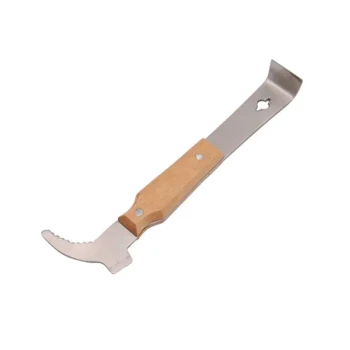
A multi-functional tool with an integrated J-hook changes the physics of this interaction entirely.
- From Prying to Lifting: The hook allows you to apply force vertically. This lifts the frame straight up, breaking the propolis seal cleanly without collateral damage.
- Minimizing Disturbance: This single design feature transforms a disruptive act into a quiet, respectful one. Less vibration and fewer crushed bees mean a calmer colony throughout the entire inspection.
The elegance of a J-hook isn't in its complexity, but in its profound understanding of leverage and bee behavior.
From Disruption to Dialogue
A hive inspection is a conversation with the colony. Every action you take is a question, and the bees' response is the answer. Switching tools is like shouting, interrupting the dialogue and putting the colony on the defensive.
A multi-functional tool allows this conversation to flow without interruption.
Reading the Brood with Precision
The sharpened tip on a quality multi-tool is not for prying. It’s a surgical instrument. It allows you to uncap a single brood cell to check for varroa mites, causing minimal damage to the surrounding comb. You get the information you need without destroying the work of the bees.
Maintaining Order
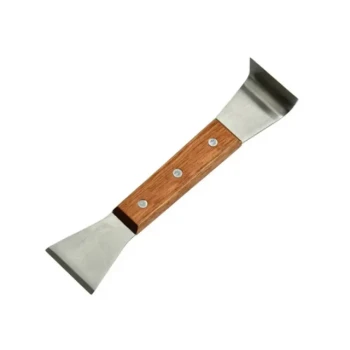
Scraping burr comb and excess propolis isn't just janitorial work; it's about maintaining the hive's intended structure. The sharp, flat edge of the tool does this efficiently, but its true value lies in being immediately available right after you’ve lifted a frame, with no need to pause or switch.
High-Stakes Operations, Simplified
Nowhere is the benefit of a streamlined workflow more apparent than during high-pressure tasks like installing a new package of bees.
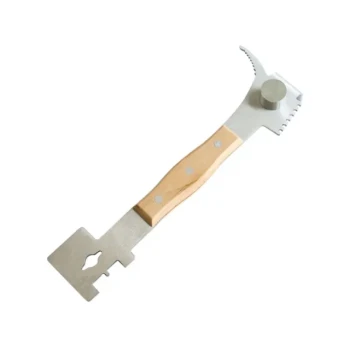
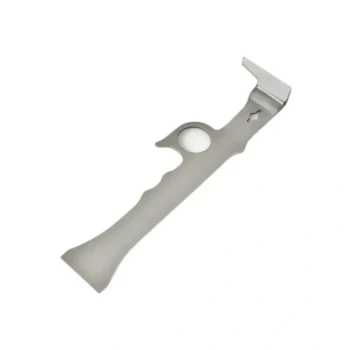
The process involves a rapid sequence of distinct actions: prying the wooden lid, leveraging out the can of syrup, and carefully pulling the staple that holds the queen cage. With separate tools, this is a clumsy, multi-step juggle.
A multi-functional tool collapses these actions into one fluid sequence with a single instrument. The process becomes faster, calmer, and significantly less stressful for the new, disoriented bees.
The Psychology of the "Right" Tool
Of course, some beekeepers prefer the familiar weight and simplicity of a traditional hive tool. This preference is born from years of muscle memory and trust. It’s a valid attachment to a tool that has proven its worth.
However, this often overlooks the hidden cognitive cost.
The "jack-of-all-trades" argument suggests a multi-tool is a master of none. But this perspective focuses on optimizing a single action rather than the entire system. For a commercial operation managing hundreds of hives, shaving seconds and reducing mental friction at every single frame lift amounts to enormous gains in time and efficiency. The question isn't whether a separate frame puller offers 5% more leverage, but whether that marginal gain is worth the systemic cost of the switch.
Choosing Your System, Not Just Your Steel
The decision between a traditional and a multi-functional hive tool is not about features. It’s a choice of philosophy. Do you prefer a collection of perfect specialists, or a single generalist that optimizes the entire workflow?
| Approach | Traditional Tool Philosophy | Multi-Functional Tool Philosophy |
|---|---|---|
| Workflow | Task-oriented, sequential | Process-oriented, fluid |
| Cognitive Load | Higher (managing multiple tools) | Lower (one tool for all tasks) |
| Hive Impact | Potentially more disruptive | Minimally invasive |
| Ideal For | Hobbyists valuing simplicity; specific, heavy-duty tasks | Commercial operators prioritizing speed and efficiency |
At HONESTBEE, we supply wholesale beekeeping equipment designed for the realities of commercial apiaries. We understand that for our clients, efficiency is not a luxury—it's the foundation of a viable business. Our multi-functional hive tools are crafted from durable materials to withstand thousands of hours of use, engineered to reduce colony stress and maximize the productivity of every hive visit.
Equip your operation with tools designed for a seamless, efficient workflow. Contact Our Experts
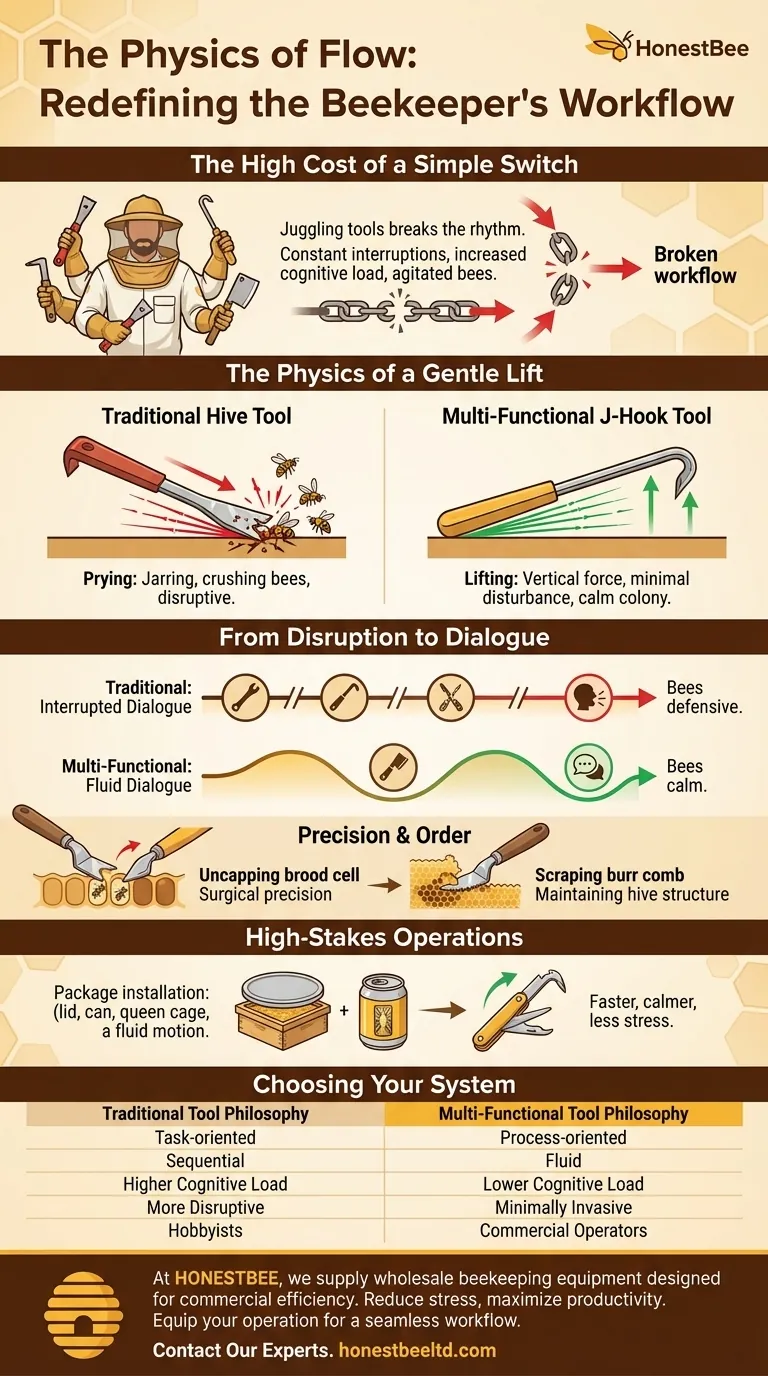
Visual Guide
Related Products
- HONESTBEE Professional Multi-Functional Hive Tool with Ergonomic Wood Handle
- Professional Multi-Function Stainless Steel Hive Tool
- Multi-Function Hive Tool with Integrated Hammer for Beekeeping
- Multi-Function Plier-Style Frame Grip Hive Tool
- HONESTBEE 15-in-1 Beekeeper Multi-Tool with Hammer and Pliers for Beekeeping
Related Articles
- The Human Interface: Why a Beekeeper's Calm is the Ultimate Hive Tool
- How to Master Essential Beekeeping Tools Safely and Efficiently
- How to Choose Beekeeping Tools: A Practical Guide for Every Budget and Climate
- Essential Beekeeping Tools: How Strategic Preparation Boosts Hive Health, Safety, and Honey Yields
- Essential Beekeeping Tools: How to Choose and Use Gear for Safe, Efficient Hive Management