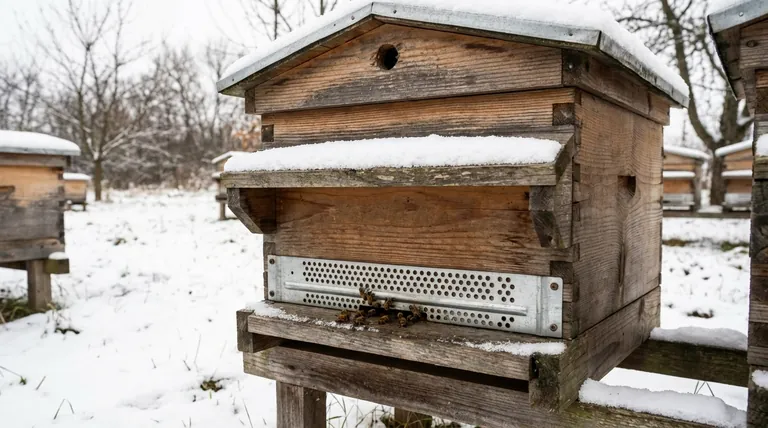
The Unintended Invitation
In the first chill of late autumn, a field mouse feels the pressure of the coming winter. It seeks warmth and food, and its search leads it to a quiet wooden box at the edge of a field. This box—a beehive—is a miracle of thermodynamics in a barren landscape. It radiates a faint warmth and smells of honey, a dense cache of pure energy.
The mouse’s entry isn’t an act of malice. It’s a simple response to an invitation.
During winter, a beehive is fundamentally vulnerable. The colony, conserving energy, pulls into a tight thermoregulating cluster. They are no longer patrolling the entire cavity of their home. The periphery becomes undefended territory, a systemic weakness that opportunistic pests are biologically programmed to exploit.
The beekeeper’s job is not merely to fight pests. It is to revoke the invitation by transforming the hive from a target into a fortress.
The Tyranny of the Open Door
The most catastrophic failures often begin at the most obvious point of entry. In winter, the hive entrance is a gaping vulnerability, a doorway that must be managed with absolute precision.
The Simple Genius of the Entrance Reducer
An entrance reducer is a simple piece of wood or metal that constricts the hive's main opening. Its function is less about blocking pests and more about physics. It dramatically reduces the surface area the bees must guard, allowing a smaller winter workforce to effectively defend their home against robbing insects.
It focuses the colony's defensive energy on a single, manageable chokepoint.
Why Mice Are a Terminal Diagnosis
A mouse that successfully nests in a hive is rarely a recoverable problem. It will consume honey, pollen, and even the bees themselves. Its waste will foul the combs, destroying the colony's morale and often leading them to abscond or perish from stress and disease.
This is why a Mouse Guard is non-negotiable winter hardware. This specialized entrance reducer, with holes drilled just large enough for a bee, is the difference between a secure fortress and a hollowed-out failure. For a commercial operation, a flimsy or poorly-fitted mouse guard is an unacceptable risk. The professional-grade equipment supplied by HONESTBEE is engineered for a perfect fit and durability, ensuring this critical line of defense never fails.
The Ghosts in the Apiary
Not all threats come from the outside. Sometimes, the greatest danger is a silent failure from within.
A "deadout"—a hive where the colony has died—is a ghost that haunts the apiary. It may seem like a static, self-contained problem, but it’s a ticking time bomb. The unguarded honey and wax combs are a perfect nursery for wax moths and hive beetles.
Letting a deadout sit is like cultivating a pest incubator. These pests will multiply and spread to your healthy, surviving hives, creating a cascading failure across the entire operation. Prompt removal isn't just cleanup; it's a critical quarantine measure to protect your entire investment.
A Strong Colony Solves a Thousand Problems
Ultimately, the most effective hive defense is not a piece of hardware but the biological engine of the colony itself.
Beekeepers can become obsessed with external threats, but the most resilient hives are those that are internally strong. A populous, healthy, well-fed colony is a self-regulating, self-defending superorganism. It has the workforce to patrol its space, the energy to generate heat, and the numbers to repel invaders.
This strength is not built in November. It is the direct result of meticulous management in summer and fall—ensuring the queen is laying well, managing mite loads, and providing supplemental feed after the honey harvest if necessary. Winter preparation is a long-term investment in colony vitality.
The Physics of a Wet Beehive
In an effort to help, beekeepers often wrap their hives to provide insulation. But this well-intentioned intervention can create a far more insidious problem: moisture.
A hive of 20,000 bees is a living furnace, constantly respiring warm, moist air. If that water vapor has no way to escape, it will condense on the cold inner surfaces of the hive. This condensation then drips down as freezing water onto the cluster below.
Wet bees are dead bees.
The Critical Escape Valve
A completely sealed hive is a death trap. To prevent condensation, proper ventilation is essential. This often takes the form of a small upper entrance hole. It seems counterintuitive to add a hole to a home you are trying to keep warm, but it serves as a vital escape valve.
This small opening allows the moist air to vent out, keeping the hive interior dry. It is a classic engineering trade-off: balancing the need for insulation against the critical demand for ventilation.
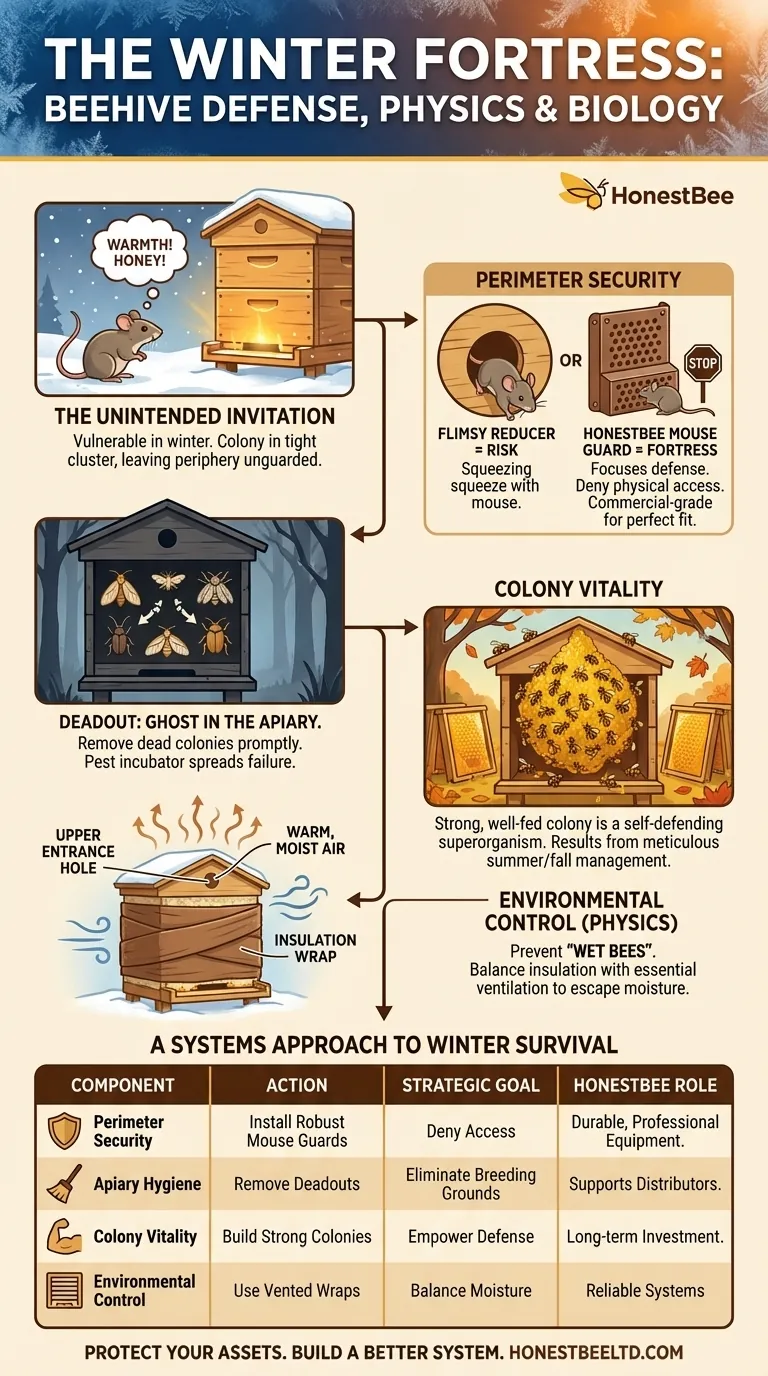
A Systems Approach to Winter Survival
Winterizing a beehive is not a series of disconnected tasks. It is a holistic approach to designing a resilient system.
| System Component | Key Action | Strategic Goal |
|---|---|---|
| Perimeter Security | Install robust mouse guards. | Deny physical access to primary threats. |
| Apiary Hygiene | Promptly remove all deadout colonies. | Eliminate pest breeding grounds. |
| Colony Vitality | Build strong, well-fed colonies in fall. | Empower the bees to defend themselves. |
| Environmental Control | Use wraps with an upper entrance. | Balance insulation with moisture ventilation. |
For commercial apiaries, where each colony is a valuable asset, success depends on the reliability of this system. At HONESTBEE, we support beekeeping distributors and large-scale operations by providing the durable, professional-grade equipment that forms the foundation of a secure winter apiary. Protect your assets by building a better system. Contact Our Experts
Visual Guide
Related Products
- Professional Reversible Beehive Hive Entrance
- Black Plastic Beetle Barn Hive Beetle Trap for Beehives
- Steel Round Disc Entrance Reducer for Flexzion Bee Hive Nuc Box Gate
- Reusable Clear Small Hive Beetle Traps for Beehives Beetle Trapping Tools
- Plastic Beetle Blaster Trap Beekeeping Tools and Supplies
Related Articles
- How Hive Entrance Size Shapes Bee Health: Balancing Ventilation and Security
- Hive Security is a Geometry Problem: Mastering the Beehive Entrance
- A Single Point of Failure: The Critical Importance of a Clear Hive Entrance in Winter
- Calibrating the Gateway: The Critical Engineering of the Hive Entrance
- The Unseen Flaw in Your Apiary: Why Hive Entrance Placement Dictates Your Profit
















