The Moment It's Gone
The sun is warm on your back. You're deep in a hive inspection, moving with a practiced rhythm—lift, inspect, replace. You’ve just finished checking a heavy super and need to pry the next frame. You reach for your hive tool.
It’s not there.
A quiet wave of frustration washes over you. You check the hive lid. The ground. The top of the adjacent hive. It has vanished. Every second spent searching is a second the hive is open, a second your workflow is broken. This small, inexpensive piece of metal has just become the most critical, and frustrating, part of your day.
This isn't a story about carelessness. It's a story about psychology and system design.
The Psychology of Misplacement
Losing a tool feels like a personal failing, but it’s usually the result of powerful cognitive biases that are predictable and universal. The apiary is a perfect environment for them to surface.
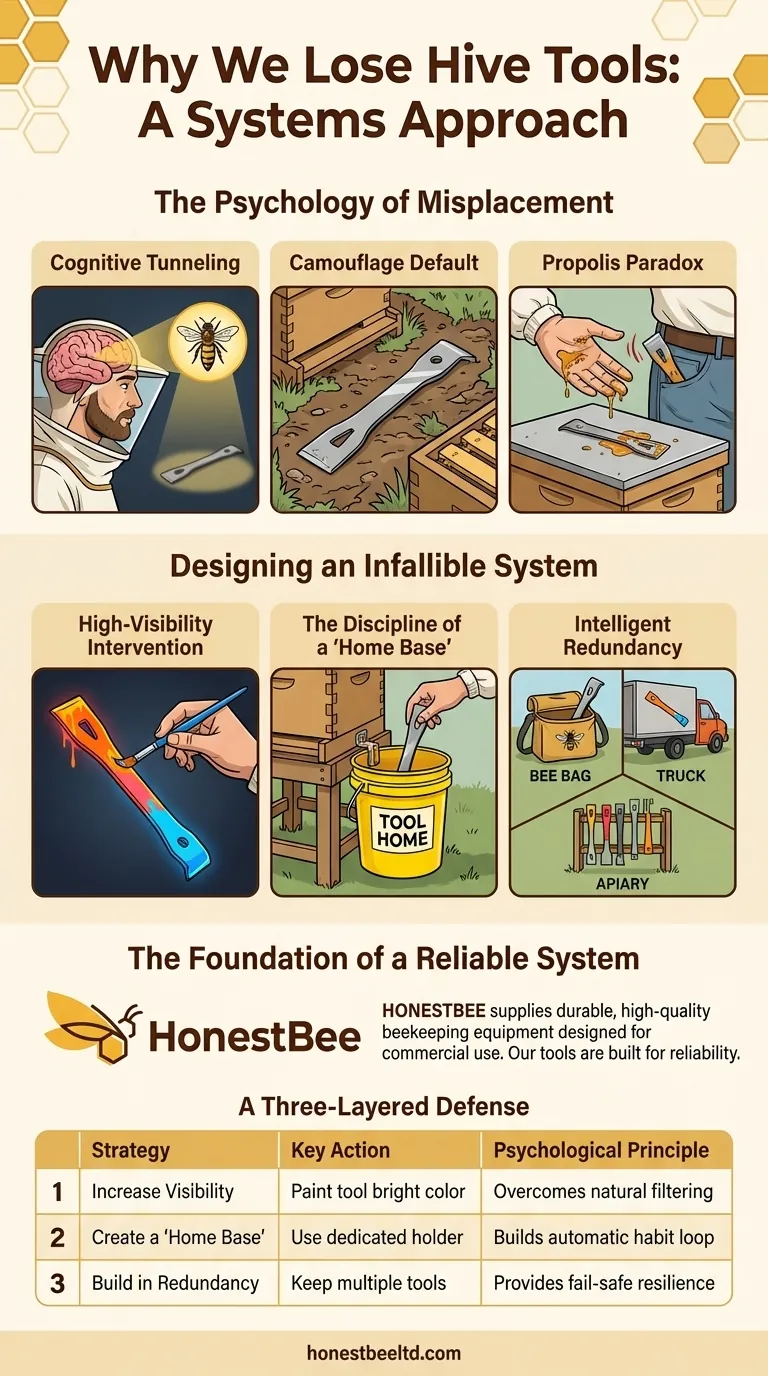
Cognitive Tunneling: The "Inspection Trance"
When you are deeply focused on finding a queen or diagnosing a brood pattern, your brain enters a state of intense concentration. It intentionally filters out peripheral information to dedicate all resources to the critical task.
Your hive tool, when not in your hand, becomes "peripheral." Your brain literally stops tracking it, leading to the jarring moment you "wake up" from the trance and have no memory of where you set it down.
The Camouflage Default
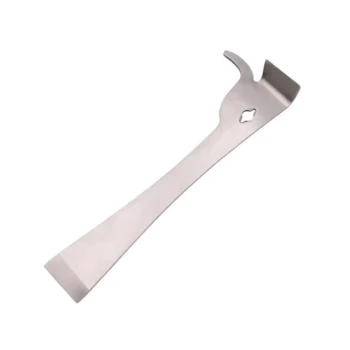
A standard steel hive tool is perfectly camouflaged in an apiary. Its metallic sheen disappears against damp grass, dirt, and the wooden textures of hive bodies. Our visual system is designed to spot anomalies, and a hive tool is the opposite of an anomaly in this environment.
The Propolis Paradox
Propolis makes tools sticky. This creates a tiny, subconscious friction against putting it back in your pocket. The path of least resistance is to set it down—on a hive cover, in the grass, anywhere but on your person.
This small, logical avoidance of stickiness is the trigger for a much larger, systemic failure.
Designing an Infallible System for Tool Retention
The solution isn't to "try harder to remember." It's to engineer a system that bypasses your brain's predictable shortcomings. It’s an elegant solution to a chaotic problem.
Principle 1: High-Visibility Intervention
The first step is to make your tool impossible for your brain to ignore. This means breaking its natural camouflage.
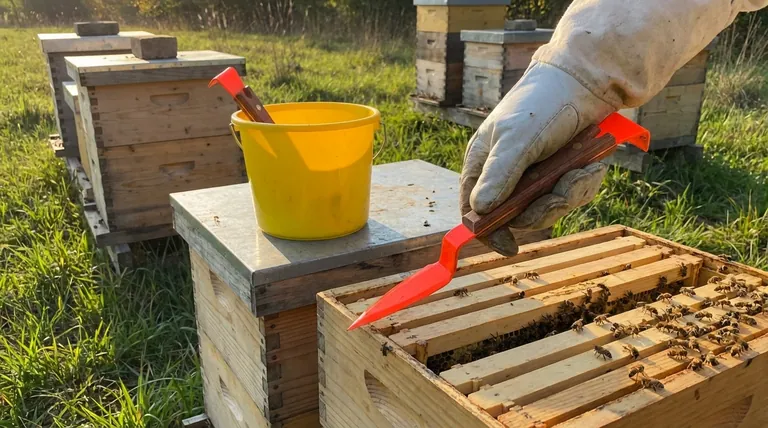
- Action: Paint your hive tool a bright, unnatural color. Fluorescent blue, vibrant orange, or neon yellow.
- Why it Works: It transforms the tool from camouflaged background noise into a high-contrast visual signal. Your brain can no longer easily filter it out. Even when set down, it shouts for attention.
Principle 2: The Discipline of a 'Home Base'
A tool can only be in one of two states: in your hand, or in its designated home. There is no third option.
- Action: Establish a "home base." A brightly colored bucket, a magnetic tool holder on your hive stand, or a specific slot in your tool caddy.
- Why it Works: This isn't about memory; it's about building a physical habit loop. The muscle memory of returning the tool to the bucket becomes automatic, requiring zero cognitive load. It makes the correct action the easiest action.
Principle 3: Intelligent Redundancy
No system is perfect. A backup is not the system itself, but a planned fail-safe for when the system breaks.
- Action: Keep multiple hive tools. One in your bee bag, one in your truck, and several at the apiary.
- Why it Works: Relying solely on redundancy leads to losing more tools. But when used as a backup for a visibility-and-habit system, it provides resilience. It ensures a single mistake doesn't derail an entire day's work in the yard.
The Foundation of a Reliable System
A system is only as strong as its components. For commercial apiaries and equipment distributors, where efficiency is measured in dollars and hours, tool failure is not an option. A bent tool or a chipped paint job can unravel a carefully built workflow.
This is why professionals build their systems on a foundation of quality. HONESTBEE supplies durable, high-quality beekeeping equipment designed for the rigors of commercial use. Our hive tools are built to withstand constant prying and scraping, providing a reliable base for high-visibility modifications. We understand that for a large-scale operation, having dependable equipment isn't a luxury—it's the bedrock of profitability and bee health.
Summary Table: A Three-Layered Defense
| Strategy | Key Action | Psychological Principle |
|---|---|---|
| Increase Visibility | Paint tool a bright, unnatural color. | Overcomes the brain's natural filtering and camouflage. |
| Create a 'Home Base' | Use a dedicated bucket or magnetic holder. | Builds an automatic habit loop, reducing cognitive load. |
| Build in Redundancy | Keep multiple, inexpensive tools on hand. | Provides a fail-safe, ensuring system resilience. |
By understanding the psychology at play, you can shift from blaming memory to building a smarter workflow. Designing this robust system starts with reliable equipment that you can trust day in and day out. Contact Our Experts
Visual Guide
Related Products
- HONESTBEE Professional Long Handled Hive Tool with Precision Cutting Blade
- Professional Multi-Function Stainless Steel Hive Tool
- HONESTBEE Premium Italian Style Hive Tool with Hardwood Handle
- Ergonomic Plastic Frame Spacer Tool for Rapid Hive Management Beekeeping
- Professional Grade Foldable Beehive Handles
Related Articles
- Force and Finesse: The Hive Tool as the Beekeeper's Critical Interface
- The Essential Guide to Hive Tools in Modern Beekeeping
- The Apiary as a System: Why Your Hive Tool is More Than Just Steel
- How to Choose Hive Tools That Match Your Beekeeping Workflow
- The Beekeeper's Scalpel: How a Simple Hive Tool Governs Apiary Health