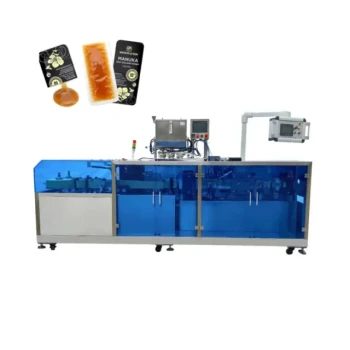
High-precision nectar productivity maps serve as a critical financial forecasting tool that directly dictates the scale and specification of your equipment procurement. By strictly aligning your capital expenditures with projected yield estimates, these maps allow you to "right-size" your investment in beekeeping machinery and honey filling lines, ensuring operational capacity perfectly matches the natural resource availability of your specific region.
Core Takeaway Reliable investment planning requires moving beyond intuition to scientifically quantified data. By mapping spatial yield differences—such as the production gap between different forest types—you can prevent the financial drain of idle equipment or the revenue loss of capacity bottlenecks.
Transforming Data into Operational Strategy
Forecasting Production Peaks
Nectar productivity maps provide more than just geographical data; they offer a timeline of potential yields. By analyzing these maps, operators can foresee honey production peaks in specific regions.
This foresight is the foundation for determining the necessary throughput of your processing facility. It allows you to calculate the maximum volume your machinery must handle during the busiest harvest windows.
Scientifically Planning Asset Investments
The primary value of these maps is the ability to scientifically plan asset investments. Rather than purchasing generic equipment packages, you can tailor your machinery to the specific yield estimates of your territory.
This approach transforms equipment buying from a static cost into a strategic response to environmental potential.
Optimizing Equipment Selection
Defining Specifications for Filling Lines
The data derived from resource mapping directly guides the specifications and capacity requirements for honey filling lines.
If your maps indicate high-potential zones—such as herbaceous birch forests—your investment should prioritize high-speed, automated filling equipment to handle the volume. Conversely, areas with lower potential, like bilberry birch forests, may warrant smaller, more cost-effective manual or semi-automated lines.
Aligning Consumables with Natural Supply
Beyond machinery, these maps help quantify the consumable requirements for your operation.
By understanding the spatial yield differences, you can accurately forecast the volume of jars, lids, and packaging materials needed. This ensures your supply chain is synchronized with the actual automated processing capacity you have installed.
Understanding the Trade-offs
The Risk of Over-Investment (Cost Waste)
Without the guidance of productivity maps, there is a high risk of "over-configuration."
Investing in industrial-grade extraction tools for a region with naturally low nectar density results in significant cost waste. You end up paying for idle capacity that the local environment can never fill.
The Risk of Under-Investment (Capacity Shortage)
Conversely, failing to identify high-yield zones leads to capacity shortages.
If your equipment is under-specified for a region's actual nectar resources, you create a bottleneck during peak production. This results in missed revenue opportunities and operational strain as you struggle to process the available harvest.
Making the Right Choice for Your Goals
Your investment strategy should be dictated by the specific "nectar profile" of your land.
- If your primary focus is Capital Efficiency: Use productivity maps to identify lower-yield zones, allowing you to save capital by purchasing smaller, fit-for-purpose machinery.
- If your primary focus is High-Volume Scalability: Use maps to validate high-yield regions (like herbaceous birch forests) to justify and de-risk heavy investments in high-capacity automated filling lines.
Leveraging high-precision mapping converts environmental data into a secure blueprint for profitable equipment investment.
Summary Table:
| Investment Factor | Low-Yield Zone Strategy (e.g., Bilberry Birch) | High-Yield Zone Strategy (e.g., Herbaceous Birch) |
|---|---|---|
| Equipment Scale | Compact / Semi-automated | Industrial / High-speed automated |
| Primary Goal | Capital efficiency & cost saving | High-volume scalability & throughput |
| Filling Capacity | Low-volume manual/semi-auto lines | High-capacity automated filling lines |
| Resource Risk | Over-configuration (Idle capacity) | Capacity bottlenecks (Missed revenue) |
| Consumables | Minimal inventory stock | High-volume supply chain synchronization |
Maximize Your Apiary’s Potential with HONESTBEE
Don’t let guesswork dictate your capital expenditures. At HONESTBEE, we specialize in empowering commercial apiaries and distributors with the precise tools needed to scale efficiently. From high-capacity honey-filling machines and hive-making machinery to a complete range of professional beekeeping tools and consumables, our portfolio is designed to match your specific regional productivity.
Whether you are looking to optimize a high-yield operation or seeking cost-effective equipment for emerging territories, we provide the technical expertise and hardware to ensure your investment delivers maximum ROI.
Ready to right-size your operation? Contact our expert team today to discuss our wholesale machinery and equipment solutions.
References
- И.Ф. Адельмурзина, Р.З. Хизбуллина. Проектирование и составление карт пчеловодства. DOI: 10.18411/trnio-12-2023-910
This article is also based on technical information from HonestBee Knowledge Base .
Related Products
- Double Nozzle Small Honey Filling Machine Honey Sachet Packing Packaging Equipment
- Small Honey Filling Machine Sachet Packing Equipment Single Nozzle
- Precision Durable Efficient HONESTBEE Rotary Honey Filling Machine
- Manual Honey Filling Machine Bottling Machine for Honey
- Economy Small Honey Filling Machine Honey Bottle Filler Packaging Machine
People Also Ask
- How does industrial honey-filling machinery support Robinia pseudoacacia stands? Maximize Your Acacia Honey Yield
- What value do retail packaging equipment and filling technologies provide in the honey distribution process? Maximize ROI
- What is honey filling equipment used for? Optimize Your Bottling with Precision Automation
- Why is precision temperature control necessary for red honey filling? Preserve Amorpha fruticosa Color and Aroma
- How does high-precision honey filling equipment protect honey's biological activity? Safeguard Purity & Premium Value