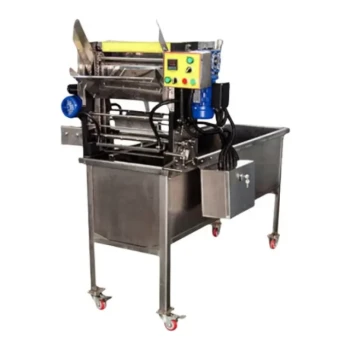
Automated honey filling machines serve as the critical bridge between raw agricultural production and industrial retail success. They enhance competitiveness by utilizing high-precision quantitative filling processes to rapidly convert bulk honey into standardized, hygiene-compliant retail packaging.
The core competitive advantage of automation lies in transforming honey from a variable agricultural product into a consistent industrial commodity. By ensuring strict weight standardization and eliminating contamination risks, these systems allow apiaries to meet the rigorous demands of global retail chains while simultaneously reducing operational costs.
Achieving Industrial Standardization
For large-scale operations, consistency is not a luxury; it is a requirement for market entry. Automated filling machines provide the technical foundation for this standardization.
Precision and Regulatory Compliance
Manual filling inevitably leads to variance in net weight. Automated machines use high-precision quantitative pumps to ensure every unit contains the exact amount of product.
This precision ensures compliance with strict food industry regulations regarding net weight labeling, protecting the business from legal liabilities and consumer complaints.
Accessing Formal Retail Channels
Large retailers, such as supermarkets and international distributors, require uniform product presentation.
By guaranteeing that every bottle is identical in weight and appearance, automated filling enables apiaries to transition from local sales to formal retail channels and global markets that demand professional-grade packaging.
Operational Efficiency and Cost Control
Competitiveness is often determined by the cost per unit. Automation fundamentally alters the economics of honey processing.
Rapid Scalability
Manual bottling limits production to the speed of human labor. Automated lines allow producers to rapidly scale production volumes to meet seasonal spikes or large export orders without needing to hire temporary staff.
Reducing Waste and Labor Costs
Automation minimizes product spillage and "giveaway" (overfilling), which are common in manual operations.
Furthermore, by drastically reducing the manual labor required for bottling, apiaries can lower their overhead costs, allowing them to maintain price competitiveness in international markets where margins are tight.
Enhancing Product Integrity
The quality of honey can be compromised during the packaging process. Automation acts as a safeguard against environmental factors.
Hygiene and Contamination Control
Manual handling introduces significant hygiene risks, including secondary contamination from human contact.
Automated systems utilize closed, sanitary lines that significantly reduce these risks, ensuring the final product meets food safety standards required for high-end certification.
Preservation and Shelf Life
Honey is hygroscopic; it absorbs moisture from the air, which can lead to fermentation and spoilage.
Industrial-grade filling machines minimize exposure to atmospheric moisture during the bottling process. This preserves the honey's natural characteristics and ensures a consistent, stable shelf life, which is critical for high-value commercial commodities.
Strategic Resource Reallocation
The impact of automation extends beyond the bottling plant and back to the hives.
Shifting Focus to Colony Health
By streamlining post-harvest processing, beekeepers can reclaim significant time and labor resources.
This time can be reallocated to core colony management tasks, such as the timely treatment of Varroa destructor mites. Improving colony health directly reduces winter mortality rates, thereby securing the raw supply chain for the next season.
Understanding the Trade-offs
While automation offers significant advantages, it introduces specific challenges that must be managed.
High Initial Capital Expenditure
Implementing industrial filling lines requires a substantial upfront investment. This capital cost raises the barrier to entry and requires a minimum production volume to achieve a return on investment (ROI).
Maintenance and Technical Complexity
Moving from manual to automated systems shifts the skill requirement from general labor to technical maintenance.
Operators must be trained to manage high-precision pumps and sealing systems. A breakdown in an automated line can halt the entire production capability, making preventative maintenance critical.
Making the Right Choice for Your Goal
To maximize competitiveness, align your equipment choice with your specific business objective.
- If your primary focus is Global Market Expansion: Prioritize machines with the highest quantitative precision and certification compliance to meet international trade standards.
- If your primary focus is Cost Reduction: Focus on high-speed lines that minimize waste and drastically lower the labor-cost-per-unit.
- If your primary focus is Product Quality: Select equipment with advanced sealing and moisture control features to prevent fermentation and spoilage.
Ultimately, automated filling is not just about packaging speed; it is the strategic lever that allows an apiary to evolve from a farm into a reliable industrial manufacturer.
Summary Table:
| Competitive Factor | Manual Process | Automated Filling Machine | Impact on Business |
|---|---|---|---|
| Consistency | High weight variance | High-precision quantitative accuracy | Ensures regulatory compliance & brand trust |
| Scalability | Limited by manual labor speed | Rapidly scalable for large export orders | Enables entry into global retail channels |
| Cost Control | High labor costs & product waste | Minimized overfilling & lower overhead | Enhances price competitiveness and ROI |
| Hygiene | Higher risk of human contamination | Closed, sanitary industrial lines | Meets strict international food safety standards |
| Resource Use | Time-intensive processing | Streamlined, automated workflow | Allows focus on colony health & hive management |
Scale Your Honey Production with HONESTBEE
At HONESTBEE, we specialize in transforming commercial apiaries into industrial leaders. Whether you are a large-scale producer or a distributor, we provide the comprehensive tools you need to dominate the market.
Our expert-grade portfolio includes:
- High-Precision Machinery: From advanced honey-filling machines to automated hive-making equipment.
- Professional Tools: A full spectrum of beekeeping hardware and essential consumables.
- Unique Value: Cultural merchandise to enhance your honey brand's appeal.
Ready to reduce waste, ensure regulatory compliance, and maximize your operational efficiency? Let us provide the technical foundation for your growth.
Contact HONESTBEE Today to Discuss Your Wholesale Needs
References
- Wali Khan, Shaista Naz. Beekeeping in Federally Administered Tribal Areas of Pakistan: Opportunities and Constraints. DOI: 10.17582/journal.sja/2017/33.3.459.465
This article is also based on technical information from HonestBee Knowledge Base .
Related Products
- Fully Automatic Honey Filling Packaging Machine for Processing Line
- Automatic Honey Filling and Filtering Machine for Beekeeping Bottle Filling
- Precision Durable Efficient HONESTBEE Rotary Honey Filling Machine
- Semi Automatic Small Honey Bottle Filling Machine Honey Filler
- Precision Automated Packaging Turntable Honey Spoon Filling Sealing Packing Machine
People Also Ask
- Why are fully automatic honey filling and packaging lines essential? Boost Your Honey's Market Value and Quality
- What is a fully-automatic honey filler? Streamline Your Production with High-Precision Automation
- How do automated honey filling and packaging machines affect profitability? Boost Margins with HONESTBEE Technology
- How do automated honey filling and packaging machines contribute to the market value of honey products? Maximize Your ROI
- How do industrial-grade automated honey filling and packaging machines mitigate the risk of physical contamination?