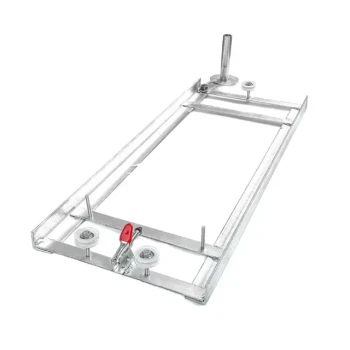
Beehive frames equipped with fixed-specification metal grids function as precise physical coordinate systems. By overlaying a standardized grid (typically 2x2 cm squares) onto the frame, researchers can accurately count the specific squares filled with newly built beeswax. This process converts the irregular, organic shapes of honeycomb construction into standardized area data, enabling a quantitative assessment of wax production efficiency.
The Core Utility
In biological research, visual estimation is unreliable. Fixed metal grids transform complex nest-building behaviors into objective statistical data, allowing for the precise calculation of production efficiency without the interference of structural variables.
Transforming Behavior into Data
The Grid as a Standardization Tool
The primary function of the metal grid is to act as a uniform overlay. Natural honeycomb construction is often uneven and difficult to measure with a simple linear ruler.
By dividing the frame into fixed units, such as 2x2 cm squares, the grid forces a biological output (wax) into a measurable geometric standard.
From Observation to Quantification
The methodology relies on a simple binary count: is the square filled or empty?
By counting the number of filled grid squares, researchers can calculate the exact total area of new wax. This metric is essential for determining production efficiency, allowing observers to track exactly how much energy a colony is converting into structural resources.
The Role of Experimental Control
Eliminating Structural Bias
To accurately measure biological differences, the physical environment must be identical.
Standardized frames ensure that all bee colonies—regardless of subspecies or population size—are working within the exact same physical space. This eliminates the possibility that variations in the hive structure itself could skew the data regarding wax production.
Enabling Comparative Analysis
Once the physical space is standardized, the resulting data becomes comparable across different groups.
Because the grid specifications are fixed, researchers can directly compare the wax building rates of different experimental groups. This is critical for studies focusing on the impact of variables such as diet, genetics, or environmental stressors on colony vitality.
Understanding the Trade-offs
Resolution vs. Efficiency
The size of the grid dictates the precision of the data. A smaller grid (like the 2x2 cm utilized for wax) offers high resolution for detecting early building activity.
However, utilizing larger grids (such as 5x5 cm, often used for brood or honey) speeds up the counting process but may lose granularity when measuring the initial, fragmented stages of wax secretion.
Manual Verification Requirements
While the grid provides a standard, it requires manual verification.
Technicians or researchers must physically inspect the frames to perform the count. Unlike automated weight sensors, this method requires hive intrusion, which must be managed carefully to avoid disrupting the very behavior being measured.
Making the Right Choice for Your Goal
To effectively utilize grid frames in your apiary management or research, consider your primary objective:
- If your primary focus is high-precision research: Utilize smaller grid specifications (2x2 cm) to capture granular data on early-stage wax production and nest-building initiation.
- If your primary focus is comparative analysis: Ensure strict adherence to identical frame manufacturing specifications to rule out environmental variables between test groups.
Ultimately, the metal grid serves as the translation layer between organic bee behavior and actionable scientific data.
Summary Table:
| Feature | Specification/Detail | Impact on Measurement |
|---|---|---|
| Grid Standard | Typically 2x2 cm squares | Converts irregular shapes into quantifiable geometric units |
| Data Type | Area-based binary count | Enables precise calculation of production efficiency |
| Structural Control | Fixed physical coordinates | Eliminates environmental bias across different test groups |
| Measurement Focus | High-resolution tracking | Captures early-stage wax secretion and building initiation |
| Primary Benefit | Standardized comparison | Allows for objective analysis of diet, genetics, and stressors |
Elevate Your Apiary Research and Productivity with HONESTBEE
At HONESTBEE, we specialize in empowering commercial apiaries and distributors with the high-precision tools necessary for modern beekeeping. From specialized beehive-making and honey-filling machinery to high-quality beekeeping tools and consumables, our comprehensive wholesale offering is designed to streamline your operations and enhance data accuracy.
Whether you are conducting rigorous biological research or scaling a commercial honey enterprise, our portfolio of hardware and cultural merchandise provides the professional edge you need. Partner with an industry leader to secure premium equipment at scale.
Contact HONESTBEE Today to Discuss Your Wholesale Needs
References
- Renata Leonardo Lomele, Ricardo de Oliveira Orsi. Essential Oils in Beeswax Production by <i>Apis mellifera</i>. DOI: 10.1080/0972060x.2016.1141064
This article is also based on technical information from HonestBee Knowledge Base .
Related Products
- Professional Galvanized Steel Frame Rest for Beehives
- Stainless Steel Bee Hive Frame Wire for Beekeeping
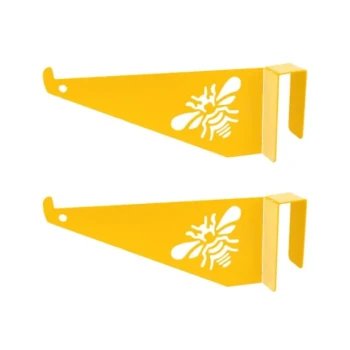
- Heavy Duty Laser Cut Bee Design Metal Frame Perch
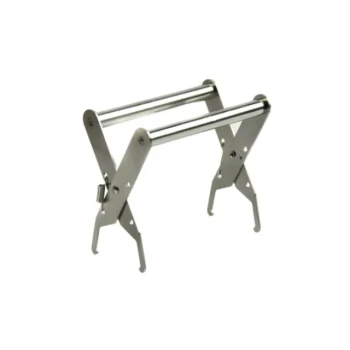
- Heavy-Duty Stainless Steel Clip-On Frame Perch
- Assembled Wooden Bee Frames with Plastic Foundation for Durability and Convenience by HONESTBEE
People Also Ask
- What are the standard dimensions for frame rests in a beehive? Essential Guide for Perfect Bee Space
- How does balancing the number of frames impact hive productivity? Optimize Your Apiary's Biological Output
- What are the main considerations when choosing between wooden and plastic bee hive frames? Optimize Your Apiary's Efficiency
- How do wooden and plastic hive frames compare in terms of durability? Wood vs. Plastic Longevity & Repairability
- What are the main types of beehive frames used in modern beekeeping? Find the Perfect Fit for Your Apiary