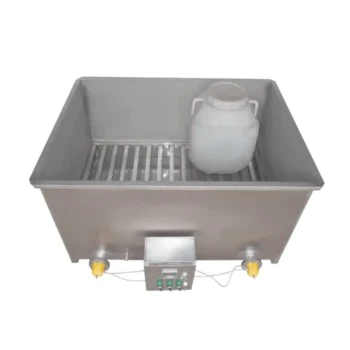
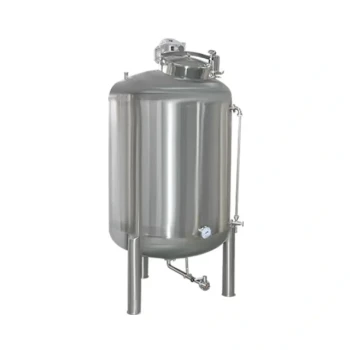
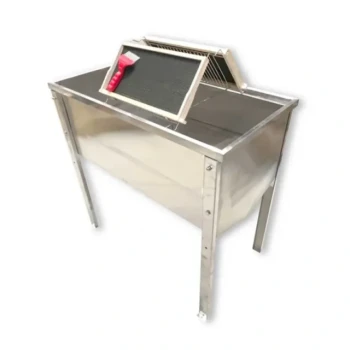
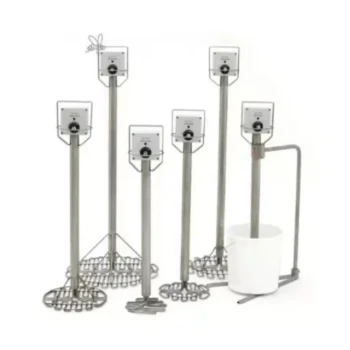
High-precision filtering equipment and honey settling tanks serve as the critical primary processing stage, designed to effectively remove wax debris, organic impurities, and trapped air bubbles from the raw harvest. This physical purification process significantly enhances the honey's visual clarity and extends its shelf life while ensuring the product meets the stringent food hygiene standards required for formal commercial markets.
By systematically removing physical contaminants and crystallization nuclei, these tools transform raw hive products into stable, visually appealing retail goods without altering the honey's core chemical properties.
The Mechanics of Purification
Removal of Solid Impurities
Raw honey often contains contaminants introduced during harvesting, such as wax fragments, bee parts, larval debris, and airborne dust. High-precision filtration systems utilize multi-stage stainless steel screens or microporous media to physically isolate and eliminate these particles.
Elimination of Air Bubbles
During the extraction process, air is often whipped into the honey. Settling tanks allow for gravity sedimentation, giving the honey the necessary "standing time" for these air bubbles to rise and separate naturally. This results in a dense, uniform liquid free of unsightly foam.
Enhancing Stability and Shelf Life
Preventing Premature Crystallization
Microscopic impurities and suspended matter often act as nuclei—starting points for sugar crystals to form. By removing these fine particles, filtration equipment removes the physical triggers for solidification.
Extending Liquid Viability
The reduction of these impurity nuclei significantly extends the liquid shelf life of the honey. This ensures the product remains in a stable, pourable state for a longer period, which is essential for inventory management and consumer satisfaction.
Driving Commercial Value
Achieving Visual Brilliance
The combined effect of sedimentation and multi-stage filtration removes microscopic suspended matter that causes cloudiness. This results in a product that is clear, transparent, and visually appealing, meeting the sensory requirements of high-end retail markets.
Ensuring Regulatory Compliance
To compete in formal markets, honey must meet specific purity and hygiene standards. Using industrial-grade filtration ensures that mechanical impurities and biological residues are removed, positioning the product as a safe, high-grade food item suitable for broad distribution.
Operational Considerations
The Factor of Time
While filtration is an active process, settling tanks rely on gravity and time. Producers must factor in sufficient standing time for clarification to occur; rushing this stage can compromise the final clarity and density of the bottled product.
Making the Right Choice for Your Goal
To maximize the value of your processing equipment, align your protocol with your market targets:
- If your primary focus is High-End Retail: Prioritize multi-stage filtration to achieve maximum transparency and delay crystallization, as visual appeal is a primary driver for shelf sales.
- If your primary focus is Market Access: Ensure your equipment serves as a critical control point for hygiene, removing all visible contaminants to meet basic food safety regulations.
Effective processing is not just about cleaning honey; it is about stabilizing your product to secure its value in a competitive marketplace.
Summary Table:
| Processing Phase | Equipment | Key Function | Impact on Quality |
|---|---|---|---|
| Solid Removal | High-Precision Filters | Eliminates wax debris, bee parts, and dust | Ensures purity and hygiene compliance |
| Clarification | Settling Tanks | Gravity-based removal of air bubbles and foam | Produces a dense, uniform liquid texture |
| Stabilization | Multi-stage Systems | Removes crystallization nuclei (fine particles) | Extends liquid shelf life and pourability |
| Visual Polish | Micro-filtration | Removes microscopic suspended matter | Achieves high-end transparency and brilliance |
Elevate Your Honey Production with HONESTBEE
At HONESTBEE, we understand that premium honey quality begins with superior processing. We offer a comprehensive suite of beekeeping tools, machinery, and industrial-grade equipment specifically designed for commercial apiaries and global distributors. From high-precision filtration systems and honey-filling machines to specialized hive-making hardware, our solutions empower you to meet the strictest food safety standards while maximizing the market value of your harvest.
Ready to scale your honey processing or expand your wholesale inventory? Partner with an industry leader who supplies everything from essential consumables to heavy-duty machinery.
Contact HONESTBEE Today to Discuss Your Wholesale Needs
References
- Cristina Bianca Pocol, Molly M. McDonough. Women, Apiculture and Development: Evaluating the Impact of a Beekeeping Project on Rural Women’s Livelihoods. DOI: 10.15835/buasvmcn-hort:11423
This article is also based on technical information from HonestBee Knowledge Base .
Related Products
- Stainless Steel Honey Storage and Settling Tank with Double Strainer
- Stainless Steel Honey Storage Tank with Lid for Honey
- Heavy Duty Stainless Steel Honey Processing Machine Decrystallizing Tank
- Professional Honey Storage Tank with Agitation System
- Stainless Steel Heated Honey Tank Warming Heating Tank
People Also Ask
- What economic role do honey storage tanks play? Boost Your Revenue Through Strategic Inventory Management
- What roles do industrial honey storage tanks and filtration meshes play in processing? Ensure Purity & Consistency
- What is the purpose of a honey storage tank? Streamline Your Honey Processing for Quality & Efficiency
- What role do settling tanks play in honey production? Achieve Pure, High-Clarity Honey Naturally
- Why are large settling tanks used in the honey clarification process? Achieve Natural Purity & Batch Consistency