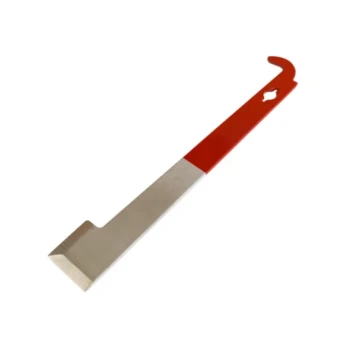
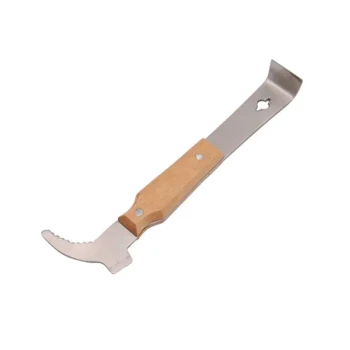
High-quality beekeeping inputs act as a catalyst for environmental conservation by stabilizing farmer livelihoods. By utilizing professional tools and advanced protective gear, these inputs significantly reduce operational risks and increase honey production success rates. This economic stability creates a direct financial incentive for farmers to preserve the surrounding forest vegetation as a critical resource, rather than clearing it for destructive agricultural practices.
The connection between equipment and ecology is fundamentally economic. Advanced beekeeping tools ensure reliable income, transforming the forest from potential farmland into a valuable, permanent asset that farmers are motivated to protect.
Reducing Operational Barriers
Lowering Risk and Difficulty
Beekeeping is traditionally a high-skill, high-risk endeavor. High-quality inputs, such as professional-grade protective suits and ergonomic tools, drastically lower the difficulty of managing hives.
Increasing the Success Rate
When farmers are protected and equipped with the right tools, their operational efficiency improves. This leads to a higher success rate in maintaining healthy colonies and harvesting honey, preventing the frustration that often leads to project abandonment.
The Economic Incentive Structure
Creating Stable Returns
The primary driver for ecological protection in this model is a stable and robust economic return. Professional inputs are essential for achieving the productivity levels required to make beekeeping a primary income source.
Shifting Land-Use Priorities
When beekeeping becomes profitable, the forest acquires new value. Farmers stop viewing the land as space to be cleared for crops and start viewing it as a necessary honey source.
Discouraging Destructive Practices
This economic shift disincentivizes destructive agricultural practices, such as slash-and-burn farming. The forest becomes more profitable standing than cut down.
Ecological Outcomes
Protecting Forest Vegetation
Because the bees rely on local flora to produce honey, the farmers become the forest's guardians. The use of advanced equipment directly supports the retention of native vegetation to ensure a continuous yield.
Restoring Degraded Regions
Beyond mere protection, this model supports active restoration. By making the ecosystem the engine of their economy, communities are motivated to support biodiversity conservation and rehabilitate ecologically degraded regions to expand their beekeeping capacity.
Understanding the Trade-offs
Initial Cost Barriers
While high-quality inputs drive success, they represent a significant upfront investment. If the cost of professional gear is too high for local farmers, the barrier to entry may prevent the adoption of this eco-friendly model without external subsidies.
Maintenance and Supply Chain Dependency
Advanced equipment often requires specific maintenance or replacement parts that may not be locally available. Reliance on high-tech inputs can create a dependency on external supply chains, whereas traditional methods are often self-sustaining.
Making the Right Choice for Your Goal
To maximize the ecological benefits of agroforestry beekeeping, consider the following approach:
- If your primary focus is Economic Stability: Prioritize investment in protective gear to minimize sting incidents and maximize the working hours farmers can dedicate to hive maintenance.
- If your primary focus is Ecological Restoration: Ensure that the introduction of high-quality tools is paired with education on the direct link between forest density and honey yields.
Investing in the right tools does not just upgrade the beekeeper; it upgrades the economic value of the entire ecosystem.
Summary Table:
| Key Input Category | Role in Ecological Protection | Impact on Sustainability |
|---|---|---|
| Professional Protective Gear | Reduces operational risk and farmer fear | Ensures long-term project participation |
| Ergonomic Beekeeping Tools | Increases hive management efficiency | Higher honey yields and economic stability |
| Advanced Hive Machinery | Supports large-scale honey production | Transforms forests into high-value assets |
| Quality Consumables | Maintains colony health and vitality | Prevents forest clearing for alternative farming |
Elevate Your Beekeeping Operation with HONESTBEE
At HONESTBEE, we understand that high-quality inputs are the foundation of both profitable beekeeping and environmental stewardship. We cater specifically to commercial apiaries and distributors, providing a comprehensive wholesale range of professional beekeeping tools, hive-making machinery, and honey-filling equipment.
Whether you are looking to supply large-scale ecological projects or expand your distribution portfolio, our hardware and industry consumables ensure reliable performance and maximum honey yield. Let us help you transform beekeeping into a powerful driver for conservation and economic growth.
Contact HONESTBEE Today to Discuss Your Wholesale Needs
References
- Willickister R. Kadigi, Reuben M. J. Kadigi. Economic Viability of Smallholder Agroforestry and Beekeeping Projects in Uluguru Mountains, Tanzania: A Cost Benefit Analysis. DOI: 10.4236/ojf.2021.112007
This article is also based on technical information from HonestBee Knowledge Base .
Related Products
- HONESTBEE 15-in-1 Beekeeper Multi-Tool with Hammer and Pliers for Beekeeping
- Stainless Steel J Hook Hive Tool for Beekeeping
- Stainless Steel Queen Grafting Tool for Beekeeping and Bee Queen Grafting
- Multi-Function Plier-Style Frame Grip Hive Tool
- HONESTBEE Professional Mini J-Hook Hive Tool for Beekeeping
People Also Ask
- What is the recommended method for storing beekeeping tools? Expert Vertical Storage Solutions for Your Apiary
- How does a favorable microclimate interact with beekeeping tools? Boost Overwintering Success and Equipment Longevity
- Why is the treatment of beekeeping tools with high-concentration chemical disinfectants necessary for preventing AFB?
- Why are specialized beekeeping tools and consumables essential? Enhance Colony Management and Honey Yield Today
- Why design beekeeping tools with ergonomics in mind? Empowering All Beekeepers with Inclusive Equipment