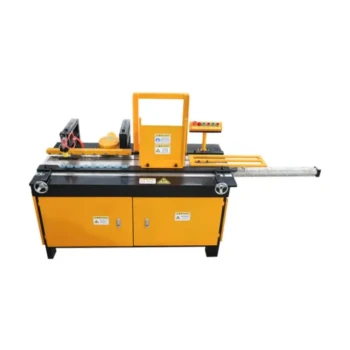
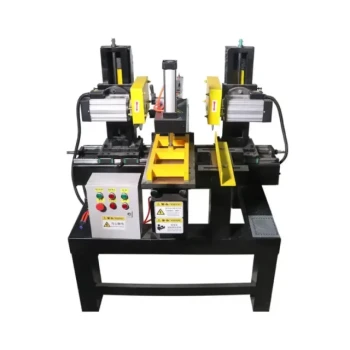
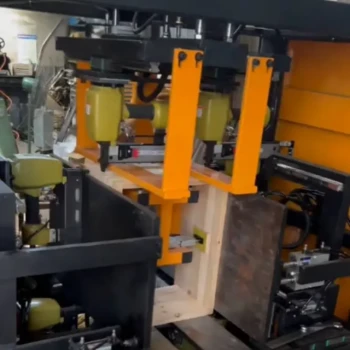
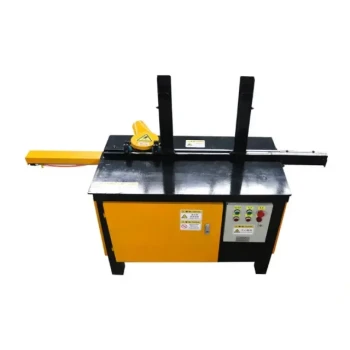
Hive-making machines support scientific studies by mass-producing standardized hives with uniform specifications. This mechanical precision ensures that every colony inhabits an identical physical structure, allowing researchers to isolate genetic variables by minimizing environmental differences that could otherwise skew data on colony development.
By eliminating structural variations between hives, machine-produced components create a reliable "control" baseline across large-scale apiaries. This allows scientists to attribute differences in bee performance directly to lineage or genetics rather than inconsistencies in their physical housing.
Creating a Controlled Scientific Environment
Minimizing Environmental Variables
In scientific population studies, the physical environment must remain constant to generate valid data. Hand-built hives often introduce minor structural irregularities, such as gaps or uneven insulation, which create micro-climates that affect colony health.
Hive-making machines eliminate these inconsistencies. They produce uniform wooden components that ensure every test colony experiences the same internal conditions, effectively removing housing quality as a variable.
Controlling Airflow and Humidity
Scientific studies often track how different lineages manage hive atmosphere. Machine-processed components facilitate optimized internal airflow and humidity management.
Because the structures are optimized for specific bee species, researchers can be confident that respiratory or humidity-related stress is not a result of construction defects, but rather a biological response to be measured.
Reducing Parasitic Interference
Data regarding colony survival rates can be compromised if hives have structural vulnerabilities. Industrial-grade machinery ensures tight wood joints and high structural precision.
This precision creates a stable physical barrier against robbing bees and parasites. Furthermore, it allows for the effective use of specialized hardware, such as queen excluders and Varroa mite control protocols, ensuring that disease data reflects the colony's natural resistance rather than the hive's physical failure.
Operational Consistency for Large-Scale Sampling
Enabling Compartmentalized Management
Large-scale studies often require the separation and tracking of specific honeybee lineages. Machine-produced hives facilitate the compartmentalized management of these distinct groups.
By providing consistent operational units, researchers can segregate different genetic lines into identical housing setups. This makes it possible to run side-by-side comparisons of different lineages without the interference of unique hive quirks.
Ensuring Data Comparability
The ultimate goal of population studies is to generate data on genetic variation that is scientifically comparable. If hives vary in size or "bee space," population growth metrics become unreliable.
Machine standardization ensures that every frame and box body has perfectly consistent dimensions. This universality guarantees that data collected from Colony A can be directly and accurately compared to data from Colony B, regardless of where they are located in the apiary.
Streamlining Inspection Workflows
Scientific sampling requires frequent, repetitive inspections. Standardized components allow for complete interchangeability between hives.
This simplifies the logistics of inspecting thousands of colonies. Researchers can replace components or migrate colonies without disrupting the experiment, ensuring that the sampling process itself does not introduce undue stress or variables into the population.
Understanding the Trade-offs
The Cost of Precision
While standardization is critical for science, achieving it requires a significant investment in specialized, industrial-grade machinery.
For smaller operations or casual studies, the high capital cost of these machines may outweigh the benefits of micro-precision. The value is most realized in large-scale commercial contexts where data integrity is paramount.
Design Rigidity
Standardization implies a commitment to a single design specification. If the initial hive design is flawed or ill-suited to a specific local climate, the machine will replicate that flaw across every single unit.
This "systemic error" can be detrimental to a study. It creates a scenario where every colony suffers from the same structural deficiency, potentially masking the true performance potential of the bee populations.
Making the Right Choice for Your Research
To effectively leverage hive-making technology for scientific goals, consider your specific data requirements:
- If your primary focus is genetic research: Prioritize machines that guarantee strict dimensional consistency to ensure that any variation in performance is strictly biological.
- If your primary focus is disease resistance: Ensure the machinery produces tight, high-precision joints to eliminate structural entry points for parasites, acting as a baseline for valid immunological studies.
- If your primary focus is large-scale sampling: Focus on equipment interchangeability to streamline the manual labor of data collection across thousands of units.
Standardization is not just about manufacturing efficiency; it is the prerequisite for treating the apiary as a legitimate scientific laboratory.
Summary Table:
| Feature | Impact on Scientific Studies | Benefit to Researchers |
|---|---|---|
| Dimensional Uniformity | Eliminates physical housing as a variable | Isolates genetic traits & lineage performance |
| High-Precision Joints | Prevents parasitic entry & micro-climate leaks | Ensures data reflects biological resistance |
| Standardized Bee Space | Guarantees consistent internal volume | Enables accurate population growth comparisons |
| Component Interchangeability | Facilitates seamless colony migration/replacement | Streamlines large-scale sampling & inspection |
Elevate Your Apiary's Scientific Integrity with HONESTBEE
At HONESTBEE, we understand that for commercial apiaries and distributors, precision is the foundation of success. Our industrial-grade hive-making machines and honey-processing equipment are designed to deliver the rigorous standardization required for large-scale population studies and genetic research.
Why partner with HONESTBEE?
- Wholesale Excellence: We provide a full spectrum of beekeeping tools, specialized hardware, and essential consumables.
- Precision Engineering: Our machinery ensures every hive is a perfect 'control' unit, eliminating environmental noise from your data.
- Comprehensive Solutions: From honey-filling machines to honey-themed cultural merchandise, we support every facet of your business.
Ready to transform your apiary into a precision laboratory? Contact us today to explore our wholesale offerings and see how we can help you scale your operations with scientific accuracy.
References
- Julio Chávez‐Galarza, Héctor V. Vásquez. Mitochondrial DNA Variation in Peruvian Honey Bee (Apis mellifera L.) Populations Using the tRNAleu-cox2 Intergenic Region. DOI: 10.3390/insects12070641
This article is also based on technical information from HonestBee Knowledge Base .
Related Products
- High-Efficiency Pneumatic Bee Hive Making Machine for Rapid Box Assembly
- Mini Desktop Bee Hive Frame Forming Making Machine
- Beehive Handle and Frame Rest Cutting Machine: Your Specialized Hive Machine
- Beehive Machine Double End Saw for Precision Hive Component Manufacturing
- Automatic High-Speed Bee Hive Box Stapling Machine
People Also Ask
- How does the introduction of professional beehive-making machinery benefit sustainable beekeeping? Scale Your Apiary
- Why is specialized beehive-making machinery critical for low-defense breeding? Enhance Selection with Precision Tools
- How does the introduction of specialized beehive making machinery contribute to increasing the scale of regional beekeeping industries?
- What is the importance of specialized beehive making machinery in a circular bio-economy? Build Local Sustainability
- Why is specialized beehive-making machinery essential? Scale Your Apiary with Precision Industrial Standards