Honey yield is the primary equipment-selection variable: Apis mellifera generally produces far more marketable honey per colony than Apis cerana, so commercial operations using A. mellifera need larger, standardized movable-frame hives, additional honey supers, and higher-throughput extraction equipment. A. cerana operations can often use smaller, lighter, and more adaptable equipment because colony output is lower, although local terrain and the species’ stronger swarming and absconding behavior are equally important.
The higher the expected yield per colony, the more important standardized capacity, frame stability, and processing throughput become. Langstroth-style equipment is usually the stronger commercial choice for A. mellifera, while A. cerana may justify smaller box systems or modified movable-frame equipment where lower output, rugged terrain, and lower capital costs matter more.
Why Yield Changes the Equipment Decision
A. mellifera requires more hive capacity
A. mellifera colonies commonly produce approximately 25–40 kg of honey per colony per year, depending on forage, climate, management, and whether the colony is stationary or migratory.
That output requires hive bodies and honey supers with enough frame capacity to prevent congestion during strong nectar flows. Distributors should therefore prioritize compatible deep boxes, shallow or medium supers, precision-cut frames, bottom boards, inner covers, and roofs as a coordinated equipment system.
A. cerana can operate with smaller capacities
A. cerana produces substantially less honey per colony under comparable conditions. Reported yields vary widely by environment, with low figures in some cavity-nesting systems and higher yields in productive plains or hill regions.
This lower and more variable output reduces the need for high-capacity supers and industrial-scale extraction equipment at the individual-colony level. Smaller box hives, lightweight components, and flexible frame configurations may be more practical for forest, mountain, or smallholder operations.
Yield determines processing throughput
A. mellifera apiaries accumulate enough honey to make processing speed a commercial constraint. They may need high-capacity radial or tangential extractors, uncapping equipment, settling tanks, filters, pumps, and automated or semi-automated filling systems.
A. cerana operations may be adequately served by compact extractors and manual uncapping tools, particularly where colonies are dispersed or honey is harvested in smaller batches. Equipment should be sized for the total apiary output, not simply the number of hives.
Why Standardized Hives Matter Most for A. mellifera
Movable frames support repeatable management
Standardized movable-frame wooden hives allow beekeepers to inspect brood, replace damaged comb, add supers, and harvest honey without destroying the nest structure.
This is essential when each colony represents a relatively high-volume production unit. It also lets commercial operators use the same frames, boxes, hive tools, transport equipment, and extraction machinery across a large apiary.
Langstroth dimensions support scalability
Langstroth hives are widely used for A. mellifera because their standardized dimensions support top-lifting frames and a controlled bee space of approximately 8 mm. Correct spacing helps limit crushed bees and unwanted cross-comb.
For wholesalers and resellers, dimensional consistency is a core commercial requirement. Frames, foundation, hive bodies, queen excluders, inner covers, and supers must be compatible across batches and suppliers.
A. cerana equipment can be more localized
A. cerana is traditionally kept in log hives or smaller wooden box systems adapted to local conditions. These systems may be appropriate where transport is difficult, colonies are smaller, or beekeepers prioritize low capital expenditure.
However, movable-frame A. cerana hives can still provide inspection and harvesting advantages. The correct choice depends on local hive dimensions, colony behavior, beekeeper practices, and whether the operation has access to compatible extraction equipment.
Equipment Requirements Beyond Box Size
Colony population affects frame and box capacity
A. mellifera colonies can reach approximately 40,000–60,000 bees during strong nectar flows, while A. cerana colonies are often smaller. Larger A. mellifera populations need more brood space, more comb capacity, and stronger frames that remain stable during inspection and extraction.
This difference affects the full equipment package, including hive-body depth, frame count, foundation strength, handles, stands, and transport crates.
Propolis affects hardware durability
A. mellifera actively uses propolis to seal gaps. This helps weatherproof the hive but can glue frames, covers, and boxes together.
Commercial A. mellifera equipment should therefore be durable and easy to separate with robust hive tools. Strong joints, reliable handles, replaceable components, and surfaces that tolerate repeated scraping reduce downtime during inspections.
A. cerana requires attention to hive sealing
A. cerana generally uses less propolis to seal hive gaps. Equipment for this species should therefore provide good dimensional fit and weather resistance through construction quality rather than relying on the colony to close openings.
This matters particularly in humid, cool, or mountainous environments where poorly sealed boxes can increase stress and maintenance requirements.
Behavior influences the value of standardization
A. cerana has stronger tendencies toward swarming, absconding, and robbing, especially when forage or environmental conditions become unfavorable. Equipment that supports rapid inspection, secure entrances, easy relocation, and quick colony assessment can be more valuable than simply increasing box volume.
A. mellifera is generally more predictable in standardized commercial systems, making mechanized inspection and harvesting easier to justify at scale.
Matching Equipment to the Operating Environment
Open agricultural areas favor higher-capacity systems
A. mellifera performs particularly well where forage is concentrated, such as irrigated crop fields, fruit orchards, and large flowering plantations.
In these settings, distributors should offer complete high-capacity packages: standardized hive boxes, multiple supers, migratory pallets or stands, durable frames, queen excluders, and extraction and filling equipment sized for peak production.
Rugged terrain favors lighter equipment
A. cerana can perform reliably in forests, varied plantation landscapes, and temperate or mountainous regions. These operations may require equipment that is easier to carry, repair, and reposition.
Lightweight wooden boxes, compact extractors, secure roofs, weather-resistant components, and adaptable stands may provide more practical value than industrial automation.
Forage should determine inventory planning
Yield estimates should not be based on species averages alone. Nectar availability, seasonal flow length, colony strength, altitude, rainfall, disease pressure, and migratory practices can change the required equipment capacity substantially.
A supplier serving multiple regions should offer modular equipment rather than a single hive configuration. Modular boxes and interchangeable frames let customers scale capacity as colony productivity becomes clearer.
Understanding the Trade-offs
Higher yield brings higher equipment investment
A. mellifera offers greater commercial output, but the apiary usually requires more capital in hives, supers, frames, feeding supplies, pest-control products, transport, and processing machinery.
Its lower tendency to abscond and its suitability for standardized management can improve operational predictability, but the equipment must be maintained and used correctly to realize those benefits.
Lower yield does not mean zero equipment complexity
A. cerana may require less initial investment, but its behavior can create management and replacement costs. Swarming and absconding can reduce the return on equipment if colonies leave before the harvest.
A. cerana equipment should therefore emphasize secure construction, rapid inspection, adaptable hive placement, and practical maintenance rather than maximum storage volume.
Avoid sizing equipment from headline yield figures
The references provide materially different yield estimates for both species. This is expected because yield depends heavily on region, forage, colony strength, management, and measurement method.
For procurement, use a planning range and local production records instead of treating a single figure as universal. The commercially relevant question is how much honey the apiary must process during its peak flow, not only the species’ theoretical annual average.
Do not mix incompatible dimensions
Standardization only creates efficiency when components actually match. Frames, hive bodies, queen excluders, covers, and extraction baskets must use compatible dimensions and tolerances.
For distributors and B2B resellers, clear specification sheets, sample validation, quality control, and rapid replacement of dimensional defects are as important as the product range itself.
Making the Right Choice for Your Goal
The best commercial package combines species, environment, expected yield, and processing volume in one equipment plan.
- If your primary focus is maximum honey output: Prioritize standardized A. mellifera-compatible Langstroth equipment, ample supers, strong movable frames, and high-throughput extraction and filling machinery.
- If your primary focus is low initial investment: Consider smaller A. cerana box systems or locally compatible movable-frame hives with compact extraction equipment.
- If your primary focus is migratory or large-scale production: Select dimensionally standardized boxes, reinforced frames, transport-ready hive bases, and modular supers that support rapid inspection and expansion.
- If your primary focus is mountain or forest beekeeping: Favor lightweight, durable, weather-resistant equipment that can be moved and maintained easily in difficult terrain.
- If your primary focus is reliable supply for resale customers: Maintain a full range of compatible hive components, clearly document dimensions, and support orders with responsive technical service and fast fulfillment.
Select equipment around the colony’s expected production and operating environment, because the right capacity improves both harvest efficiency and the economic return on every hive.
Summary Table:
| Factor | Apis mellifera (European) | Apis cerana (Asian) |
|---|---|---|
| Honey yield per colony | 25–40 kg/year, higher potential | Lower, variable (e.g., 10–20 kg/year) |
| Colony size | 40,000–60,000 bees, larger populations | Smaller colonies |
| Hive type | Standardized Langstroth, movable frames | Smaller box hives, local designs |
| Equipment capacity | Large boxes, multiple supers, high-throughput extraction | Compact extractors, manual tools |
| Propolis use | High, seals gaps but complicates equipment | Less, need precise-fitting components |
| Behavior | Less swarming/absconding, predictable in standardized systems | Stronger swarming/absconding, needs secure, adaptable equipment |
| Best environment | Open fields, orchards, large forage | Forests, mountains, rugged terrain |
| Investment level | Higher capital required | Lower initial investment |
Ready to optimize your beekeeping operation? HONESTBEE supplies a full spectrum of beekeeping equipment—from Langstroth hives and honey-processing machinery to compact solutions for native bees. As a trusted B2B partner for distributors and commercial apiaries, we offer OEM/ODM support, rapid response, and ultra-fast delivery. Ensure supply reliability and boost your margins—contact our experts today for tailored wholesale solutions!
Related Products
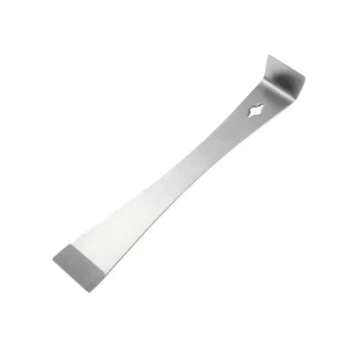
- HONESTBEE Classic Pry Bar Hive Tool with High Visibility Finish for Beekeeping
- Professional Stainless Steel Pry-Bar Hive Tool
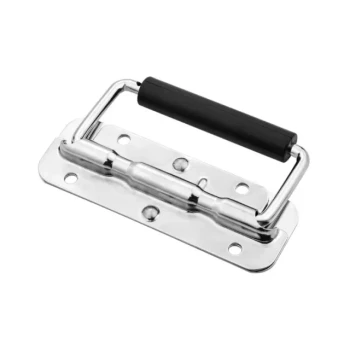
- Ergonomic Two Person Foldable Hive Lifter
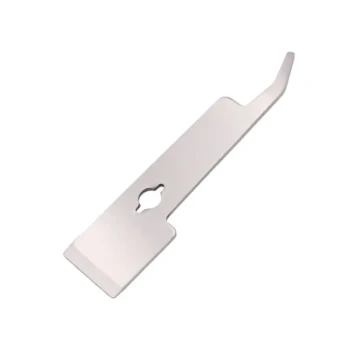
- HONESTBEE Professional Long Handled Hive Tool with Precision Cutting Blade
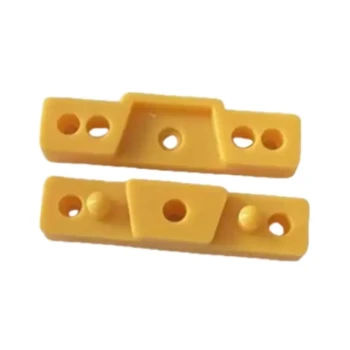
- Durable Plastic Interlocking Hive Connector for Beekeeping
People Also Ask
- What specific challenges do beekeeping hive tools address during hive maintenance? Essential Solutions for Apiaries
- Why are specialized beekeeping tools essential for executing colony health monitoring processes? Enhance Hive Precision
- What are some essential tools for beekeepers? Start Your Apiary with the Right Gear
- What are the essential tools and gear for basic beekeeping? Equip Your Apiary for Success and Safety
- What is the purpose of adding crystalline soda when disinfecting beekeeping tools? Boost Sterilization Efficiency