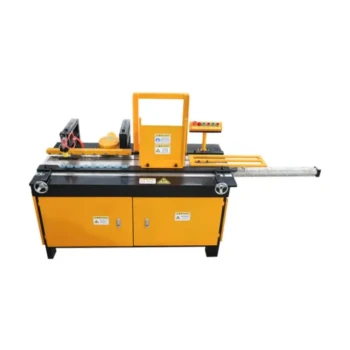
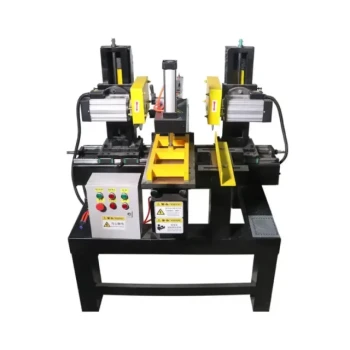
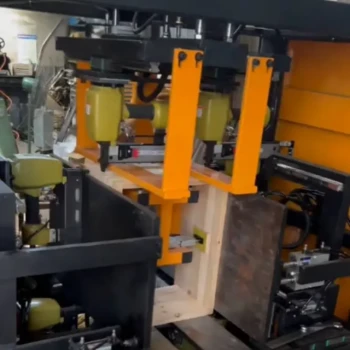
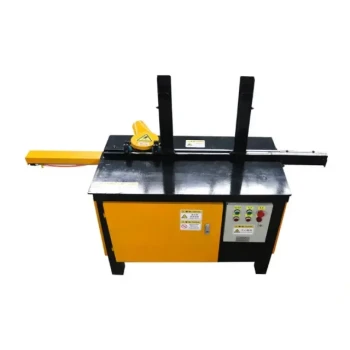
Industrial hive-making machines serve as the foundational infrastructure for modern apiary scalability. By utilizing high-precision woodworking technology, these machines ensure that every hive component—specifically honey frames and supers—maintains exact dimensions and structural durability. This rigorous standardization creates seamless interchangeability across different apiaries, which is the primary driver for enhancing operational efficiency and supporting regional production strategies.
The transition from traditional to industrial beekeeping relies on the elimination of variability. By ensuring absolute precision in manufacturing, these machines unlock the ability to mechanize management tasks, stabilize colony health, and significantly reduce the long-term capital costs required for rapid expansion.
The Operational Mechanics of Scale
Achieving Absolute Interchangeability
The primary barrier to scaling an apiary is hardware inconsistency. Industrial machines utilize high-precision cutting to guarantee that internal dimensions and frame specifications are perfectly uniform.
This interchangeability allows beekeepers to move frames between different hives without friction. It simplifies complex biological management tasks—such as colony splitting, merging, and pest inspections—that become logistically impossible to perform manually at scale.
Enabling Mechanized Workflows
Standardization is a prerequisite for moving beyond manual, small-scale methods. When physical specifications remain consistent, apiaries can transition to professional management of 150 or more bee colonies.
Uniform components also facilitate the integration of automated honey collection systems. Precise joinery ensures that hives fit seamlessly into processing lines, streamlining transportation and significantly reducing operational losses during extraction.
Economic and Logistical Advantages
Reducing Long-Term Capital Costs
While the machinery represents an investment, it lowers the unit cost of hive production over time. The production of standardized hardware can shorten the capital recovery period to approximately two years.
Furthermore, owning this machinery allows for in-house manufacturing customized to local specifications. This reduces reliance on external vendors, cutting logistics and procurement costs significantly.
Enhancing Asset Resilience
Large-scale operations face risks from pests or environmental collapse. In-house production capacity ensures a rapid supply of new hives during recovery phases.
This ability to quickly manufacture replacement hardware enhances self-sufficiency. It ensures that operations can bounce back quickly from colony losses without waiting on supply chains.
Biological Impacts of Precision
Improving Colony Health and Survival
Precision manufacturing does more than fit frames together; it ensures superior sealing performance. Airtight components help regulate internal temperature and humidity, which directly improves bee survival rates.
Disease and Pest Prevention
High-precision molding prevents structural gaps where pests often enter. This creates a secure environment that reduces the incidence of colony diseases.
This level of structural integrity provides the infrastructure necessary to meet strict industry standards, including those required for organic certification in commercial beekeeping.
Understanding the Trade-offs
The Threshold for Efficiency
While these machines offer immense value, they are designed for volume. The efficiency gains are most realized when transitioning from traditional methods to managing 150+ colonies. For smaller operations, the benefits of such high-throughput machinery may not outweigh the initial setup complexity.
Maintenance of Precision
To maintain the "high-precision" output required for interchangeability, the machinery itself demands professional maintenance. If the equipment falls out of calibration, the resulting non-standard components can disrupt the entire automated workflow, negating the benefits of the system.
Making the Right Choice for Your Goal
To determine if industrial hive-making machinery is the right step for your operation, consider your immediate strategic objectives:
- If your primary focus is Rapid Scaling: Prioritize the machine’s ability to produce interchangeable frames to simplify splitting and merging colonies across multiple sites.
- If your primary focus is Cost Control: Leverage the machinery for in-house production to reduce logistics costs and target a capital recovery period of two years.
- If your primary focus is Asset Security: Utilize the manufacturing capacity to create a stockpile of standardized components for rapid recovery after environmental or pest-related losses.
Standardization is not just a manufacturing detail; it is the operational lever that turns beekeeping from a craft into an industry.
Summary Table:
| Key Feature | Impact on Scaling | Commercial Benefit |
|---|---|---|
| High-Precision Joinery | Absolute interchangeability of frames/supers | Simplified colony management & splitting |
| Standardized Dimensions | Enables mechanized workflows (150+ colonies) | Reduced labor costs & extraction losses |
| In-house Production | Faster manufacturing of replacement hardware | 2-year capital recovery & supply chain independence |
| Airtight Sealing | Superior temperature & humidity regulation | Improved survival rates & organic compliance |
Scale Your Apiary with Industrial Precision
Transitioning from craft beekeeping to a large-scale commercial industry requires the right infrastructure. HONESTBEE empowers commercial apiaries and distributors with the high-precision machinery needed to dominate the market.
From industrial hive-making and honey-filling machines to a full spectrum of specialized beekeeping tools and essential consumables, we provide the end-to-end hardware solutions you need to ensure operational efficiency and asset resilience.
Ready to reduce your costs and accelerate expansion?
Contact HONESTBEE today to discuss your wholesale equipment needs.
References
- Anastasiya Osokina, Lidiya Kolbina. The ecological and biological characteristics of honey plants of the Udmurt Republic. DOI: 10.32417/1997-4868-2024-24-07-896-908
This article is also based on technical information from HonestBee Knowledge Base .
Related Products
- High-Efficiency Pneumatic Bee Hive Making Machine for Rapid Box Assembly
- Beehive Handle and Frame Rest Cutting Machine: Your Specialized Hive Machine
- Beehive Machine Double End Saw for Precision Hive Component Manufacturing
- Mini Desktop Bee Hive Frame Forming Making Machine
- Automatic High-Speed Bee Hive Box Stapling Machine
People Also Ask
- How does the introduction of professional beehive-making machinery benefit sustainable beekeeping? Scale Your Apiary
- Why is specialized beehive-making machinery critical for low-defense breeding? Enhance Selection with Precision Tools
- How does the introduction of specialized beehive making machinery contribute to increasing the scale of regional beekeeping industries?
- What is the importance of specialized beehive making machinery in a circular bio-economy? Build Local Sustainability
- Why is specialized beehive-making machinery essential? Scale Your Apiary with Precision Industrial Standards