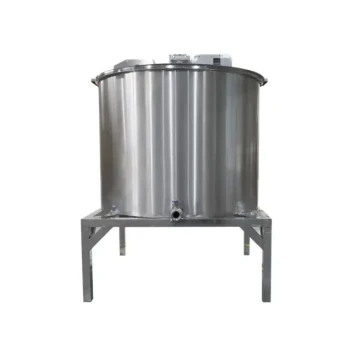
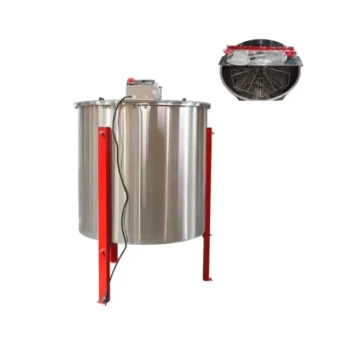
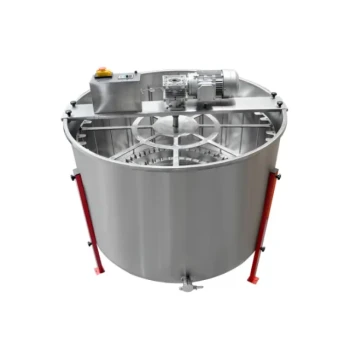
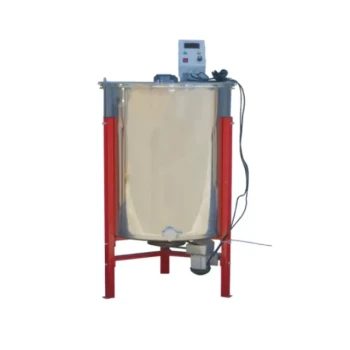
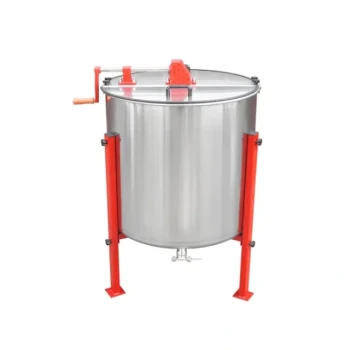
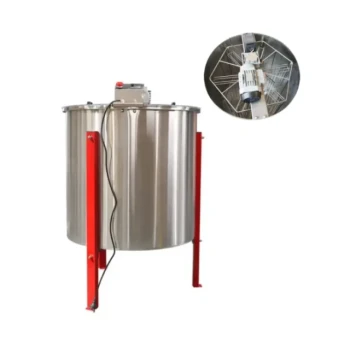
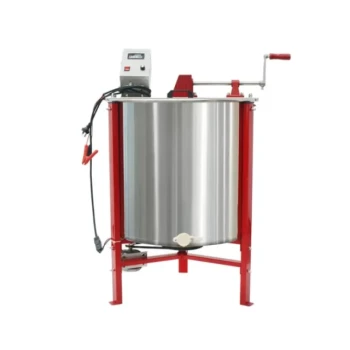
Industrial honey extractors and automatic uncapping machines fundamentally transform commercial beekeeping by shifting the extraction process from a labor-intensive craft to a high-speed, standardized industrial workflow. These technologies allow operations to dramatically increase the number of hives a single operator can manage, accelerating the transition of raw honeycomb into marketable product.
The core value of this equipment lies in removing the primary bottleneck of commercial beekeeping: manual labor. By automating the physical removal of wax cappings and the spinning of frames, apiaries can achieve rapid, consistent throughput that scales linearly with hive growth rather than labor availability.
Accelerating Production Throughput
Breaking the Bottleneck
In traditional setups, uncapping frames by hand is the slowest step in the harvest cycle. Automatic uncapping machines resolve this by processing frames mechanically, ensuring a continuous feed of uncapped frames ready for extraction.
Increasing Operator Capacity
The primary reference indicates that these machines significantly increase the number of hives a single operator can effectively manage. By reducing the time spent on individual frames, personnel can focus on logistical management rather than repetitive manual tasks.
Rapid Commercialization
Speed is critical when processing large harvests to prevent crystallization or fermentation in the comb. Industrial extractors facilitate the "rapid, standardized extraction of honey," allowing raw product to enter the commercialization phase faster than manual methods permit.
Standardization and Labor Efficiency
Reducing Physical Intensity
Manual extraction is physically demanding and prone to operator fatigue, which leads to inconsistent results over a long workday. Industrial machinery reduces this labor intensity, allowing for sustained operation periods without a drop in efficiency.
Consistent Output Quality
Standardized extraction is a key benefit of automation. Machines apply consistent force and speed, ensuring maximum honey removal without damaging the delicate comb structure, which is vital for reusing frames in subsequent seasons.
Understanding the Trade-offs
The Reliance on Operator Experience
While machines provide speed, they do not replace skill. Supplementary data suggests that beekeeping experience is highly correlated with the effective utilization of equipment. An inexperienced operator may fail to optimize the machine's settings, negating the potential efficiency gains.
Complexity and Maintenance
Transitioning to industrial machinery introduces mechanical complexity. To ensure the "optimal output potential" mentioned in supporting texts, operators must possess the proficiency to handle maintenance and respond to technical variances, rather than simply relying on traditional beekeeping knowledge.
Making the Right Choice for Your Operation
- If your primary focus is rapid scaling: Prioritize high-capacity automatic uncappers to ensure your extractor is never waiting for frames, maximizing throughput per hour.
- If your primary focus is labor reduction: Invest in extractors with automated cycles to minimize physical handling, allowing your current team to manage a larger apiary footprint.
- If your primary focus is equipment ROI: ensure your team has the technical experience required to maintain these complex systems, as proficiency is statistically linked to maximizing return on investment.
True efficiency in commercial beekeeping is achieved not just by purchasing faster machines, but by integrating them into a workflow where human expertise and mechanical speed work in tandem.
Summary Table:
| Feature | Manual Extraction | Industrial Automation | Impact on Efficiency |
|---|---|---|---|
| Uncapping Speed | Slow, labor-intensive | High-speed mechanical feed | Continuous workflow, no bottlenecks |
| Operator Capacity | Limited by physical fatigue | Managed by system oversight | Significantly more hives per operator |
| Honey Recovery | Variable / Inconsistent | Standardized centrifugal force | Maximum yield with minimal comb damage |
| Processing Time | High risk of crystallization | Rapid, standardized cycle | Faster time-to-market for raw honey |
Maximize Your Harvest Efficiency with HONESTBEE
Ready to transform your commercial apiary from a labor-intensive craft into a high-output industrial operation? HONESTBEE specializes in empowering commercial beekeepers and distributors with a comprehensive range of professional-grade equipment. From high-capacity industrial honey extractors and automatic uncapping machines to specialized honey-filling systems and hive-making machinery, we provide the tools you need to scale rapidly and maintain consistent quality.
Don't let manual labor be the bottleneck of your growth. Partner with HONESTBEE to access premium wholesale beekeeping hardware and essential industry consumables designed for the modern professional.
Contact us today to optimize your production workflow!
References
- Alla Chmil. DYNAMICS OF PRODUCTION AND EXPORT OF HONEY IN UKRAINE. DOI: 10.32782/2413-9971/2019-28-55
This article is also based on technical information from HonestBee Knowledge Base .
Related Products
- HONESTBEE 72 Frame Industrial Electric Honey Extractor for Beekeeping
- Commercial Electric 12 Frame Honey Extractor Spinner Motorized Honey Extractor
- 32 Frame Commercial Electric Honey Extractor for Beekeeping and Honey Production
- 8-Frame Electric Self-Reversing Honey Extractor Spinner for Commercial Honey Extraction Equipment
- electric honey extractor honey centrifuge 3 frame honey extractor stainless steel honey frame extractor
People Also Ask
- What is the importance of balancing honeycomb frames within a honey extractor? Ensure Stability and Protect Machinery
- How is honey separated from the frames after they are uncapped? Efficient Extraction Methods for High Yields
- What are the main benefits of using a honey extractor? Maximize Yields and Protect Your Honeycomb
- What are the recommended methods for removing honey from the honeycomb? Top Extraction Techniques for Maximum Efficiency
- How do manual honey extractors compare to electric honey extractors? Choosing the Right Tool for Your Apiary Growth