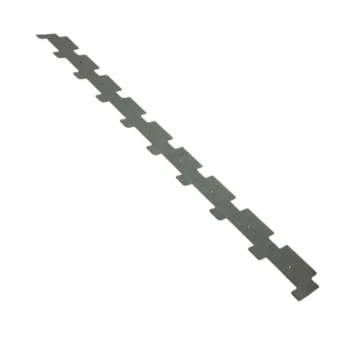
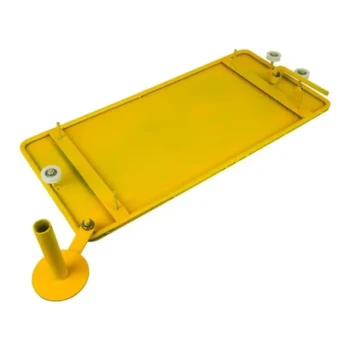
Measurement grid frames function as a standardization tool that transforms visual estimation into hard data. By overlaying a physical frame with defined divisions—typically 5x5 cm or 2.5x2.5 cm—over a honeycomb, technicians can accurately calculate the total surface area of pollen stores.
Measurement grids bridge the gap between observation and analysis. By converting irregularly shaped pollen deposits into standardized units of surface area, these tools allow for the precise calculation of occupied cells, providing the data necessary to correlate nutrition with hive growth.
Standardizing Irregular Storage
The Challenge of Distribution
Bees rarely store pollen in uniform patterns. Deposits are often irregularly distributed across the comb, making visual estimation unreliable.
The Grid Solution
The measurement frame imposes a geometric structure over this biological chaos. By using standardized scales (such as 5x5 cm or 2.5x2.5 cm divisions), the observer creates a coordinate system directly on the frame.
Surface Area Calculation
This overlay allows the technician to sum the area of the grid sections covering pollen. This total surface area is then converted into a specific number of occupied cells, providing a quantifiable metric rather than a rough guess.
Connecting Data to Biological Health
Quantifying Nutritional Intake
Pollen is the hive's primary protein source. Accurate cell counts derived from grid measurements provide a definitive baseline for the colony's nutritional intake.
Correlating Larval Development
Because pollen availability directly impacts brood rearing, researchers use this data to track growth. Grid measurements allow for a statistical comparison between stored resources and larval development rates.
Analyzing Queen Performance
The data facilitates the analysis of queen oviposition (egg-laying) rates. By quantifying pollen reserves, technicians can determine if the queen's laying rate is limited by available nutrition or other factors.
Understanding the Trade-offs
Resolution vs. Efficiency
The primary reference notes distinct grid sizes (5x5 cm vs. 2.5x2.5 cm). The choice of grid size dictates the granularity of your data.
The Precision of Smaller Grids
A 2.5x2.5 cm grid offers higher resolution. It is better suited for fragmented pollen stores but requires more time to count and tabulate.
The Speed of Larger Grids
A 5x5 cm grid covers surface area faster. However, it may over-generalize small or scattered pollen patches, potentially reducing the accuracy of the final "occupied cell" conversion.
Making the Right Choice for Your Goal
Select your measurement approach based on the specific biological correlation you intend to study.
- If your primary focus is rapid field assessment: Use larger grid divisions (5x5 cm) to quickly estimate nutritional status without keeping the hive open excessively.
- If your primary focus is precise biological research: Use smaller grid divisions (2.5x2.5 cm) to ensure the conversion to "occupied cells" is accurate enough for correlation with larval development.
Measurement grid frames are the essential mechanism for turning the visual chaos of a beehive into the structured data required for scientific analysis.
Summary Table:
| Feature | 2.5x2.5 cm Grid | 5x5 cm Grid |
|---|---|---|
| Resolution | High (High Granularity) | Standard (Lower Granularity) |
| Best Use Case | Precise Research & Larval Correlation | Rapid Field Assessments |
| Pros | Accurate for fragmented stores | Fast calculation, less hive exposure |
| Cons | Time-intensive to count | May over-generalize scattered patches |
Elevate Your Beekeeping Operation with HONESTBEE
Precise data is the backbone of successful commercial beekeeping. At HONESTBEE, we empower commercial apiaries and distributors with the high-quality tools necessary for scientific hive management.
Whether you need precision measurement tools, automated honey-filling machines, or specialized hive-making equipment, we provide a comprehensive wholesale solution for all your industry consumables and hardware needs. Partner with us to enhance your productivity and deliver superior value to your customers.
Ready to scale your operation? Contact us today to explore our wholesale catalog!
References
- O. Lytvynenko, K. Afara. INFLUENCE OF TECHNOLOGICAL METHODS OF BEEKEEPING ON THE FLIGHT AND COLLECTING WORK OF BEES. DOI: 10.46913/beekeepingjournal.2023.11.09
This article is also based on technical information from HonestBee Knowledge Base .
Related Products
- Assembled Wooden Bee Frames with Beeswax Foundation Ready to Use by HONESTBEE
- Wooden Bee Hive Frames for Beekeeping and Wholesale
- Durable Plastic Frame Spacer
- Heavy Duty Castellated Iron Frame Spacer for Honey Supers
- Assembled Wooden Bee Frames with Plastic Foundation for Durability and Convenience by HONESTBEE
People Also Ask
- How should frames be rearranged as a bee colony grows? Master Hive Expansion and Nest Management
- Under what circumstances should bee frames be destroyed? Protect Your Apiary from American Foulbrood
- Do bee frames need foundation? Choose the Right Approach for Your Apiary
- What types of bee frames can be cleaned and returned to service? A Guide to Safe Apiary Refurbishment
- What are bee frames and how are they sized? A Professional Guide to Standardization & Material Choice