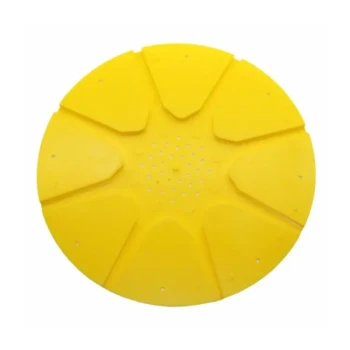
Plastic sheets function primarily as a specialized moisture barrier designed to counteract the aggressive environment within a beehive. By covering pollen patties, these sheets prevent rapid evaporation caused by high internal hive temperatures, ensuring the feed retains the physical consistency required for consumption.
By mitigating moisture loss, plastic covers prevent pollen patties from hardening into an unpalatable state. This simple mechanical intervention ensures the supplemental feed remains soft and accessible throughout the feeding cycle, directly preventing nutritional waste.
Preserving Physical Consistency
Combating Internal Heat
Beehives naturally maintain high internal temperatures to support the colony and brood. This heat, coupled with necessary air circulation, creates an environment that rapidly dehydrates exposed substances.
The Barrier Effect
Without protection, the moisture within a pollen patty evaporates quickly. The plastic sheet creates an impermeable seal that traps moisture within the feed matrix, isolating it from the drying effects of the hive's atmosphere.
Ensuring Consumption and Palatability
Preventing Feed Hardening
The primary risk to pollen patties is physical degradation. As moisture evaporates, the feed transforms from a soft paste into a hard, rock-like substance.
Maintaining Accessibility
Bees require the feed to be moist and pliable to consume it effectively. If the patty hardens, it becomes mechanically difficult for the bees to ingest, leading to nutritional deficiencies simply because the food is no longer physically accessible.
The Role of Perforations
To function correctly, the plastic cannot be a total blockade. Perforated films are often used to strike a balance: they retain the overall moisture of the "cake" while providing specific entry points for bees to access the soft food underneath.
Operational Advantages
Visual Monitoring
Beyond moisture retention, the use of transparent plastic packaging offers a management advantage. It allows beekeepers to inspect feed levels instantly.
Minimizing Disturbance
Because the feed status is visible through the clear cover, beekeepers can gauge consumption and plan adjustments without physically disrupting the cluster or exposing the colony for longer than necessary.
Understanding the Trade-offs
The Access Requirement
A common pitfall is using a plastic sheet that is too robust or lacks sufficient openings. If the bees cannot easily access the feed through perforations or by manipulating the edge of the film, the moisture barrier becomes a barrier to nutrition.
Managing Condensation
While retaining moisture is critical, trapping too much moisture can occasionally be detrimental. In rare instances, if a colony consumes the patty too slowly, the humid environment under the plastic can encourage mold growth, rendering the feed unsafe.
Making the Right Choice for Your Colony
To maximize the effectiveness of your supplemental feeding program, consider the following based on your specific objectives:
- If your primary focus is maximizing feed uptake: Ensure the plastic film is perforated or slashed adequately to allow easy access while maintaining the moisture seal.
- If your primary focus is colony management efficiency: Utilize transparent plastic covers to monitor consumption rates without triggering defense responses or chilling the brood.
Ultimately, the plastic sheet is not merely packaging; it is a functional component of the feed system that ensures your nutritional investment actually reaches the bees.
Summary Table:
| Function | Benefit to Colony | Technical Mechanism |
|---|---|---|
| Moisture Barrier | Prevents feed hardening | Blocks evaporation caused by high hive temperatures |
| Consistency Control | Ensures palatability | Keeps supplemental feed soft and easy for bees to ingest |
| Clear Visibility | Minimal hive disturbance | Transparent film allows beekeepers to monitor feed levels |
| Perforation Design | Balanced access | Provides entry points for bees while retaining core moisture |
Maximize Your Colony Productivity with HONESTBEE
At HONESTBEE, we understand that every detail—from the consistency of your pollen patties to the efficiency of your machinery—impacts your bottom line. As a premier partner for commercial apiaries and distributors, we provide more than just supplies; we offer a comprehensive wholesale solution designed for scale and reliability.
Our extensive portfolio includes:
- Advanced Machinery: High-precision hive-making and honey-filling machines.
- Quality Hardware: A full spectrum of durable beekeeping tools and equipment.
- Industry Consumables: Essential supplies tailored for large-scale operations.
- Branding & Culture: Unique honey-themed merchandise to expand your market reach.
Ready to elevate your beekeeping operation with professional-grade tools and expert support? Contact us today to explore our wholesale catalog and customized solutions.
References
- Asmaa Fawzey, Sawsan El Mohandes. EFFECT OF FEEDING FOUR POLLEN TYPES ON SOME HONEYBEE CHARACTERS (Apis mellifera L.). DOI: 10.21608/jppp.2008.217773
This article is also based on technical information from HonestBee Knowledge Base .
Related Products
- Beehive Entrance Discs Plastic Bee Entrance Disc for Bee Hives
- Beeswax Foundation Sheets Beehive Foundation for Wholesale
- Inner Beehive Cover for Beekeeping Bee Hive Inner Cover
- Plastic Bee Pollen Trap Strips Comb Catcher Collector
- Food Grade Plastic bee Foundation for Bee Frames
People Also Ask
- What is the best entrance for a bee hive? Maximize Colony Health & Honey Production
- What happens if you block the entrance to a bee hive? Avoid This Dangerous Mistake
- How does entrance configuration vary seasonally for beekeepers? A Guide to Year-Round Hive Health
- Why adjust beehive entrance size for humidity? Boost Honey Ripening and Varroa Control in Commercial Apiaries
- How big should a beehive entrance be? Optimize for Colony Health & Honey Production