Stingless bees require hive and processing systems designed around storage pots, not honeycomb frames. Their colonies store honey and pollen in clusters of small, round wax pots inside dark cavities and seal entrances with sticky propolis. As a result, beekeepers need compact, insulated hive boxes or specialized vertical micro-hives, while processors need gentle collection, fine filtration, moisture-aware handling, and sanitary liquid-filling equipment instead of standard centrifugal extraction lines.
The central design principle is simple: stingless bee nesting determines the physical form of the hive and how honey can be collected, while the honey’s high moisture, viscosity, acidity, pollen content, and resistance to crystallization determine the processing and packaging equipment required.
Why Nesting Structure Changes Hive Design
Honey Is Stored in Separate Pots
Unlike Apis mellifera, which stores honey in flat, parallel comb cells, stingless bees use clusters of rounded wax pots. These pots are located within protected, dark cavities and are not arranged in removable frames.
This makes conventional honey supers, comb frames, and frame-based uncapping systems poorly suited to stingless bee colonies. Hive interiors must provide accessible cavity space while preserving the colony’s natural storage arrangement.
Compact Cavities Match Smaller Colonies
Stingless bee colonies generally have smaller populations and smaller body sizes than many managed honey bee colonies. Their hives can therefore be substantially more compact, provided that the internal volume, ventilation, insulation, and entrance dimensions support stable colony development.
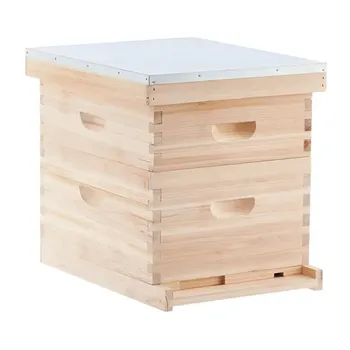
Lightweight wooden boxes around 1.5 cm thick, with commonly used dimensions near 20 × 20 × 20 cm or 20 × 20 × 25 cm, can provide a practical starting point. Exact dimensions should still be matched to the species, colony strength, climate, and local management practice.
Vertical and Modular Hives Improve Management
Specialized vertical wooden hives and modular meliponiculture systems allow beekeepers to control internal space, divide colonies, and access honey pots more effectively. Modular construction is particularly valuable for commercial operations because components can be standardized across production sites.
For distributors and wholesalers, this creates demand for a broader product portfolio: hive bodies, modular extensions, entrance components, insulated shelters, colony-division parts, and compatible harvesting tools.
Entrance and Environmental Control Matter
Stingless bees use propolis to seal and regulate nest entrances. Hive designs should therefore provide species-appropriate entrance diameters and surfaces that allow the bees to maintain their protective structures.
The hive also functions as a physical and environmental barrier against pests, excess humidity, temperature stress, and contamination. Good insulation and sheltering are important in hot, dry, or highly variable climates because colony survival and honey quality depend on a stable internal micro-environment.
Why Honey Composition Changes Extraction Equipment
Standard Centrifugal Extraction Is Not the Natural Fit
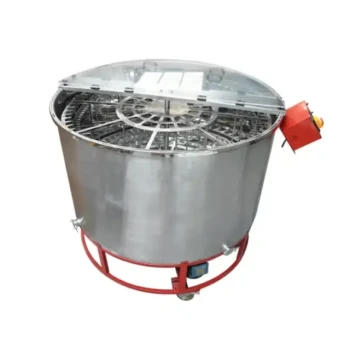
Centrifugal extractors are designed for removable honeycomb frames. They separate liquid honey from comb by spinning the frames at high speed, but stingless bee honey is stored in individual pots that must usually be opened and collected manually.
The practical alternatives are scooping, draining, or gentle pressing. Equipment must remove honey from pots without excessive mechanical force that could introduce wax, propolis, debris, or unnecessary air.
Higher Moisture Raises Processing Risk
Stingless bee honey commonly has a higher moisture content than conventional Apis honey, with reported levels around 30–40 percent in some production contexts. This affects shelf stability because higher water content increases the risk of fermentation and spoilage.
Processing lines therefore need stronger moisture-control and quality-control procedures than those used for typical low-moisture honey. Moisture measurement, batch segregation, controlled storage, and appropriate packaging are operational requirements rather than optional upgrades.
Viscosity Requires Gentle Fluid Handling
The honey may be viscous and pollen-rich, so pumps, valves, hoses, and filling heads must be selected for low-shear handling and reliable flow control. Equipment that is too aggressive can increase foaming, damage suspended components, or make cleaning more difficult.
For commercial systems, sanitary positive-displacement pumps, short product paths, cleanable fittings, and adjustable filling parameters are generally more appropriate than high-speed equipment designed for thin liquids.
Low Crystallization Does Not Eliminate Quality Control
Stingless bee honey is often described as having a low-dextrose composition and a strong resistance to crystallization, even during extended storage. That characteristic can simplify liquid filling and reduce the need for decrystallization equipment.
It does not remove the need to control moisture, temperature, acidity, fermentation, and microbial quality. A honey that remains liquid can still deteriorate if it is stored or packaged under unsuitable conditions.
Pollen and Propolis Require Careful Filtration
Stingless bee honey may contain substantial pollen and fine particles from wax pots and propolis. Filtration should therefore remove unwanted solids while preserving the product characteristics the market expects.
A fine but gentle filtration stage is preferable to unnecessarily aggressive clarification. The correct filter grade depends on the intended product specification: a minimally processed honey may require coarse debris removal, while a polished retail product may require finer filtration.
How the Hive and Processing Systems Must Work Together
Harvest Access Should Be Planned Into the Box
If honey pots cannot be reached without damaging brood structures or forcing the colony into an unstable configuration, harvesting becomes slow and inconsistent. Hive architecture should separate or organize brood, food storage, and access points where the species and management system allow it.
This is why specialized hive boxes are more than simple containers. Their layout directly affects labor, colony health, harvest yield, and the repeatability of commercial operations.
Equipment Should Match Small Batch Collection
Stingless bee colonies typically produce smaller harvest volumes than large Apis colonies. Processing equipment should therefore support controlled batch handling rather than assume continuous, high-throughput extraction.
Modular presses, small sanitary tanks, compact filters, and flexible filling systems allow operators to process variable quantities without excessive product hold-up or cleaning overhead.
Storage Containers Need Moisture and Acidity Compatibility
High-moisture honey and acidic products place greater demands on storage containers, seals, pumps, and transfer lines. Materials should be food-grade, corrosion-resistant where required, and easy to sanitize.
Containers should also minimize contamination during storage and filling. Airtight closures, appropriate headspace control, batch labeling, and temperature-managed storage help operators monitor fermentation risk and preserve product consistency.
Understanding the Trade-Offs
Higher Moisture Can Support a Distinctive Product
The higher moisture content contributes to the fluid character and distinctive sensory profile associated with stingless bee honey. It may also support naturally occurring fermentation processes that are part of some product traditions.
The trade-off is reduced stability compared with conventional honey. Commercial sellers must define whether they are marketing a fresh, naturally active product or a more shelf-stable product, then select processing and packaging controls accordingly.
Gentle Processing Preserves More Product Character
Minimal pressing and restrained filtration can retain pollen, propolis-derived compounds, flavor, and other natural constituents. This may support premium positioning and product differentiation.
However, less intensive processing can leave more solids and create greater variability between batches. Buyers need clear specifications for moisture, filtration level, acidity, fermentation status, packaging, and shelf life.
Specialized Equipment Improves Fit but Narrows Interchangeability
Stingless bee equipment is better matched to pot-based storage and small-batch harvesting than standard honey processing machinery. It can improve handling efficiency and reduce damage to colonies and product.
The limitation is that components are less interchangeable with conventional Apis systems. Distributors should verify compatibility across hive dimensions, pot access methods, pump capacity, filter sizes, filling viscosities, electrical standards, and cleaning procedures before assembling a complete package.
Automation Has Practical Limits
Automation can improve filling accuracy, sanitation, and order fulfillment, but the initial harvesting stage may remain partly manual because the honey pots are irregular, delicate, and embedded within the colony cavity.
A realistic commercial setup usually combines skilled hive-side collection with standardized downstream processing. This approach supports quality without forcing unsuitable industrial equipment into the harvesting stage.
Making the Right Choice for Your Goal
The best equipment package depends on whether the priority is colony health, product quality, processing efficiency, or scalable distribution.
- If your primary focus is colony health: Choose insulated, species-appropriate wooden or modular hives with controlled entrance dimensions, sheltered placement, and internal access that protects brood and nest structures.
- If your primary focus is premium honey quality: Use gentle pressing or draining, fine product-compatible filtration, moisture monitoring, sanitary storage, and low-shear filling that preserves the honey’s natural characteristics.
- If your primary focus is processing efficiency: Specify compact modular pumps, cleanable transfer lines, small-batch tanks, adjustable filling heads, and equipment sized for variable harvest volumes rather than standard frame-extractor throughput.
- If your primary focus is distribution and resale: Build a coordinated portfolio covering hives, modular components, harvesting tools, filters, pumps, storage containers, filling machinery, and replacement parts, supported by clear compatibility data and rapid fulfillment.
- If your primary focus is shelf stability: Treat moisture, fermentation, acidity, hygiene, and storage temperature as core controls, and validate the finished product rather than relying only on its resistance to crystallization.
A successful stingless bee operation begins by treating the hive and processing line as one connected system shaped by the bees’ nesting behavior and the honey’s composition.
Summary Table:
| Aspect | Stingless Bees | Conventional Honey Bees | Implication for Equipment |
|---|---|---|---|
| Storage | Honey in pots | Honey in combs | Need pot-based harvesting tools, not extractors |
| Colony size | Smaller | Larger | Compact hives, modular systems |
| Honey moisture | 30-40% | <18% | Moisture control, fermentation risk |
| Viscosity | High | Moderate | Gentle low-shear pumps and filling |
| Crystallization | Low | High | Less need for decrystallizers |
| Filtration | Pollen-rich | Filtered | Fine but gentle filtration stage |
| Harvest method | Manual scooping | Centrifugal | Batch processing, small tanks |
| Automation | Limited | High | Semi-automated downstream processing |
Ready to optimize your stingless bee operation? At HONESTBEE, we understand that one size doesn't fit all. Our comprehensive product portfolio includes specially designed hives, modular components, gentle extraction tools, and sanitary processing equipment tailored to the unique needs of meliponiculture. For distributors and commercial beekeepers, we offer OEM/ODM support, certified quality, and reliable supply chains to help you scale efficiently. Contact us today to explore how our one-stop sourcing and expert guidance can elevate your business. Get in touch with our team.
Related Products
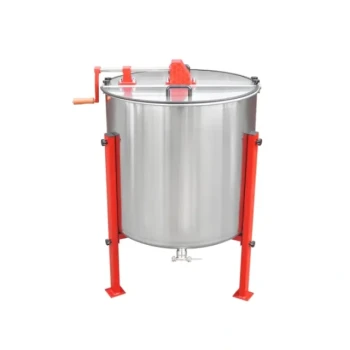
- Stainless Steel Manual 8 Frame Radial Honey Extractor Machine for Beehives
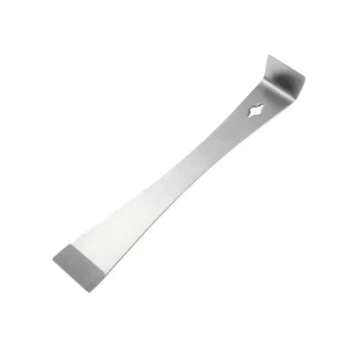
- Professional Stainless Steel Pry-Bar Hive Tool
- 6 Frame Manual Stainless Steel Honey Extractor Beekeeping Equipment
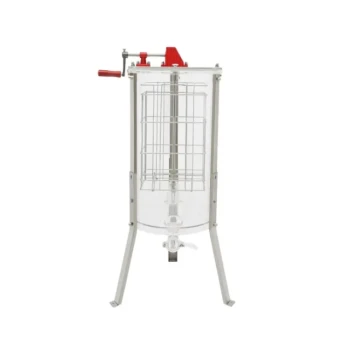
- Stainless Steel 3 Frame Manual Honey Extractor Spinner for Bee Honey Extraction
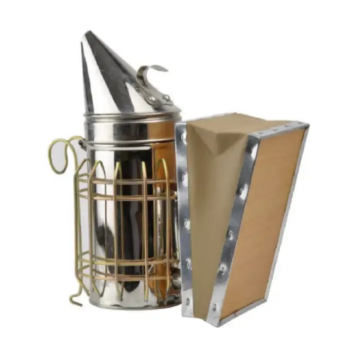
- Stainless Steel Honey Bee Smoker Hive and Honeycomb Smoker for Beekeeping
People Also Ask
- What types of beehive frames are compatible with honey extractor machines? Find the Perfect Match for Your Apiary
- Which type of honey extractor is generally more durable? Focus on Material & Build Quality for Longevity
- What are the key features and benefits of a stainless steel honey extractor? Upgrade to Professional Purity
- Why are manual extractors popular among beginner beekeepers? A Guide to Starting Simple & Saving Money
- What are the disadvantages of a manual honey extractor? Overcome Efficiency Bottlenecks in Your Apiary