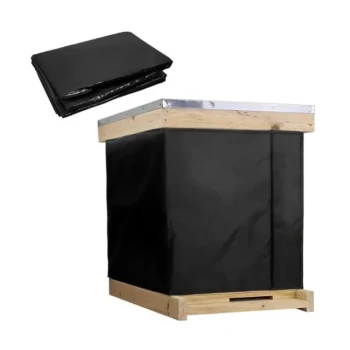
Foam insulation functions primarily by establishing a robust thermal barrier due to its low thermal conductivity. This barrier significantly mitigates heat transfer from the hive's interior to the cold exterior, allowing the colony to maintain critical internal temperatures with significantly less metabolic effort.
By minimizing heat loss, foam insulation reduces the energy bees must expend on survival heating. This conservation allows the colony to redirect resources toward vital productivity, resulting in increased brood areas and higher honey yields.
How Insulation Preserves Energy
Low Thermal Conductivity
Foam insulation is defined by low thermal conductivity, which naturally resists the flow of heat energy. This physical property prevents the rapid dissipation of warmth generated by the winter cluster.
Creating a Thermal Barrier
The material acts as a shield, creating an effective thermal barrier between the bees and the freezing external environment. This stabilizes the internal hive temperature, reducing the drastic fluctuations that stress the colony.
Reducing Metabolic Cost
When internal heat is preserved, bees are not required to generate as much warmth through muscle vibration. This directly reduces the amount of energy they must spend on thermoregulation, lowering their metabolic rate during the dormant season.
Impact on Colony Productivity
Preventing Starvation
Because the bees expend less energy on heating, they consume less of their winter honey stores. This conservation reduces the risk of starvation and ensures a larger quantity of honey is available for harvesting in the spring.
Resource Reallocation
With the burden of survival heating lifted, the colony can allocate more resources toward growth. This energy shift allows for more aggressive brood rearing even during colder months.
Measurable Yield Increases
The combination of conserved resources and early brood rearing has a compounding effect. Insulated hives consistently demonstrate increased capped brood areas and higher overall productivity compared to uninsulated controls.
Understanding the Trade-offs
The Moisture Challenge
While trapping heat is beneficial, foam insulation can inadvertently trap moisture generated by the bees' respiration. Excessive insulation without escape routes leads to damp air and mildew, which can be more lethal to bees than the cold itself.
Balancing Airflow
To maximize thermal efficiency without harming the colony, ventilation is critical. Leaving small openings at both the top and bottom of the hive ensures proper airflow, allowing moisture to escape while still retaining the necessary heat.
Making the Right Choice for Your Goal
Properly insulating a hive is a balance between heat retention and moisture management.
- If your primary focus is colony survival: Prioritize insulation to minimize metabolic stress and honey consumption, reducing the risk of winter starvation.
- If your primary focus is spring production: Use insulation to boost early brood rearing, ensuring a larger population is ready for the first nectar flow.
- If your primary focus is hive health: Pair foam insulation with adequate top and bottom ventilation to prevent mildew and internal dampness.
Strategic insulation creates a stable environment where bees thrive rather than just survive.
Summary Table:
| Feature | Benefit for Honeybees | Impact on Productivity |
|---|---|---|
| Low Thermal Conductivity | Prevents rapid heat dissipation | Stabilizes hive micro-climate |
| Reduced Metabolic Cost | Bees consume less winter honey stores | Lower risk of starvation |
| Resource Reallocation | Energy diverted from heating to growth | Larger brood areas in spring |
| Thermal Barrier | Protects colony from external fluctuations | Higher survival rates |
| Moisture Management | Prevents damp air with proper venting | Healthier hive environment |
Elevate Your Beekeeping Operation with HONESTBEE
At HONESTBEE, we specialize in empowering commercial apiaries and distributors with the tools needed for professional-grade success. From high-efficiency hive-making machinery to essential consumables, our comprehensive wholesale portfolio is designed to maximize your productivity.
Why partner with HONESTBEE?
- Comprehensive Equipment: Full spectrum of beekeeping tools and advanced machinery.
- Scalable Solutions: Specialized hardware tailored for large-scale commercial operations.
- Industry Expertise: We understand the technical requirements of thermal efficiency and hive health.
Ready to scale your honey production and secure your colony survival? Contact us today to explore our wholesale offerings!
References
- ABD-ELMAWGOOD BAHA EL DIN H., AHAMED O. EL-ASHHAB. EFFECT OF THE INTERNAL SIZE AND THERMAL INSULATION OF THE HIVE ON BEE COLONIES STRENGTH AND PRODUCTIVITY. DOI: 10.21608/ejar.2015.153324
This article is also based on technical information from HonestBee Knowledge Base .
Related Products
- Professional Insulated Plastic Bee Hives
- Professional Insulated Winter Hive Wrap for Beekeeping
- Inner Beehive Cover for Beekeeping Bee Hive Inner Cover
- Styrofoam Mini Mating Nuc Box with Frames Feeder Styrofoam Bee Hives 3 Frame Nuc Box
- Stainless Steel Round Beehive Air Vents for Ventilation
People Also Ask
- What are the advantages of plastic bee hives? Boost Efficiency & Durability for Your Apiary
- Are plastic bee hives any good? Unlock Durability & Efficiency for Your Apiary
- How do plastic bee hives compare to wooden hives in handling? Reduce Strain & Boost Efficiency
- Are plastic bee hives good? Durable, Low-Maintenance Hives for Modern Apiaries
- What are the disadvantages of plastic beehives? Key Operational and Environmental Risks Exposed