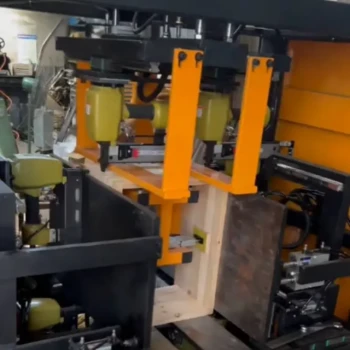
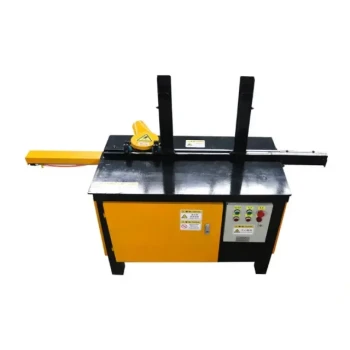
Industrial-grade beehive manufacturing equipment acts as a critical control variable in the science of bee breeding. By ensuring strict adherence to standardized dimensions, such as Langstroth specifications, this machinery eliminates the structural irregularities that often cause bees to exhibit defensive or corrective behaviors. This allows breeders to evaluate inherent biological traits based on genetics rather than the colony’s reaction to a poorly constructed environment.
Core Takeaway Successful trait selection requires isolating the genetic signal from environmental noise. Industrial manufacturing creates a "constant" environment across thousands of colonies, ensuring that observed behaviors—such as hygienic traits—are true genetic expressions rather than reactions to physical hive inconsistencies.
The Science of Standardization and Trait Selection
Eliminating Behavioral Anomalies
To select for specific biological traits, breeders must compare colonies on a level playing field. If a hive has irregular gaps or poor seals, bees will prioritize corrective behaviors, such as applying excessive propolis or building burr comb to fix the structure.
Industrial manufacturing guarantees that every hive component is identical. This removes the need for bees to compensate for structural flaws, ensuring that the behaviors you observe are derived from their genetics, not their environment.
Isolating Hygienic Behavior
One of the most sought-after traits in modern apiaries is hygienic behavior—the ability of bees to detect and remove diseased brood.
Accurately measuring this requires a "clean" environment. When equipment is manufactured with industrial precision, it prevents behavioral noise caused by drafty corners or ill-fitting frames. This allows breeders to attribute colony health directly to the queen's lineage rather than the quality of the carpentry.
Respecting the "Bee Space"
Honey bees act according to precise biological imperatives regarding space (specifically, the 6mm–9mm "bee space").
Precision manufacturing ensures wooden components adhere strictly to these technical specifications. When dimensions are exact, bees are not forced to waste energy building burr comb to bridge gaps. This frees up the colony's energy for the behaviors breeders want to measure, such as honey production and brood rearing.
Supporting Large-Scale Genetic Experiments
Ensuring Component Interchangeability
Genetic experiments often require moving frames of brood or food between different colonies to test performance under various conditions.
Industrial-grade equipment ensures total hardware consistency. A frame from Colony A fits perfectly into Colony B. This interoperability allows breeders to manipulate resources without disrupting the colony structure or crushing bees, which could skew behavioral data due to stress.
Enabling Statistical Significance through Scale
Reliable trait selection requires large sample sizes—often involving hundreds or thousands of colonies.
Automated manufacturing enables the rapid production of interchangeable parts (bottom boards, supers, frames). This scalability allows commercial apiaries to manage the massive colony numbers required to identify rare, superior genetic traits that would be statistically invisible in smaller, non-standardized operations.
Understanding the Trade-offs
The Risk of Standardized Defects
While consistency is the goal, industrial manufacturing creates a high degree of replication. If the original design specification has a minor flaw (e.g., a slightly incorrect frame rest depth), that flaw is replicated across thousands of units. This can introduce a systemic stressor across the entire apiary that mimics a genetic issue, potentially confusing trait selection.
Capital Intensity vs. Genetic Gain
Investing in industrial-grade equipment requires significant upfront capital compared to artisanal or hand-built methods. For smaller operations focused on localized adaptation rather than broad commercial trait selection, the return on investment regarding genetic improvement may be slower to realize.
Making the Right Choice for Your Goal
- If your primary focus is Genetic Breeding: Prioritize equipment that guarantees sub-millimeter precision to ensure "bee space" adherence, creating a sterile control environment for trait evaluation.
- If your primary focus is Commercial Honey Production: Focus on equipment durability and interchangeability to maximize mechanization efficiency and reduce labor costs during extraction.
- If your primary focus is Colony Multiplication: Select hardware that ensures perfect sealing to maintain thermal stability, aiding winter survival and rapid spring buildup.
True genetic progress is impossible without a standardized environment; precision hardware is the silent partner that makes scientific breeding possible.
Summary Table:
| Feature | Impact on Trait Selection | Benefit to Commercial Apiaries |
|---|---|---|
| Sub-millimeter Precision | Eliminates behavioral noise from structural flaws | Ensures observed behaviors are purely genetic |
| Standardized Bee Space | Prevents energy waste on burr comb construction | Maximizes honey production & brood rearing |
| Hardware Consistency | Enables seamless frame swapping & resource trials | Supports large-scale, statistically valid breeding |
| Scalable Manufacturing | Provides identical control environments at scale | Facilitates identification of rare superior traits |
Elevate Your Breeding Precision with HONESTBEE
To achieve true genetic progress, your environment must be a constant. HONESTBEE specializes in providing commercial apiaries and distributors with high-precision beehive manufacturing machinery and specialized beekeeping tools that guarantee the standardization required for scientific breeding.
Whether you are scaling your honey-filling operations or need durable, hardware-consistent hives for your distribution network, our comprehensive wholesale offering ensures your customers achieve maximum biological performance.
Ready to professionalize your apiary infrastructure? Contact us today to explore our industrial machinery and honey-themed cultural merchandise solutions.
References
- Stephen F. Pernal, Andony Melathopoulos. Breeding for hygienic behaviour in honeybees (Apis mellifera) using free-mated nucleus colonies. DOI: 10.1007/s13592-011-0105-x
This article is also based on technical information from HonestBee Knowledge Base .
Related Products
- High-Efficiency Pneumatic Bee Hive Making Machine for Rapid Box Assembly
- Mini Desktop Bee Hive Frame Forming Making Machine
- Beeswax Machine Press Embosser Wax Foundation Mold Printer Bee Hive Equipment Making Sheet
- Automatic High-Speed Bee Hive Box Stapling Machine
- Professional Bee Frame Machine for Side Bar Shaping
People Also Ask
- How does the introduction of professional beehive-making machinery benefit sustainable beekeeping? Scale Your Apiary
- Why is specialized beehive-making machinery critical for low-defense breeding? Enhance Selection with Precision Tools
- How does the introduction of specialized beehive making machinery contribute to increasing the scale of regional beekeeping industries?
- What is the importance of specialized beehive making machinery in a circular bio-economy? Build Local Sustainability
- Why is specialized beehive-making machinery essential? Scale Your Apiary with Precision Industrial Standards