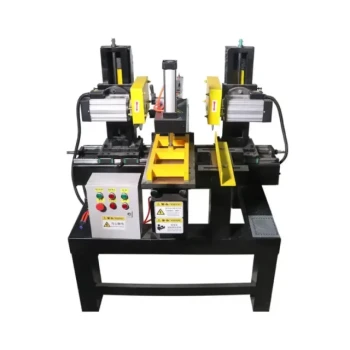
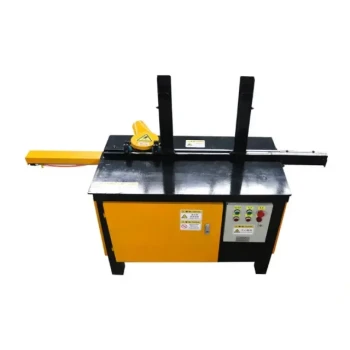
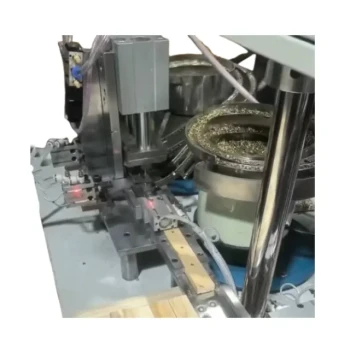
Industrial-grade beehive manufacturing machinery acts as the technological cornerstone for shifting beekeeping from a manual craft to a scalable industry. By automating the production of hive components, this machinery ensures precise structural consistency and high-volume output, which directly lowers the initial capital required to build an apiary and simplifies the logistics of managing massive colony numbers.
Core Takeaway This machinery provides the physical foundation for industrialized apiculture by replacing variable, hand-crafted equipment with standardized, modular components. This shift not only reduces unit costs but also enables critical management efficiencies—from automated honey extraction to the remote migration of bee colonies.
Establishing Economic and Operational Scalability
Reducing Acquisition and Expansion Costs
The primary contribution of industrial machinery is the ability to achieve economies of scale. By mass-producing uniform components, apiaries can significantly reduce the acquisition cost of individual hive units compared to purchasing pre-made or hand-crafted alternatives.
Enabling Rapid Capacity Growth
Commercial apiaries must often scale quickly to capitalize on improved honey plant yields or harvest peaks. Specialized machinery allows for the rapid production of infrastructure, ensuring that hive capacity can be increased immediately to meet biological demands without supply chain bottlenecks.
Streamlining Maintenance and Repairs
When hive components are manufactured industrially, every part is interchangeable. This uniformity simplifies maintenance, as damaged parts can be swapped out instantly without custom fitting, reducing labor costs and downtime for the apiary staff.
Enhancing Management and Logistics
Facilitating Remote Migration
Modern commercial beekeeping often involves moving colonies to different geographic locations for pollination contracts or nectar flows. The structural consistency provided by industrial manufacturing ensures hives stack securely and withstand the physical stress of transport, facilitating safe and efficient remote migration.
Supporting Automated Workflows
Standardization is a prerequisite for automation. Precisely dimensioned hives allow for the seamless integration of automated honey extraction machinery. When frames and boxes are uniform, extraction equipment operates without jamming or damage, significantly lowering operational costs.
Modular Colony Management
Industrial production creates a modular system where equipment acts as a standardized tool rather than a unique habitat. This allows apiary managers to treat hive bodies, supers, and frames as interchangeable assets, streamlining inventory management across thousands of colonies.
Optimizing Biological Conditions via Precision
Ensuring Accurate "Bee Space"
High-precision manufacturing guarantees the maintenance of accurate bee space—the precise gap bees need to move freely. Correct spacing is critical for natural colony thermoregulation and proper ventilation, reducing the biological stress on the colony.
Improving Pest and Disease Control
Industrial machinery creates tight, precise wood joints that manual assembly often lacks. These high-quality constructions reduce structural defects that can lead to robbing or parasite entry. Furthermore, precise dimensions facilitate the effective use of specialized hardware, such as queen excluders and Varroa mite control protocols.
Understanding the Trade-offs
High Upfront Capital Investment
While the per-unit cost of hives decreases, the initial investment in industrial-grade machinery is substantial. For smaller operations, the ROI may not justify the expense compared to purchasing finished goods, requiring a careful cost-benefit analysis based on projected scale.
Reduced Design Flexibility
Industrial tooling is designed for specific, standardized dimensions. Once the machinery is set up for a specific hive standard (e.g., Langstroth), shifting to a different hive style or modifying dimensions requires significant re-tooling, potentially limiting an apiary's ability to pivot experimental management styles.
Making the Right Choice for Your Goal
To leverage industrial machinery effectively, align your investment with your specific operational focus:
- If your primary focus is Rapid Expansion: Prioritize high-throughput machinery that can meet demand during harvest peaks to avoid holding back colony growth.
- If your primary focus is Cost Reduction: Focus on machinery that ensures strict component interchangeability to minimize waste and lower long-term maintenance labor.
- If your primary focus is Modernization: Ensure the machinery produces components compatible with automated extraction lines to future-proof your processing facility.
By standardizing the physical environment of the bee, you remove variability from the equation, allowing you to focus entirely on biological management and yield optimization.
Summary Table:
| Benefit Category | Key Advantage | Impact on Apiary Management |
|---|---|---|
| Scalability | Economies of Scale | Dramatically lowers per-unit acquisition and expansion costs. |
| Logistics | Structural Consistency | Enables secure hive stacking for remote migration and transport. |
| Efficiency | Interchangeable Parts | Streamlines maintenance and supports automated extraction lines. |
| Biological | Precision "Bee Space" | Optimizes thermoregulation and enhances pest/disease control. |
Scale Your Apiary Operations with HONESTBEE
Transitioning from manual labor to industrial efficiency is the key to commercial success in beekeeping. At HONESTBEE, we empower commercial apiaries and distributors with the high-performance machinery needed to dominate the market.
From automated hive-making and honey-filling machines to a complete spectrum of wholesale beekeeping tools and industry consumables, we provide the hardware and support necessary to reduce your operational costs and maximize yields. Whether you are looking to modernize your processing facility or expand your distribution portfolio, we are your strategic partner in apiculture growth.
Ready to industrialize your production?
Contact HONESTBEE Today to Discuss Your Wholesale Needs
References
- Radivoj Prodanović, Jelena Vapa–Tankosić. Beekeeping as a Tool for Sustainable Rural Development. DOI: 10.55817/ixvm2800
This article is also based on technical information from HonestBee Knowledge Base .
Related Products
- High-Efficiency Pneumatic Bee Hive Making Machine for Rapid Box Assembly
- HONESTBEE Top Bar & Bottom Bar Forming Machine | Bee Frame Machine
- Automatic High-Speed Bee Hive Box Stapling Machine
- Mini Desktop Bee Hive Frame Forming Making Machine
- Beehive Machine Double End Saw for Precision Hive Component Manufacturing
People Also Ask
- How does the introduction of professional beehive-making machinery benefit sustainable beekeeping? Scale Your Apiary
- Why is specialized beehive-making machinery critical for low-defense breeding? Enhance Selection with Precision Tools
- How does the introduction of specialized beehive making machinery contribute to increasing the scale of regional beekeeping industries?
- What is the importance of specialized beehive making machinery in a circular bio-economy? Build Local Sustainability
- Why is specialized beehive-making machinery essential? Scale Your Apiary with Precision Industrial Standards