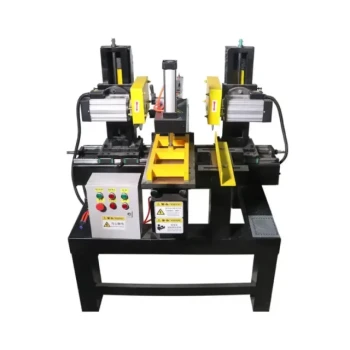
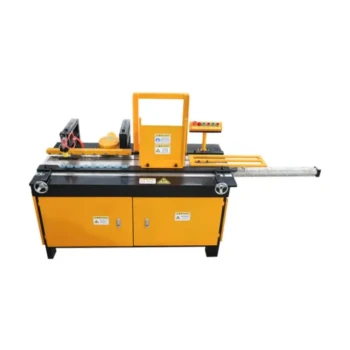
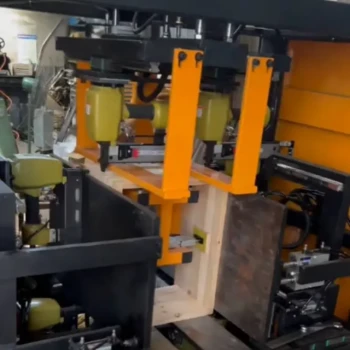
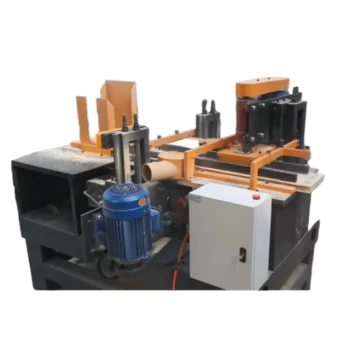
Industrial-grade woodworking machinery fundamentally transforms beekeeping by utilizing precise cutting, slotting, and assembly processes to convert timber into uniform, standardized beehive components. This mechanical precision creates a stable, manageable environment for colonies—specifically Langstroth or modified designs—allowing for efficient observation and the streamlined collection of hive products.
The core value of industrial machinery lies not just in production speed, but in structural uniformity. By ensuring every component meets exact dimensional tolerances, these machines provide the physical foundation required for automated harvesting, disease management, and the rapid scalability of commercial apiaries.
Achieving Precision and Uniformity
The Power of Automated Processing
Industrial machinery replaces manual variability with mechanized consistency. Through the use of CNC milling and standardized mold processing, manufacturers can achieve extremely tight dimensional tolerances that manual construction cannot match.
Creating Interchangeable Components
The primary output of this precision is interchangeability. Frames, hive bodies, and bases produced on industrial lines can be swapped seamlessly between different hives.
Adhering to Global Standards
Machinery is calibrated to produce specific standards, such as the Langstroth design. This ensures compatibility with the broader ecosystem of beekeeping tools and equipment available on the market.
Enhancing Operational Efficiency
Enabling Automated Harvesting
Modern commercial beekeeping relies on automated honey extraction lines. These machines require consistent physical specifications to function without jamming or damaging equipment, a requirement that only industrially manufactured hives can reliably meet.
Streamlining Logistics and Transport
For migratory beekeeping, where hives are moved to follow bloom cycles, structural uniformity is critical. Standardized dimensions allow for efficient stacking and secure transportation, significantly reducing labor costs and logistical complexity.
Facilitating Rapid Inspection
Standardized construction removes physical irregularities that hinder hive manipulation. This allows beekeepers to open hives, inspect frames, and assess colony health much faster, directly improving management efficiency.
Economic and Biological Impact
Reducing Unit Costs
By leveraging economies of scale, industrial machinery significantly lowers the unit cost of infrastructure. This allows professional beekeepers to rapidly expand their colony counts without facing prohibitive hardware costs.
Improving Biosecurity
Interchangeable frames allow for better quarantine practices. Beekeepers can easily rotate old combs out or isolate components, reducing the risk of disease transmission between colonies.
Optimizing the Microclimate
High-precision cutting leads to superior joint fit and sealing. This enhances thermal insulation and durability, helping colonies adapt to seasonal changes and increasing their survival rates in extreme climates.
Understanding the Trade-offs
High Capital vs. Low OpEx
Implementing industrial-grade machinery requires a significant upfront capital investment. However, for large-scale operations, this is offset by the long-term reduction in labor and per-unit production costs.
Material Dependencies
Industrial machines require consistent raw materials to function correctly. The quality of the final output is heavily dependent on sourcing uniform timber or composite materials that can withstand high-speed processing without warping or splintering.
Making the Right Choice for Your Goal
- If your primary focus is rapid expansion: Prioritize machinery that maximizes throughput to lower the unit cost of hive bodies, enabling fast scaling of infrastructure.
- If your primary focus is automation compatibility: Ensure your equipment offers the highest dimensional tolerances (CNC precision) to guarantee frames fit automated extraction lines perfectly.
- If your primary focus is colony health and survival: Focus on machinery capabilities that ensure tight sealing and superior thermal properties to protect the hive's microclimate.
Standardization is the bridge that turns traditional beekeeping into a scalable, modern industry.
Summary Table:
| Key Feature | Benefit for Commercial Beekeepers | Impact on Operations |
|---|---|---|
| CNC Precision | Exact dimensional tolerances and uniformity | Guaranteed interchangeability of hive components |
| Standardized Molds | Adherence to Langstroth & global designs | Seamless compatibility with extraction machinery |
| High-Speed Milling | Drastic reduction in unit production costs | Faster infrastructure scaling and expansion |
| Superior Joint Fit | Enhanced thermal insulation and sealing | Improved colony survival and biosecurity control |
| Uniform Sizing | Optimized stacking and transport logistics | Reduced labor costs for migratory beekeeping |
Elevate Your Commercial Apiary with HONESTBEE Precision
At HONESTBEE, we understand that standardization is the backbone of a profitable beekeeping enterprise. We provide commercial apiaries and distributors with the high-performance woodworking machinery, hive-making equipment, and honey-filling systems needed to achieve industrial-grade precision.
Whether you are looking for specialized hardware to manufacture uniform hives or seeking a reliable wholesale partner for beekeeping tools and essential consumables, we deliver the tools that turn traditional beekeeping into a scalable, modern industry.
Ready to scale your production? Contact us today to explore our full spectrum of equipment and machinery!
References
- Hossam F. Abou‐Shaara. Potential Honey Bee Plants of Egypt. DOI: 10.1515/cerce-2015-0034
This article is also based on technical information from HonestBee Knowledge Base .
Related Products
- Beehive Machine Double End Saw for Precision Hive Component Manufacturing
- HONESTBEE Top Bar & Bottom Bar Forming Machine | Bee Frame Machine
- Beehive Handle and Frame Rest Cutting Machine: Your Specialized Hive Machine
- Beeswax Machine Press Embosser Wax Foundation Mold Printer Bee Hive Equipment Making Sheet
- Automatic High-Speed Bee Hive Box Stapling Machine
People Also Ask
- Why is precision woodworking machinery critical for the standardization of beehive components? Ensure Hive Compatibility
- How does beehive manufacturing machinery benefit large-scale commercial beekeeping? Scale Your Apiary Efficiency
- Why is professional beehive manufacturing machinery essential for raw honey quality? Precision for Commercial Success.
- What are the operational advantages of specialized beehive manufacturing machinery for expanding commercial apiaries?
- What is the significance of specialized beehive manufacturing machinery? Drive Scalability for Commercial Apiaries