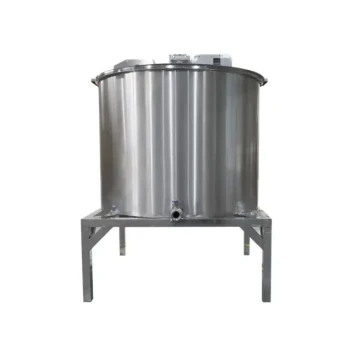
Modern honey harvesting and processing equipment acts as the critical bridge between subsistence farming and commercial viability. By deploying tools like professional presses, filtration systems, and filling machines, beekeepers serve the immediate need of elevating raw honey into a standardized product. This equipment enhances purity and aesthetic quality, ensuring the output meets the strict consistency standards required for urban and international markets.
The transition to commercial production relies on establishing product standardization and value enhancement. Modern equipment provides the necessary infrastructure to increase purity, ensure consistency, and scale economic output, transforming beekeeping from a manual craft into a high-value industry.
The Foundation of Standardization
To move beyond local, subsistence sales, a product must be predictable and professional. Modern equipment shifts the focus from simple collection to rigorous quality control.
Elevating Product Purity
Subsistence methods often result in honey containing wax particles or debris. Professional filtration systems and honey presses act as the primary mechanism for value enhancement. By removing impurities, these tools ensure the clarity and aesthetic appeal that commercial retailers demand.
Achieving Filling Precision
Manual packaging is slow and inconsistent. Industrial filling machines provide high-precision quantitative filling. This automation ensures that every unit meets strict weight regulations and hygiene standards, which are prerequisites for entering large-scale distribution networks.
Ensuring Brand Consistency
Commercial buyers require a uniform product experience. Automated workflows minimize human error and variability. This consistency allows producers to build a reliable brand reputation, directly increasing the economic value of the final product.
Infrastructure for Scalability
Commercial beekeeping is not just about processing honey; it is about managing the logistics of thousands of colonies. Standardized equipment is the backbone of this scale.
Removing Growth Bottlenecks
Expanding a bee yard requires physical infrastructure. Modern hive-making machines utilize mechanized cutting and assembly to rapidly produce standardized hives. This autonomous production capability prevents hive shortages from stalling growth and reduces the heavy investment costs associated with purchasing pre-made hives.
Enabling Mechanized Extraction
Efficiency is lost if hive dimensions vary. Standardized mobile-frame hives are critical because they fit perfectly into automated extraction machinery. This compatibility significantly reduces the manual labor required per hive, allowing fewer staff to manage larger operations.
Facilitating Migratory Operations
To maximize yield, commercial operations often move bees to follow bloom cycles. Mechanically produced hives feature superior durability and uniform dimensions. This standardization allows for efficient stacking and transport, making migratory beekeeping—a key driver of commercial volume—logistically feasible.
Optimizing Biological Output
The transition to commercial production also requires maximizing the biological efficiency of the bees themselves.
Improving Colony Health
Standardized hives provide a controlled internal environment. Features like ventilation control and thermal insulation increase overwintering survival rates. Healthier colonies in the spring lead to faster breeding speeds and higher population densities.
Enhancing Yield Through Management
A structured environment allows for precise intervention. Standardized equipment supports systematic colony monitoring and supplementary feeding. By optimizing the living space, beekeepers can manage bee labor distribution more effectively, leading to a higher total honey yield per colony.
Understanding the Trade-offs
While modern equipment is essential for scaling, it introduces new dynamics to the beekeeping operation.
Capital vs. Labor
The shift to commercial equipment trades ongoing labor costs for upfront capital investment. Producers must ensure their production volume is sufficient to amortize the cost of machinery like filling lines and hive makers.
Maintenance Requirements
Mechanization introduces technical complexity. The operation changes from pure animal husbandry to managing a production line. Reliability now depends on the maintenance of hardware as much as the health of the bees.
Making the Right Choice for Your Goal
When planning your transition to commercial production, focus your investment on the bottleneck that currently limits your growth.
- If your primary focus is Market Access: Prioritize filtration and filling equipment to achieve the purity and packaging standards required by high-value urban retailers.
- If your primary focus is Scaling Volume: Prioritize hive-making machinery and standardized frames to rapidly increase colony count and enable automated extraction.
Modern equipment is not merely a convenience; it is the strategic infrastructure that converts raw labor into scalable, asset-based economic value.
Summary Table:
| Transition Factor | Modern Equipment Benefit | Commercial Impact |
|---|---|---|
| Product Purity | Professional filtration & presses | Meets retail & export quality standards |
| Scalability | Hive-making & filling machines | Rapid expansion and reduced labor costs |
| Consistency | Automated workflows | Builds brand trust and reliable pricing |
| Yield Optimization | Standardized mobile-frame hives | Enables migratory beekeeping & higher output |
| Logistics | Uniform hive dimensions | Efficient transport and mechanized extraction |
Scale Your Apiary with HONESTBEE Professional Solutions
Are you ready to transform your subsistence beekeeping into a high-yield commercial enterprise? HONESTBEE specializes in empowering commercial apiaries and distributors with the robust infrastructure needed for global markets.
We provide a comprehensive wholesale portfolio designed to remove growth bottlenecks:
- Industrial Machinery: Hive-making machines and high-precision honey-filling lines.
- Processing Equipment: Professional filtration systems and extraction tools for maximum purity.
- Essential Consumables: A full spectrum of beekeeping tools and hardware.
- Cultural Merchandise: Honey-themed products to diversify your brand value.
Partner with us to gain access to the tools that ensure consistency, durability, and economic efficiency. Contact HONESTBEE today to discuss your wholesale equipment needs and take the first step toward industrial excellence.
References
- Kata Wagner, Paul Cross. Sticky business - Why do beekeepers keep bees and what makes them successful in Tanzania?. DOI: 10.1016/j.jrurstud.2019.01.022
This article is also based on technical information from HonestBee Knowledge Base .
Related Products
- Electric Double Wall Honey Filtering Machine Purifier Equipment for Honey Processing Plant
- 0.5T Capacity Honey Dehumidifier Dryer with Vacuum Heating and Thickening Filtering Machine
- Honey Concentrating and Filtering Dehumidifier Machine 2T Capacity for Honey
- All-Stainless Steel Pivoting Honey Uncapping Fork for Beekeeping
- Double Wall Honey Heating Stirring Homogenizer Mixing Machine with Various Capacity
People Also Ask
- What is the process of filtering honey? A Guide to Clean, Pure, and Market-Ready Honey
- What types of equipment are used in honey filtering? Build an Efficient System for Pure, Marketable Honey
- What is the overall importance of using the right equipment in honey filtering? Boost Quality & Marketability
- What is a potential concern associated with filtering honey? Balancing Clarity and Pollen Preservation
- Why is filtering important in honey processing, and what equipment is used? A Guide to Quality & Efficiency