The honey dryer operates by utilizing internal discs that rotate at a precisely controlled, slow speed inside a sealed environment. Specifically, the system uses an air-lock tank and a regulated heating unit to maintain the honey at 35 °C, allowing for effective humidity extraction without compromising the product's quality.
The core principle of this technology is the balance between low-temperature heating and slow mechanical movement, ensuring moisture is removed while the honey remains chemically unaltered and unspoiled.
The Mechanics of Gentle Drying
To process honey effectively, one must remove excess water without "cooking" the sugars or destroying delicate enzymes. This machine achieves this through a combination of kinetics and thermal regulation.
Controlled Mechanical Rotation
The heart of the system is a series of internal discs. These discs rotate at a fixed, very slow speed of 1 revolution per minute (RPM).
This slow rotation is critical. It continuously exposes new surface areas of the honey to the drying environment without introducing excessive aeration or foam, which can occur at higher speeds.
Thermal Regulation
The dryer includes a specialized heating system designed to process the honey at 35 °C.
This temperature is chosen deliberately to mimic the natural temperature of the beehive. By keeping the heat low, the machine prevents the spoiling that often occurs with high-temperature processing methods.
The Closed-System Environment
Unlike open-air evaporation, which risks contamination or re-absorption of ambient moisture, this dryer operates as a closed system.
The Air-Lock Tank
The entire drying process takes place within an air-lock tank. This seals the honey off from the external environment.
This isolation allows the machine to create a specific microclimate, ensuring that the parameters for drying are constant and unaffected by the humidity of the surrounding room.
Humidity Extraction
While the discs expose the honey and the heater warms it, an incorporated system actively extracts humidity.
This component pulls the evaporated moisture out of the air-lock tank, gradually lowering the water content of the honey until it reaches the desired viscosity.
Understanding the Trade-offs
While this specific drying method is excellent for quality, it is important to understand its limitations compared to other processing methods.
Speed vs. Quality
Because the machine relies on low temperatures (35 °C) and slow rotation (1 RPM), the drying process is gradual.
Operators accustomed to industrial flash-heating methods may find this process slower, but it is the only way to ensure the honey retains its natural properties.
Scope of Processing
It is vital to distinguish between drying and clarification.
This machine focuses on moisture removal. Other equipment, such as filtration devices or settling tanks, is required to remove physical impurities like wax debris or larval fragments to achieve high transparency.
Making the Right Choice for Your Goal
When operating this equipment, your settings should reflect your specific end-product goals.
- If your primary focus is Enzyme Preservation: Strictly adhere to the 35 °C temperature limit to ensure the honey remains distinct from pasteurized commercial products.
- If your primary focus is Moisture Reduction: Rely on the efficiency of the humidity extraction system and the duration of the cycle, rather than attempting to accelerate the process with higher heat.
High-quality honey processing is defined not by how fast you can heat it, but by how gently you can handle it.
Summary Table:
| Feature | Specification | Benefit |
|---|---|---|
| Rotation Speed | 1 RPM | Prevents aeration and foaming while exposing surface area |
| Operating Temp | 35 °C (95 °F) | Mimics hive temperature; prevents spoiling and enzyme loss |
| Environment | Air-lock Tank | Sealed system prevents contamination and ambient humidity |
| Mechanism | Internal Discs | Gentle mechanical movement for consistent water extraction |
| Core Result | Moisture Reduction | Lowers water content without 'cooking' the honey sugars |
Elevate Your Honey Quality with HONESTBEE Professional Solutions
Are you looking to scale your honey production while maintaining the delicate nutritional profile of your harvest? At HONESTBEE, we specialize in supporting commercial apiaries and distributors with high-performance beekeeping machinery and tools.
From our precision-engineered honey dryers and honey-filling machines to advanced hive-making equipment, we provide the full spectrum of hardware and industry consumables needed for professional success. Our equipment is designed to ensure your honey remains chemically unaltered and premium-grade.
Ready to upgrade your processing facility? Contact us today to discuss our wholesale offerings and discover how our expertise can streamline your operation and increase your market value.
Related Products
- 0.5T Capacity Honey Dehumidifier Dryer with Vacuum Heating and Thickening Filtering Machine
- High Quality Honey Dehumidifier Dryer Thickening Machine for Beekeeping
- Economy Small Scale Honey Dryer Dehumidifier Thickening Machine
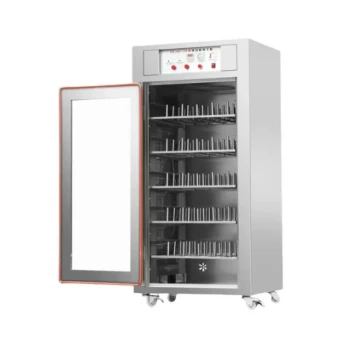
- HONESTBEE Professional Cabinet Bottle Dryer
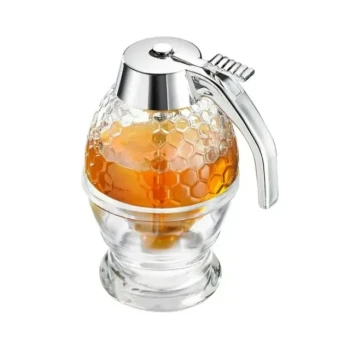
- Honeycomb Style Drip Free Honey Dispenser
People Also Ask
- What is the primary function of professional dehumidification equipment in honey processing? Stability & Quality
- How to dry up honey? The Safe Guide to Stabilizing Honey and Preventing Fermentation
- What is the process for using a dehumidifier to lower honey's moisture content? Expert Drying Techniques
- How to decrease moisture in honey? Prevent Fermentation and Ensure Long-Term Quality
- How to remove humidity from honey? Protect Your Harvest from Fermentation