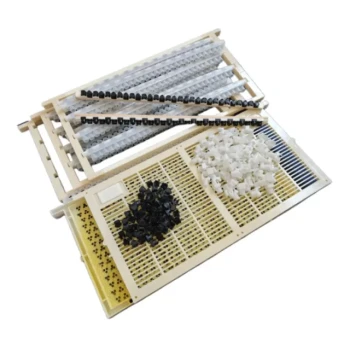
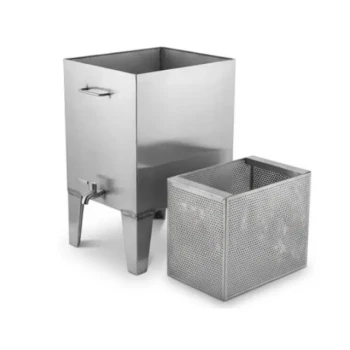
Diversification is the primary mechanism by which processing equipment for high-value bee by-products improves a farm's competitiveness. By integrating machinery specifically for extracts like propolis and royal jelly, a farm shifts from a vulnerable, single-product model to a resilient, multi-stream business. This technical upgrade directly addresses the financial risks associated with the volatility of the international honey market.
Core Takeaway Relying solely on raw honey sales exposes farms to unpredictable price fluctuations and commodity stagnation. Introducing processing equipment for by-products transforms a farm into a versatile producer, securing higher profit margins and stabilizing revenue through product diversification.
Strategic Diversification and Risk Management
The most significant impact of this equipment is the ability to decouple a farm's financial health from the price of a single commodity.
Breaking the "Honey-Only" Dependency
The primary reference highlights a critical vulnerability in traditional farming: reliance on single-product sales.
When a farm only produces honey, its revenue is entirely dictated by that specific market's supply and demand. Processing equipment allows for the production of high-value alternatives such as royal jelly and propolis. This creates a safety net; if honey prices drop, revenue from by-products can sustain the operation.
Mitigating Market Volatility
International market prices for agricultural commodities fluctuate due to weather, trade policies, and global yield.
By-products like propolis often command higher, more stable prices due to their applications in health and cosmetics. By equipping a farm to harvest and process these items, you insulate the business from the financial risks associated with market fluctuations. This stability is a key indicator of long-term competitiveness.
Elevating Product Value and Quality
While the primary benefit is economic diversification, the supplementary references illustrate how equipment improves the physical product to meet market demands.
Achieving Standardization and Traceability
High-value by-products often require adherence to stricter standards than raw honey.
Advanced processing machinery provides a controlled environment that ensures hygiene and prevents contamination. Just as industrial honey fillers protect against atmospheric moisture and microbes, by-product processing equipment ensures that delicate substances like royal jelly retain their biochemical integrity. This is essential for meeting international hygiene regulations and securing organic certifications.
Unlocking High-End Retail Markets
Manual processing is often inconsistent, making it difficult to sell to premium buyers.
Industrial-grade equipment ensures consistent volume and sensory transparency. By removing impurities and standardizing the final output, farms can guarantee the quality required by high-end retailers and pharmaceutical companies. This capability transforms raw agricultural output into a polished commercial commodity.
Understanding the Trade-offs
Investing in advanced processing technology is a significant strategic move that comes with inherent challenges.
The Capital vs. Return Ratio
High-quality processing equipment represents a substantial upfront capital expenditure.
While the long-term profitability is improved through higher margins on by-products, the initial return on investment (ROI) may take time to materialize. Farms must carefully calculate the volume of by-products they can realistically produce to justify the cost of the machinery.
The Necessity of Technical Expertise
Owning the machine is not enough; you must know how to operate it.
As noted in the supplementary references regarding technical training, modern harvesting and processing equipment requires specialized knowledge. Introducing this technology necessitates a commitment to training staff on operation, maintenance, and hygiene protocols. Without this human investment, the machinery cannot deliver its full competitive value.
Making the Right Choice for Your Goal
The decision to invest in by-product processing equipment should be driven by your specific business objectives.
- If your primary focus is Financial Stability: Prioritize equipment that allows for maximum product diversity (e.g., propolis and pollen), creating multiple revenue streams to buffer against honey price drops.
- If your primary focus is Premium Market Access: Focus on equipment that guarantees hygiene and standardization (e.g., filtration and sterile filling), as this is the "gatekeeper" requirement for high-end retail and export.
True competitiveness is achieved not just by producing more, but by producing a diverse range of standardized, high-quality products that the market values.
Summary Table:
| Improvement Category | Key Competitive Advantage | Impact on Business |
|---|---|---|
| Revenue Streams | Product Diversification | Shifts from single-product dependency to multi-stream resilience. |
| Market Risk | Volatility Mitigation | Higher margins on by-products buffer against fluctuations in honey prices. |
| Product Standards | Hygiene & Consistency | Ensures high-end retail and pharmaceutical grade quality through automation. |
| Value Addition | Premium Branding | Transforms raw materials into standardized, high-value commercial commodities. |
Elevate Your Apiary's Profitability with HONESTBEE
Transitioning from a traditional honey farm to a high-value producer requires the right technical foundation. HONESTBEE specializes in empowering commercial apiaries and distributors with high-performance beekeeping machinery and tools.
From honey-filling and hive-making machines to specialized processing equipment for propolis and royal jelly, we provide the full spectrum of hardware and consumables needed to diversify your revenue. Our solutions are designed to help you meet international standards and capture premium markets.
Ready to scale your operation? Contact us today to discuss how our wholesale equipment can transform your competitiveness in the global market.
References
- Lyubomir Lyubenov. A Study of the Yield of Honey in Farms from North-Eastern Bulgaria. DOI: 10.37075/ea.2021.4.09
This article is also based on technical information from HonestBee Knowledge Base .
Related Products
- No Grafting Queen Rearing Kit: System for Royal Jelly Production and Queen Rearing
- Plastic Chinese Queen Grafting Tool for Bee Queen Rearing
- Electric Double Wall Honey Filtering Machine Purifier Equipment for Honey Processing Plant
- Heavy Duty Stainless Steel Honey Processing Machine Decrystallizing Tank
- Double Nozzle Small Honey Filling Machine Honey Sachet Packing Packaging Equipment
People Also Ask
- What is the primary function of a queen rearing kit? Eliminate Manual Grafting for Superior Bee Breeding
- How do specialized queen rearing kits and queen management tools improve the success rate of bee colony expansion?
- What are some alternative methods to grafting for queen cell production? Discover Graft-Free Queen Rearing Systems
- Are queen rearing systems generally suitable for all honeybee species? Master Efficient Breeding Methods
- Are queen rearing systems suitable for all beekeepers? Modern Tools for Every Experience Level