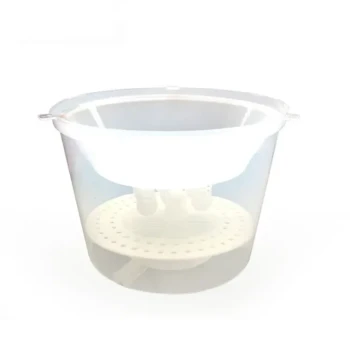
The narrow-slit design functions as a selective physical filter. By utilizing precise dimensional constraints, the trap allows Small Hive Beetles (SHB) to pass through side apertures while blocking larger non-target insects. This design is specifically engineered to grant beetles access to toxic bait while mechanically preventing honey bees from entering and consuming the poison.
The core advantage of this design is target selectivity: it leverages the physical size difference between pests and pollinators to safely introduce chemical controls into the hive without risking the health of the bee colony.
The Mechanics of Selective Exclusion
Exploiting Physical Dimensions
The efficacy of the trapping container relies entirely on biometrics—specifically, the size disparity between the Small Hive Beetle and the honey bee. The apertures are manufactured to a specific width that exceeds the thoracic width of a beetle but is too narrow for a worker bee to pass through.
This physical barrier acts as a passive gatekeeper. It ensures that the trap remains exclusive to the pest, rendering the device biologically secure for the rest of the apiary.
Enabling Safe Chemical Control
Because the slit effectively excludes bees, beekeepers can utilize toxic baits that would otherwise be fatal to the colony.
Without this narrow-slit barrier, placing potent insecticides inside a hive would be catastrophic. The design creates a "quarantine zone" within the hive itself, where the lethal agent is accessible only to the invasive species.
The Role in Integrated Pest Management (IPM)
Complementing Bee Behavior
Small Hive Beetles often seek refuge in dark, tight crevices to escape the harassment of guard bees. The narrow slits mimic these natural hiding spots, baiting the beetles into entering the trap voluntarily.
Once inside, the beetles are exposed to the toxicant. This turns the beetle's natural evasion instinct into a mechanism for its own elimination.
Reducing Reliance on Broad-Spectrum Applications
By containing the toxin within a physical enclosure, the narrow-slit design supports a more targeted approach to pest management.
This minimizes the need to spray chemicals throughout the hive. It aligns with biosecurity frameworks that prioritize mechanical barriers and localized treatment over widespread chemical exposure.
Understanding the Trade-offs
Potential for Obstruction
The precise dimensions of the narrow slits can become a liability if hive debris accumulates. Propolis, wax, or dead insects can block the apertures, rendering the trap inaccessible to beetles and useless for control.
Maintenance Requirements
Because these traps rely on physical entry, they require regular inspection. Beekeepers must ensure the slits remain clear and that the bait remains fresh to maintain effectiveness.
Limitation to Adult Beetles
While effective for mobile adults, these traps do not address beetle larvae that may have already hatched outside the trap. They are a control measure for invaders, not a cure for a full-blown infestation of larvae in the combs.
Making the Right Choice for Your Goal
To effectively utilize narrow-slit traps within your apiary management strategy, consider the following:
- If your primary focus is Colony Safety: Select traps with rigid, precision-manufactured slits to guarantee zero access for curious worker bees when using toxic agents.
- If your primary focus is Pest Monitoring: Use these traps as an early warning system; the presence of dead beetles inside confirms invasion before it becomes visually obvious on the frames.
By isolating the threat through physical design, you convert a chemical risk into a targeted defense asset.
Summary Table:
| Feature | Mechanism | Benefit to Apiary |
|---|---|---|
| Selective Apertures | Sized to exclude bees while allowing SHB entry | Prevents non-target poisoning |
| Physical Barrier | Creates a "quarantine zone" for toxic baits | Enables safe use of potent insecticides |
| Behavioral Baiting | Mimics natural dark crevices/hiding spots | Increases trap efficacy via beetle instincts |
| IPM Integration | Localized chemical containment | Reduces broad-spectrum hive contamination |
Secure Your Apiary with Professional-Grade Solutions
As a commercial apiary or distributor, maintaining hive health while minimizing chemical risk is critical to your bottom line. HONESTBEE provides high-precision beekeeping tools and machinery designed to streamline your pest management and production efficiency. From specialized SHB control hardware to industrial honey-filling machines and hive-making equipment, we offer a comprehensive wholesale portfolio to support large-scale operations.
Ready to upgrade your wholesale inventory or apiary infrastructure? Contact HONESTBEE today for tailored equipment solutions
References
- Ximena Araneda, Ximena Freire. SMALL HIVE BEETLE (Aethina tumida Murray), A POTENTIAL THREAT TO BEEKEEPING IN CHILE. DOI: 10.29393/chjaas37-1shxa30001
This article is also based on technical information from HonestBee Knowledge Base .
Related Products
- Reusable Aluminium Beetle Trap for Small Hive Beetles Silver Bullet
- Reusable Clear Small Hive Beetle Traps for Beehives Beetle Trapping Tools
- Removable Washable Hive Beetle Trap Attractants for Small Hive Beetles
- Black Plastic Beetle Barn Hive Beetle Trap for Beehives
- Plastic Beetle Blaster Trap Beekeeping Tools and Supplies
People Also Ask
- How should powdered substances be used in beetle traps for hive beetle control? Expert Guide for Maximum Colony Protection
- Why are beetle traps less effective during winter? Seasonal Shifts in Pest Control Explained
- When is the best time to use small hive beetle traps in cold climates? Protect Your Honeybee Winter Stores Now
- When and how should disposable traps for small hive beetles be removed? Master Hive Hygiene and Efficiency
- How do small hive beetle traps contribute to colony management? Enhance Diagnostic Accuracy and Protect Hive Health