Nesting behavior determines commercial manageability. Cavity-nesting honey bees such as Apis mellifera and Apis cerana build several parallel combs inside dark, enclosed spaces, so they adapt well to wooden box hives with movable frames. Open-nesting species such as Apis dorsata and Apis florea typically build a single exposed comb on branches, cliffs, or rock overhangs, making them unsuitable for conventional frame-hive management.
Commercial apiaries are built around the natural behavior of cavity-nesting bees: standardized hive bodies, movable frames, brood boxes, supers, and extraction equipment allow colonies to be inspected, transported, treated, and harvested efficiently. Open-nesting species generally require observation or manual comb collection rather than standard commercial hive equipment.
Why Nesting Behavior Matters
Cavity-nesting bees support modular hive management
Cavity-nesting honey bees naturally organize multiple combs within an enclosed space. This closely matches the structure of modern box hives, where each comb is installed in an individual movable frame.
The result is a modular system. Beekeepers can remove individual frames to inspect brood, monitor food stores, control diseases, equalize colonies, and harvest honey without destroying the entire nest.
Open-nesting bees follow a different pattern
Open-nesting species usually construct one large comb suspended from a branch, cliff, or other exposed support. The comb is not divided into standardized, removable frames.
These colonies may also migrate or abandon the comb, particularly when environmental conditions change. Their exposed nesting behavior and defensive characteristics make long-term retention in standard enclosed hives impractical.
The distinction is practical, not merely biological
The key question for commercial management is whether the colony will remain in an enclosed hive and accept movable comb supports. Cavity-nesting species generally do; open-nesting species generally do not.
This distinction determines whether an operator can use routine hive inspections, non-destructive honey extraction, migratory transport, and standardized disease-control procedures.
Equipment Required for Cavity-Nesting Honey Bees
Hive bodies and brood boxes
A commercial hive begins with durable wooden hive bodies and brood boxes sized for standardized frames. These enclosures provide the dark, protected cavity that cavity-nesting bees naturally prefer.
Commercial operators may stack or rearrange boxes as colonies expand. This makes modular hive construction important for seasonal growth, honey-flow management, and apiary scaling.
Movable frames and frame components
Movable frames are the central interface between bee behavior and commercial management. They support comb while allowing beekeepers to remove, inspect, replace, or redistribute individual units.
Frame assembly equipment, precise woodworking machinery, and standardized frame components help manufacturers produce consistent dimensions. Dimensional accuracy is essential because poorly fitting frames can interfere with bee space, inspection, stacking, and equipment compatibility.
Wax foundation and foundation equipment
Wax foundation provides a starting guide for straight comb construction. It helps maintain orderly frame geometry and improves the efficiency of brood management and honey harvesting.
For distributors and apiary suppliers, foundation sheets, frame parts, wiring tools, and foundation-embedding equipment complement the basic hive-body portfolio.
Honey supers and covers
Honey supers provide additional storage space above the brood area during nectar flows. Inner covers and outer covers help protect the colony from weather while maintaining the hive’s enclosed structure.
These components should be compatible with the selected hive dimensions and frame format. Standardization across the product range simplifies replacement, inventory management, and large-scale apiary deployment.
Bottom boards and hive stands
Bottom boards support the hive and provide a controlled entrance. Screened bottom boards can assist ventilation and form part of an integrated monitoring and mite-management program.
Hive stands keep boxes above wet or contaminated ground and improve access for inspections, transport, and maintenance.
Tools for Colony Inspection and Protection
Hive tools and smokers
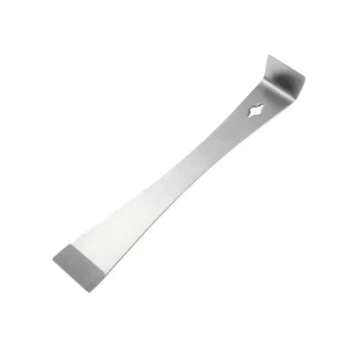
A hive tool is used to separate boxes, loosen frames, remove propolis, and inspect hive components. A smoker helps reduce defensive behavior during routine handling.
Protective clothing, gloves, and veils are also necessary for safe commercial work, especially when operators manage large numbers of colonies or defensive stocks.
Uncapping and honey extraction equipment
Before extraction, operators use uncapping knives, forks, or automated uncapping equipment to remove the wax capping from filled honey cells. Frames then enter a centrifugal honey extractor, which removes honey without destroying the comb.
Filtering, settling, pumping, filling, and packaging equipment complete the post-harvest workflow. This equipment enables faster, cleaner, and more repeatable processing than manual comb collection.
Feeding and seasonal support equipment
Managed colonies may require supplemental syrup or fondant during periods of limited forage. Feeders should be selected for the hive format and installed in a way that limits robbing and contamination.
Commercial suppliers often package feeding equipment with hive hardware, replacement frames, protective gear, and seasonal maintenance products to support one-stop purchasing.
Biosecurity and Mite-Management Equipment
Managed colonies need active intervention
Cavity-nesting colonies remain in the same managed housing, unlike some open-nesting colonies that may abandon combs. Consequently, parasites and pathogens can persist within the apiary unless they are actively monitored and controlled.
Commercial management therefore requires an equipment and treatment program covering inspection, sanitation, brood evaluation, and approved pest-control methods.
Screened boards and monitoring tools
Screened bottom boards can support ventilation and help operators monitor falling mites or other hive debris. They should be used as part of a broader integrated pest-management program rather than treated as a complete control measure.
Additional monitoring tools may include inspection trays, sampling equipment, and records for tracking colony health and treatment timing.
Uncapping tools and treatment compatibility
Capped brood must be inspected carefully when assessing colony condition. Uncapping tools can support brood examination, while mechanical or chemical mite treatments must be selected and used according to applicable label instructions and local regulations.
Equipment suppliers should distinguish between general hive hardware and regulated treatment products. Clear product documentation is especially important for wholesalers and resellers serving multiple markets.
Why Standardized Manufacturing Matters
Uniform dimensions enable interchangeability
Commercial apiaries depend on components that fit together consistently. Uniform hive bodies, brood boxes, frames, covers, and supers allow operators to move equipment between colonies without extensive modification.
This interchangeability reduces labor, simplifies spare-parts inventory, and improves response times when equipment must be repaired or replaced.
Machinery supports scalable production
Hive-making machines, woodworking systems, frame assembly equipment, and automated hardware help manufacturers produce repeatable components at commercial volume. Consistency directly affects assembly speed and field reliability.
For distributors, a complete machinery and consumables offering can be more valuable than isolated hive components because it supports both equipment production and apiary operation.
Standardization improves downstream processing
Consistent frame dimensions also improve compatibility with uncapping systems, extractors, honey pumps, and filling equipment. The entire workflow—from hive inspection to packaged honey—benefits from a common equipment standard.
This is why commercial sourcing should consider the complete operating system rather than only the hive box.
Understanding the Trade-offs
Open-nesting species are not simply smaller versions of managed bees
Open-nesting bees cannot generally be converted to standard commercial hive production by supplying a different box. Their nest architecture, exposed placement, migration patterns, and defensive behavior are fundamentally different from those of cavity-nesting species.
Attempting to force these species into conventional frame equipment can result in colony abandonment, damaged comb, unsafe handling, and poor economic performance.
Cavity-nesting management requires continuous labor
Movable-frame hives make management possible, but they do not eliminate work. Colonies require inspections, seasonal expansion, swarm management, feeding when necessary, pest monitoring, equipment cleaning, and timely honey removal.
The commercial advantage is control and repeatability—not maintenance-free operation.
Standardization must match the selected hive system
Not all hive components are interchangeable across every hive format. Mixing incompatible frame sizes, box dimensions, or cover designs can create gaps, poor bee-space control, and inefficient handling.
Distributors should confirm dimensions, materials, assembly requirements, and compatibility before consolidating products from different manufacturers.
Equipment does not replace biological judgment
Machinery can improve throughput and consistency, but it cannot determine whether a colony is healthy or whether a treatment is appropriate. Commercial results still depend on trained beekeepers, suitable bee genetics, local forage, climate, and regulatory compliance.
How to Apply This to Your Apiary or Product Portfolio
The most effective sourcing strategy aligns equipment with the species’ nesting behavior and the operator’s production model.
- If your primary focus is commercial honey production: Prioritize cavity-compatible hive bodies, brood boxes, movable frames, wax foundation, honey supers, extractors, uncapping systems, and filling equipment.
- If your primary focus is scalable apiary management: Build a standardized portfolio of interchangeable woodenware, frames, screened bottom boards, covers, stands, hive tools, smokers, and protective equipment.
- If your primary focus is biosecurity and colony health: Include inspection tools, mite-monitoring equipment, screened boards, brood-management tools, feeders, and treatment-compatible hardware.
- If your primary focus is distribution or wholesale supply: Select suppliers capable of providing a full-spectrum product range, consistent dimensions, rapid response, technical support, and efficient order fulfillment.
- If your primary focus is open-nesting wild species: Treat them as ecological or observational populations rather than assuming that standard movable-frame hive equipment will support conventional domestication.
Matching hive technology to bee biology is the foundation of reliable, scalable, and commercially sustainable apiary management.
Summary Table:
| Aspect | Cavity-Nesting Bees | Open-Nesting Bees |
|---|---|---|
| Nest Structure | Multiple parallel combs in enclosed cavities | Single exposed comb on branches or cliffs |
| Suitability for Conventional Hives | High - adapt to movable frames | Low - difficult to manage in frames |
| Management | Modular, inspectable, movable | Observational, manual comb collection |
| Equipment Needed | Hive bodies, frames, supers, extractors | Minimal/alternative methods |
Ready to equip your commercial apiary with the right tools? HONESTBEE offers a comprehensive range of beekeeping equipment, from hive bodies to honey extractors, tailored for cavity-nesting species. We cater to distributors and beekeepers, providing one-stop sourcing, fast delivery, and expert support. For distributors, we offer competitive margins, OEM/ODM services, certifications, and reliable supply. Contact us today to discuss your needs!
Related Products
- HONESTBEE Classic Pry Bar Hive Tool with High Visibility Finish for Beekeeping
- Professional Stainless Steel Pry-Bar Hive Tool
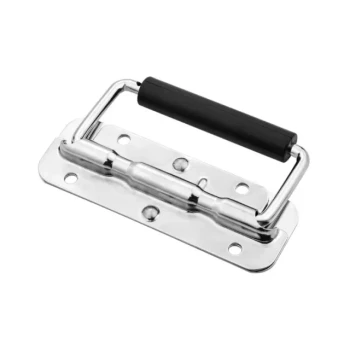
- Ergonomic Two Person Foldable Hive Lifter
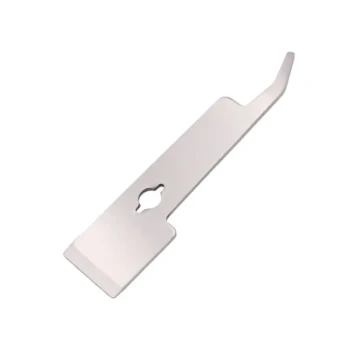
- HONESTBEE Professional Long Handled Hive Tool with Precision Cutting Blade
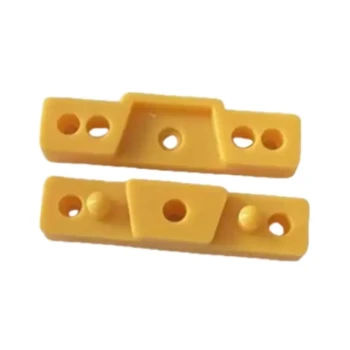
- Durable Plastic Interlocking Hive Connector for Beekeeping
People Also Ask
- What specific challenges do beekeeping hive tools address during hive maintenance? Essential Solutions for Apiaries
- Why are specialized beekeeping tools essential for executing colony health monitoring processes? Enhance Hive Precision
- What are some essential tools for beekeepers? Start Your Apiary with the Right Gear
- What are the essential tools and gear for basic beekeeping? Equip Your Apiary for Success and Safety
- What is the purpose of adding crystalline soda when disinfecting beekeeping tools? Boost Sterilization Efficiency