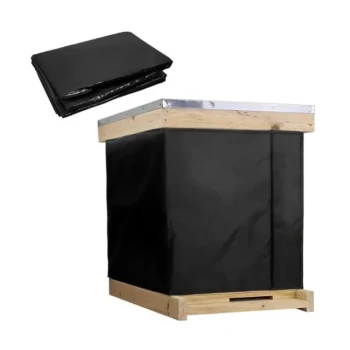
The thermal difference between these two hive types is drastic, with modern hives offering more than five times the insulation of wood. A standard wooden beehive, typically built with walls less than one inch thick, provides an R-value of less than 1. Conversely, modern insulated beehives are engineered to significantly reduce heat transfer, achieving an R-value of 5 or higher.
The gap between R-1 and R-5 is not just a metric; it represents the difference between a thin-walled box and a habitat that replicates the protective environment of a natural tree cavity.
Analyzing the Thermal Gap
The Baseline: Standard Wooden Hives
Standard apiary equipment has traditionally relied on lumber less than one inch thick.
While this material is durable and readily available, it offers minimal thermal resistance.
Consequently, the R-value of these structures typically falls below 1, offering little protection against external temperature fluctuations.
The Efficiency of Modern Insulated Hives
Modern insulated hives represent a significant shift in design philosophy.
These hives use advanced materials or construction methods specifically to impede heat transfer.
By achieving an R-value of 5 or higher, they drastically reduce the rate at which heat escapes the colony in winter or enters in summer.
The Biological Context
The Hollow Tree Benchmark
To understand why this R-value matters, one must look at where wild bees choose to live.
In nature, bees overwinter in the thick, rotting wood of hollow tree cavities.
These natural nests provide high levels of insulation, stabilizing the internal environment against the elements.
Mimicking Natural Conditions
Standard wooden boxes fail to replicate the thermal properties of a tree.
Modern insulated hives are designed to mimic these natural nesting sites.
By aligning the hive's R-value with that of a tree cavity, the hive structure supports the colony's natural overwintering strategies rather than working against them.
Understanding the Trade-offs
The Cost of Low Insulation
Choosing a standard wooden hive involves a functional trade-off regarding the colony's energy.
With an R-value under 1, the colony must consume more honey stores to generate the metabolic heat required to survive.
The bees effectively compensate for the building's lack of insulation with their own physical labor.
The Shift in Management
Moving to an R-5 environment changes the colony's dynamics.
Beekeepers must recognize that the "traditional" way of keeping bees is based on equipment that offers almost no thermal protection.
Adopting modern equipment requires acknowledging that standard wood is an artificial constraint compared to the high-insulation homes bees select in the wild.
Making the Right Choice for Your Goals
When selecting hive equipment, the R-value is a critical factor in how you will manage colony stress.
- If your primary focus is replicating natural habitats: Select modern insulated equipment to achieve the R-5+ protection found in wild tree cavities.
- If your primary focus is using standard wooden ware: Be aware that the R-value is less than 1, and your bees will face greater thermal stress during extreme weather.
High-performance insulation transforms the hive from a simple shelter into a tool that actively supports colony health.
Summary Table:
| Feature | Standard Wooden Beehive | Modern Insulated Beehive | Natural Tree Cavity |
|---|---|---|---|
| Typical R-Value | < 1.0 | 5.0 or Higher | High (Variable) |
| Material Thickness | Under 1 inch | Engineered Insulation | Thick Rotting Wood |
| Thermal Protection | Minimal | Significant | Superior |
| Winter Honey Consumption | High (High Metabolic Demand) | Low (Efficient Heat Retention) | Low (Natural Balance) |
| Colony Stress | High (Fluctuating Temps) | Low (Stable Environment) | Low (Stabilized) |
Elevate Your Apiary’s Productivity with HONESTBEE
Transitioning from standard wood to high-performance insulated equipment is the key to reducing colony mortality and maximizing honey yields. At HONESTBEE, we specialize in supporting commercial apiaries and distributors with high-quality, wholesale beekeeping solutions.
Our extensive portfolio includes everything from honey-filling and hive-making machinery to essential consumables and professional-grade beekeeping tools. Whether you are scaling your commercial operation or supplying the next generation of beekeepers, we provide the hardware and expertise you need to succeed.
Ready to upgrade your equipment and support your bees? Contact HONESTBEE today to discuss our wholesale offerings!
Related Products
- Professional Insulated Plastic Bee Hives
- Professional Insulated Winter Hive Wrap for Beekeeping
- Inner Beehive Cover for Beekeeping Bee Hive Inner Cover
- In-Hive Dual Compartment Frame Bee Feeder for Targeted Colony Nutrition
- Stainless Steel Round Beehive Air Vents for Ventilation
People Also Ask
- What are the advantages of plastic bee hives? Boost Efficiency & Durability for Your Apiary
- Are plastic bee hives any good? Unlock Durability & Efficiency for Your Apiary
- How do plastic bee hives compare to wooden hives in handling? Reduce Strain & Boost Efficiency
- Are plastic bee hives good? Durable, Low-Maintenance Hives for Modern Apiaries
- What are the disadvantages of plastic beehives? Key Operational and Environmental Risks Exposed