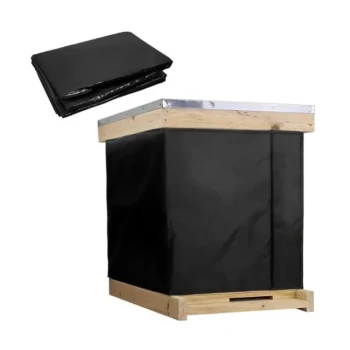
The implementation of insulated beehives directly improves apiary efficiency by superior thermal regulation, which drastically reduces the colony's metabolic energy expenditure. By retaining internal heat more effectively, bees consume significantly less honey or supplemental sugar to maintain hive temperatures, thereby lowering operational input costs and shrinking the carbon footprint associated with feed production and transport.
Core Takeaway Insulated hives shift the energy balance of an apiary from reactive maintenance to proactive production. By reducing the biological "fuel" (honey and sugar) required for survival heating, you simultaneously lower operational costs and increase the environmental sustainability of the operation.
The Mechanics of Thermal Efficiency
Reducing Metabolic Overhead
The primary function of an insulated hive is to stabilize the internal environment against external fluctuations. In standard wooden hives, bees must cluster tightly and vibrate their wing muscles to generate heat during cold periods.
This process is metabolically expensive. Insulation acts as a force multiplier for the colony, retaining the heat generated by the bees for longer periods. This allows the colony to maintain critical brood temperatures with significantly less physical effort.
Lowering Feed Dependencies
Energy in a hive comes from one source: carbohydrates. To generate heat, bees consume stored honey or supplemental sugar syrup.
When thermal loss is minimized through insulation, the caloric requirement drops. This directly translates to reduced input costs for feeding, as the colony burns through fewer stores to survive the winter. For the beekeeper, this preserves more honey for harvest and reduces the reliance on purchasing and transporting sugar.
Environmental and Resource Implications
Optimizing Colony Survival Rates
Resource efficiency is not just about feed; it is about the preservation of the biological asset—the bees themselves. Extreme weather events often lead to high mortality rates in poorly insulated hives.
Insulated hives mitigate these temperature spikes and dips, reducing bee mortality during extreme weather. By keeping the colony population stable, the apiary avoids the resource-intensive process of replacing dead-outs or nursing weak colonies back to health in the spring.
Reducing the Carbon Footprint
The improved resource efficiency of an insulated system has a measurable environmental impact. By reducing the need for supplemental feeding, an apiary reduces the indirect carbon emissions associated with the agricultural production, processing, and transportation of sugar.
Furthermore, the structural integrity and durability associated with high-quality insulated hives often extend the equipment's lifespan. This reduces the frequency of equipment replacement, minimizing waste and the consumption of raw materials over the long term.
Understanding the Trade-offs
Initial Investment vs. Operational Savings
While the operational benefits are clear, utilizing high-quality insulated systems represents a shift in capital strategy.
Standardized, high-quality infrastructure often commands a higher upfront cost compared to basic setups. You are essentially pre-paying for energy efficiency. The return on investment is realized over time through lower feed costs and higher survival rates, rather than immediate savings.
The Necessity of Precision
Insulation works best when paired with precise manufacturing. As noted in industry standards, professional manufacturing ensures tight tolerances. If an insulated hive has poor joinery or gaps, the thermal benefits are negated by drafts. Therefore, relying on insulation requires a commitment to high-quality, standardized equipment rather than ad-hoc or lower-grade solutions.
Making the Right Choice for Your Goal
To maximize the benefits of insulated hives, align your equipment choice with your specific operational objectives.
- If your primary focus is Economic Sustainability: Prioritize insulation to lower winter feed costs and increase the average honey yield per hive by preserving colony strength for the early flows.
- If your primary focus is Colony Health: Use insulated hives to buffer against environmental stressors and reduce winter mortality, ensuring robust populations for brood rearing.
- If your primary focus is Operational Scale: Leverage the durability of high-quality insulated units to reduce maintenance labor and equipment turnover, allowing for easier expansion of hive numbers.
Ultimately, insulation transforms the beehive from a simple shelter into an active tool for energy conservation and resource management.
Summary Table:
| Key Feature | Benefit of Insulation | Resource Impact |
|---|---|---|
| Thermal Regulation | Stabilizes internal hive temperature | Reduces metabolic energy expenditure |
| Feed Consumption | Less honey/sugar needed for heating | Lowers operational input costs |
| Colony Survival | Buffers against extreme weather | Prevents costly colony loss/replacement |
| Environmental Impact | Reduced transport & production needs | Smaller carbon footprint & less waste |
| Equipment Life | High-quality, durable materials | Extends replacement cycles & saves raw materials |
Maximize Your APIary’s Potential with HONESTBEE
Transitioning to high-performance equipment is the key to sustainable beekeeping. HONESTBEE empowers commercial apiaries and distributors with the high-quality, standardized tools needed to optimize resource efficiency.
From advanced hive-making systems to professional honey-filling machinery and a comprehensive range of beekeeping consumables, we provide the infrastructure your business needs to scale sustainably. Whether you are looking to lower operational costs or expand your wholesale portfolio with premium beekeeping hardware, our team is ready to support your growth.
Ready to upgrade your operation? Contact us today to explore our full wholesale spectrum!
References
- Marc Benoît, Gilles Grosmond. Analysis of the greenhouse gas emissions and energy consumption in beekeeping: what are the sensitivity factors?. DOI: 10.3389/fanim.2025.1524343
This article is also based on technical information from HonestBee Knowledge Base .
Related Products
- Professional Insulated Plastic Bee Hives
- Professional Insulated Winter Hive Wrap for Beekeeping
- Inner Beehive Cover for Beekeeping Bee Hive Inner Cover
- Stainless Steel Round Beehive Air Vents for Ventilation
- Wholesales Dadant Size Wooden Bee Hives for Beekeeping
People Also Ask
- What are the advantages of plastic bee hives? Boost Efficiency & Durability for Your Apiary
- Are plastic bee hives any good? Unlock Durability & Efficiency for Your Apiary
- How do plastic bee hives compare to wooden hives in handling? Reduce Strain & Boost Efficiency
- Are plastic bee hives good? Durable, Low-Maintenance Hives for Modern Apiaries
- What are the disadvantages of plastic beehives? Key Operational and Environmental Risks Exposed