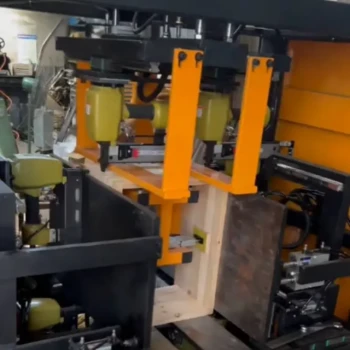
Standardized hive-boxes increase honey production by fundamentally shifting apiculture from predatory harvesting to sustainable, scientific management. Instead of destroying the colony to retrieve honey, these modular systems provide a controlled environment that allows for periodic harvesting, optimized colony health, and the mechanization required for commercial scale.
The core advantage of standardization is the transition from "hunting" honey to "farming" it. By preserving the colony structure during harvest and utilizing interchangeable hardware, beekeepers can achieve consistent, scalable yields that are impossible with traditional or wild nesting methods.
The Shift to Scientific Management
Sustainable, Non-Destructive Harvesting
Traditional wild harvesting often requires destroying the nest to access honey. Standardized hives allow for selective removal of mature honey frames.
This ensures the bee population remains intact and productive for multiple cycles. By protecting the colony structure, the hive can continue producing honey immediately after a harvest, significantly increasing annual output.
Controlled Environmental Optimization
Standardized boxes function as a scientifically managed habitat rather than a simple container. They provide essential thermal insulation and structural support, protecting the colony from adverse weather.
When the hive environment is stable, bees expend less energy on temperature regulation and hive repair. This energy conservation allows the colony to redirect resources toward foraging and honey accumulation.
Precise "Bee Space" Engineering
Modern hive manufacturing relies on precise physical specifications to maintain accurate bee space. This is the exact gap required for bees to move freely without building excess wax (burr comb) or propolis.
maintaining this precision prevents the colony from wasting energy on unnecessary construction. It also ensures that frames remain movable for inspection, preventing operational errors that could disrupt production.
Operational Efficiency and Scalability
Enabling Mechanized Operations
Commercial honey production relies on speed and volume. Standardized hives are engineered to be compatible with automated harvesting equipment and processing lines.
Uniform dimensions allow for the use of uncapping machines and extractors that cannot function with irregular traditional hives. This mechanization removes bottlenecks, allowing a single operation to manage significantly more hives.
Modular Resource Allocation
Standardization introduces modularity to the apiary. Frames and boxes are interchangeable across different hives, facilitating seamless resource reallocation.
If a strong colony needs more space or a weak colony needs support, resources can be split or combined instantly. This flexibility optimizes the overall health of the apiary, ensuring that high-performing colonies have the room they need to maximize storage.
Streamlined Health Monitoring
The design of standardized hives permits frequent, non-invasive routine inspections. Technicians can monitor for pests, diseases, and queen health without dismantling the entire nest.
Early detection of issues allows for immediate intervention. This reduces colony loss rates and ensures yield stability across the commercial operation.
Understanding the Trade-offs
High Initial Capital Expenditure
Transitioning to standardized systems requires a significant upfront investment in hardware. Unlike simple traditional hives, these precision-engineered boxes represent a substantial asset base that must be managed.
Producers must carefully calculate equipment depreciation and profitability. The efficiency gains must outweigh the cost of purchasing and maintaining high-standard equipment to ensure commercial viability.
Dependence on Management Rigor
Standardized hives are tools for active management, not passive housing. Their design assumes regular human intervention for inspections and frame rotation.
If neglected, the advantages of the system collapse. Without a rigorous schedule for splitting colonies and managing space, standardized hives can still suffer from swarming or overcrowding, negating potential yield increases.
Making the Right Choice for Your Goal
To leverage standardized hives effectively, align your management style with your specific production targets:
- If your primary focus is Maximum Volume: Prioritize compatibility with mechanized extraction equipment to remove labor bottlenecks during the flow.
- If your primary focus is Colony Health: Utilize the modularity of the boxes to perform frequent splits and equalize resources between strong and weak hives.
- If your primary focus is Profitability: Focus on equipment durability and depreciation schedules to ensure your hardware investment delivers a long-term ROI.
Standardization transforms the hive from a passive vessel into an active production tool, enabling the predictability required for a viable commercial business.
Summary Table:
| Feature | Impact on Production | Primary Benefit |
|---|---|---|
| Modular Design | Enables resource reallocation | Optimizes apiary-wide performance |
| Precision Bee Space | Reduces wasted energy on wax/propolis | Redirects bee energy to foraging |
| Mechanization Compatibility | Facilitates automated extraction | Removes bottlenecks for high-volume yield |
| Non-Destructive Harvest | Preserves colony structure | Allows for multiple annual harvest cycles |
| Thermal Optimization | Protects colony from weather stress | Improves survival rates and worker efficiency |
Scale Your Commercial Honey Production with HONESTBEE
Transitioning to a high-yield, standardized operation requires precision-engineered hardware and reliable machinery. At HONESTBEE, we specialize in supporting commercial apiaries and distributors by providing a comprehensive wholesale ecosystem.
Our value to your business includes:
- Advanced Machinery: From precision hive-making equipment to high-speed honey-filling machines.
- Premium Hardware: Durable, standardized beekeeping tools and hive components designed for longevity.
- Industry Consumables: A complete range of essential supplies to keep your colonies thriving.
- Cultural Merchandise: Honey-themed products to diversify your brand's market reach.
Ready to enhance your apiary's efficiency and maximize your ROI? Contact HONESTBEE today to discuss how our bulk supply and technical equipment can transform your commercial operations.
References
- Debasis Upadhyay, Subir Bera. Prospects of Apicultural Entrepreneurship in Coastal Districts of Eastern India: A Melissopalynological Evaluation. DOI: 10.1371/journal.pone.0094572
This article is also based on technical information from HonestBee Knowledge Base .
Related Products
- Automatic High-Speed Bee Hive Box Stapling Machine
- Metal Bee Hive Stand Bee Box Stand for Beekeeping
- Portable Bee Mating Hive Boxes Mini Mating Nucs 8 Frames for Queen Rearing
- Langstroth Honey Bee Box Hive Boxes for Different Depths
- Australian Langstroth Beehive Boxes for Beekeeping Wholesales
People Also Ask
- How is the Bee Box machine adjusted for different box sizes? Maximize Your Woodworking Versatility and Precision
- How is the Bee Box machine operated? Optimize Your Commercial Hive Production with Scalable Staffing Solutions
- How was the Bee Box machine designed? Industrial Engineering for High-Volume Beekeeping Production
- What is the production capacity of the Bee Box machine? Boost Output up to 1,000 Boxes Daily
- What are the power requirements and control system for the Bee Box machine? Optimize Your Apiary Equipment Production