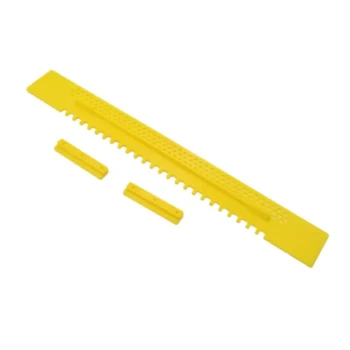
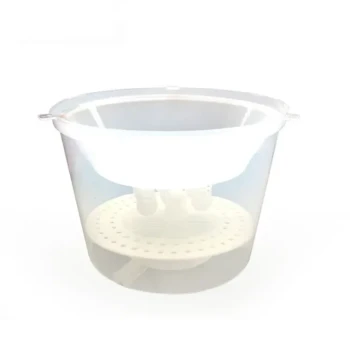
Preparation hinges on establishing a new flight pattern before introducing the collection mechanism. You cannot simply switch a colony from a bottom entrance to a top entrance pollen trap in a single step. To ensure success, you must install a standard top entrance at the specific location where the trap will eventually sit, allowing the bees to use it for one to two weeks prior to trap installation.
The Core Takeaway A honey bee colony requires a transitional period to accept a top entrance. By separating the "location change" from the "trap installation," you allow the bees to re-orient their flight paths without the added stress of navigating a pollen-stripping barrier immediately.
Step 1: Establishing the Top Entrance
To prepare the colony, you must overcome the bees' natural adherence to their existing flight paths.
Overcoming Entrance Inertia
Bees that are accustomed to a bottom entrance will not easily adjust to a top entrance if it is introduced simultaneously with a trap. The combination of a new location and a physical barrier is too disruptive.
The Required Timeline
You must introduce a standard, open top entrance first. Allow the colony to use this entrance exclusively for at least one to two weeks.
Securing the Habit
This lead time ensures the bees establish a strong habit of flying in and out through the top of the hive. Only after this pattern is set should you swap the standard entrance for the pollen trap.
Understanding Colony Behavior
Once the trap is installed, the internal dynamics of the hive will shift significantly.
The Protein Deficiency Loop
Pollen traps use grids to strip pellets from the legs of returning foragers. This creates an artificial protein feed deficiency within the hive.
Shifting the Workforce
The colony reacts to this shortage by adjusting its division of labor. The hive will dispatch significantly more worker bees to foraging tasks to compensate for the perceived loss, which ultimately enhances the total amount of pollen collected.
Understanding the Trade-offs
While pollen traps effectively harvest resources, they introduce specific constraints on the hive's productivity and biology.
Impact on Honey Production
There is a direct inverse relationship between pollen trapping and honey production. Because the colony reallocates workers to pollen collection to compensate for the trap, the nectar-collecting workforce is reduced, leading to lower honey yields.
Trap Design and Drone Safety
A well-prepared setup uses a trap designed to let a portion of pollen pass through for larval feeding. Crucially, the trap must feature unrestricted exits (often cone-shaped) that allow larger bees, such as drones and queens, to exit the hive freely.
Managing Post-Collection Flow
Your preparation strategy must also account for when you intend to stop collecting pollen.
Maintaining the Flight Path
When you remove the pollen trap, do not force the bees back to a bottom entrance immediately. Because they have established flight patterns through the top, you must replace the trap with a standard top entrance.
Making the Right Choice for Your Goal
- If your primary focus is maximizing pollen yield: Ensure you complete the full two-week orientation period so the entire foraging force is utilizing the top entrance efficiently before the trap is applied.
- If your primary focus is honey production: Acknowledge that installing a pollen trap will divert workforce away from nectar; you may need to limit trapping duration to preserve the honey harvest.
Success lies in patience: acclimate the bees to the location first, and the collection will follow naturally.
Summary Table:
| Preparation Step | Duration | Key Action/Goal |
|---|---|---|
| Orientation Phase | 1-2 Weeks | Install a standard top entrance to establish a new flight path. |
| Trap Installation | Ongoing | Replace the standard entrance with the trap once flight patterns are set. |
| Workforce Shift | Immediate | Monitor for increased foraging as bees compensate for protein deficiency. |
| Drone Management | Constant | Ensure the trap features unrestricted exits (cones) for drones/queens. |
| Post-Collection | Permanent/Variable | Replace trap with standard top entrance to maintain established flight habit. |
Maximize Your Pollen Harvest with HONESTBEE Professional Equipment
Transitioning your apiary to high-yield pollen collection requires both the right strategy and the right tools. At HONESTBEE, we specialize in supporting commercial apiaries and distributors with a complete range of professional-grade beekeeping solutions.
From high-efficiency pollen traps designed for drone safety to specialized hive-making and honey-filling machinery, we provide the durable hardware and essential consumables you need to scale your operations. Whether you are looking for bulk wholesale supplies or advanced industrial equipment, our team is dedicated to enhancing your apiary's productivity and value.
Ready to upgrade your commercial setup? Contact HONESTBEE today to discuss our comprehensive wholesale offerings and find out how we can streamline your honey and pollen production.
Related Products
- 30 cm Plastic Entrance Hole Bee Pollen Trap and Collector
- Removable Plastic Pollen Trap With Ventilated Tray for Bees Pollen Collector
- Plastic Bee Pollen Trap Strips Comb Catcher Collector
- High-Efficiency Diamond Maze Bee Escape for Clearing Supers
- Professional Reversible Beehive Hive Entrance
People Also Ask
- What are the design principles and advantages of pollen traps in the collection of bee pollen? Boost Your Apiary Yield
- Why is frequent harvesting of bee pollen from traps necessary for quality control? Ensure Freshness and Prevent Mold.
- How often should bee pollen be harvested from a trap and why? Master Freshness and Prevent Spoilage
- What function do pollen traps serve in quantitative collection? Boost Your Apiary's Data & Production Efficiency
- What is the primary function of bee pollen traps? Optimize Your Pollen Harvest with Advanced Extraction Efficiency