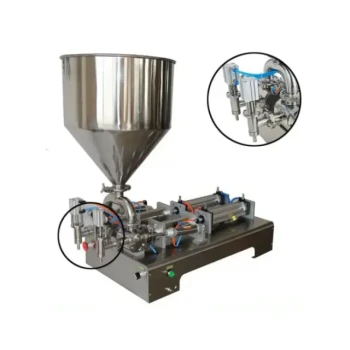
Industrial honey filling machines fundamentally transform production capabilities by shifting operations from labor-intensive manual processes to precision-driven automation. These systems improve competitiveness by drastically increasing packaging efficiency, ensuring standardized product volume, and protecting the honey’s shelf life through rigorous hygiene controls.
By automating the critical transfer from bulk storage to retail packaging, these machines do more than save time; they legitimize the product. They provide the consistency and sanitary guarantees required to transition from local bulk sales to high-value formal retail markets.
Operational Efficiency and Cost Control
Reducing Labor and Increasing Speed
The most immediate impact of industrial filling machines is the automation of the transfer process from bulk tanks to containers. This mechanization significantly increases packaging efficiency, allowing producers to scale operations rapidly to meet market demands without a proportional increase in workforce size.
Minimizing Material Waste
Manual filling often leads to overfilling or spills, which eats into profit margins. Industrial machines utilize high-precision piston-style or weighing-based systems to ensure the net content of every jar complies strictly with label specifications. This precision eliminates raw material loss due to overfilling or human error.
Enhancing Production Consistency
Beyond speed, these machines ensure consistent volume across all units. By removing the variability of manual dosing, producers can guarantee that every unit leaving the facility meets the exact same weight and volume standards, a critical factor for inventory management and commercial trust.
Elevating Hygiene and Product Quality
Extending Shelf Life via Closed Environments
The primary reference highlights that industrial machines operate in a closed environment. This minimizes the risk of microbial contamination during the packaging process, which is essential for extending the shelf life of the final product.
Preventing Fermentation and Spoilage
Honey is hygroscopic, meaning it absorbs moisture from the air. Industrial-grade machines prevent atmospheric moisture from entering the honey during filling. This control is vital for avoiding fermentation and spoilage, ensuring the honey maintains its original characteristics and quality over time.
Meeting Strict Food Safety Standards
Automated lines reduce the risk of secondary contamination caused by manual handling. Features such as no-drip filling nozzles and automatic capping ensure a clean, airtight seal at the bottleneck. This adherence to hygiene allows facilities to meet modern food safety regulations and obtain necessary health certifications.
Market Access and Brand Positioning
Accessing Formal Retail Channels
To sell in supermarkets, exhibitions, and international markets, honey must meet standardized packaging requirements. Automated filling provides the professionalism and consistency required to enter these formal retail channels, effectively expanding the producer's market reach.
Building Trust Through Professional Presentation
Competitiveness is also driven by consumer perception. Integrated labeling systems ensure that critical information—such as geographical origin and nutritional content—is presented clearly and accurately. This visual professionalism builds brand trust and justifies premium pricing for high-value commodities.
Understanding the Trade-offs
Maintenance and Technical Expertise
While automation reduces manual labor, it introduces a need for technical maintenance. To maintain the hygiene benefits described, the machines themselves require rigorous cleaning protocols to prevent cross-contamination between batches.
Capital Investment vs. Volume
The shift to industrial filling represents a significant upfront investment. It is most effective for facilities ready to move away from small-batch, "hand-filled" marketing strategies toward high-volume, standardized commercial commodities.
Making the Right Choice for Your Growth
If you are evaluating industrial filling technology, consider your immediate business objectives:
- If your primary focus is Profit Margins: Prioritize machines with high-precision weighing systems to eliminate raw material waste and reduce the cost per unit.
- If your primary focus is Market Expansion: Focus on equipment that offers "closed environment" filling and professional labeling to meet the strict hygiene and presentation standards of supermarkets and international trade.
Ultimately, industrial honey filling machines are not just production tools; they are the gateway to converting raw bulk honey into a standardized, high-value commercial asset.
Summary Table:
| Feature | Manual Filling | Industrial Machine Filling | Business Impact |
|---|---|---|---|
| Production Speed | Slow / Labor Intensive | High-Speed Automation | Scale operations rapidly |
| Filling Precision | Variable / Prone to Waste | High-Precision Piston/Weighing | Maximized profit margins |
| Hygiene Control | Open / Risk of Contamination | Closed Environment | Extended shelf life & safety |
| Market Readiness | Local / Small Scale | Professional / Standardized | Access to global retail & supermarkets |
| Consistency | Low uniformity | High standardized volume | Enhanced brand trust |
Elevate Your Honey Production with HONESTBEE
Transitioning from manual labor to high-precision automation is the key to scaling your apiary or distribution business. HONESTBEE specializes in providing commercial apiaries and distributors with premium, industrial-grade honey-filling machines and specialized beekeeping hardware designed to reduce waste and ensure food safety compliance.
From honey-filling and hive-making machinery to essential beekeeping consumables and honey-themed cultural merchandise, we offer a comprehensive wholesale portfolio to help you dominate the market.
Ready to transform your facility into a high-value commercial powerhouse?
References
- K. Beula, A Anandhy. A Study on Honey Production and Marketing by the Marthandam Beekeepers’ Co-Operative Society in Kanniyakumari District. DOI: 10.34293/economics.v8i2.1632
This article is also based on technical information from HonestBee Knowledge Base .
Related Products
- Commercial Rotary Honey Filling Machine for Production
- Precision Durable Efficient HONESTBEE Rotary Honey Filling Machine
- Fully Automatic Honey Filling Packaging Machine for Processing Line
- Economy Small Honey Filling Machine Honey Bottle Filler Packaging Machine
- Precision Automated Packaging Turntable Honey Spoon Filling Sealing Packing Machine
People Also Ask
- What role do commercial honey filling machines play in honey distribution? Scaling Efficiency and Quality Control
- What technical support do commercial-grade filling machines provide? Convert Honey NTFPs into Marketable Commodities
- What is the significance of specialized honey filling equipment? Scaling from Beekeeping to Commercial Success
- Why is professional honey filling machinery critical for honey production? Scale Your Apiary's Profit & Efficiency
- Why is high-capacity honey filling machinery necessary for Giant Honey Bees? Solve the Apis dorsata Volume Crisis