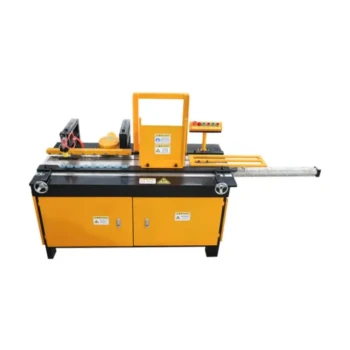
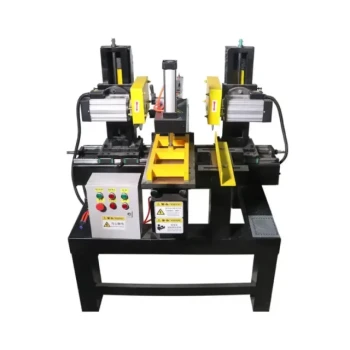
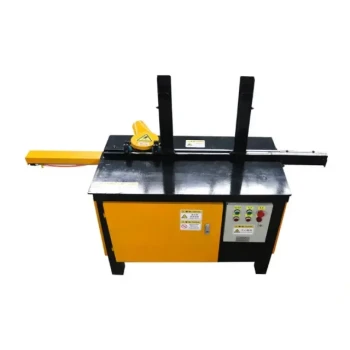
Specialized hive-making machinery serves as a critical bridge between manufacturing independence and biological optimization. By implementing this hardware, supply chains gain the ability to autonomously produce standardized hives tailored to specific local environments, significantly reducing initial investment costs while ensuring the structural precision necessary for large-scale management.
Core Takeaway Integrating hive-making machinery transforms a beekeeping operation from a passive consumer of equipment into a self-sufficient producer. It creates a sustainable supply chain where hive structures are physically optimized for local ecology and standardized to support future mechanization, effectively merging upstream manufacturing with downstream apiary efficiency.
Achieving Supply Chain Autonomy
Localized Production Power
Implementing this machinery shifts the supply chain model towards localized manufacturing. Instead of relying on distant suppliers, operations can process hives using local materials, effectively integrating upstream manufacturing capabilities directly into the beekeeping workflow.
Reducing Investment Barriers
By producing equipment in-house or locally, beekeepers significantly lower their initial investment costs. This removal of procurement premiums creates a financial buffer that supports easier entry into the industry and more sustainable long-term development.
Promoting a Circular Economy
This technology supports a self-sufficient supply of hardware. By utilizing local resources to create the necessary infrastructure, the operation reduces dependence on external resources, fostering a more resilient and circular economic model within the industry.
Enhancing Biological and Operational Precision
Mastering the "Bee Space"
The most critical technical benefit of this machinery is the strict maintenance of "bee space"—the precise gap required for bees to move freely. High-precision manufacturing prevents bees from building wild wax or applying excess propolis, which often occurs in poorly constructed hives.
Guaranteeing Interchangeability
Machinery ensures that every component meets standardized industrial specifications. This uniformity allows frames and boxes to be swapped seamlessly between different hives, which is a requirement for efficient colony rotation and large-scale apiary management.
Foundation for Mechanization
Standardized hives are the prerequisite for advanced mechanized honey extraction. Because the machinery guarantees that every frame fits perfectly, it minimizes disturbance to colonies during harvesting and protects the infrastructure required for automated processing lines.
Optimizing for Environmental Context
Climate-Specific Customization
Unlike mass-market equipment, machinery allows for structural optimizations based on regional ecological characteristics. Hives can be tailored to withstand specific local climates, ensuring better durability and colony protection.
Adaptation to Species
The technology enables the production of hardware matched to specific bee species. This biological alignment ensures a stable environment for the colony, which is fundamental to maximizing honey yields and maintaining colony health.
Understanding the Trade-offs
Operational Complexity vs. Procurement Simplicity
While manufacturing your own hives reduces direct purchasing costs, it introduces process complexity. The supply chain must now manage raw material sourcing, machine maintenance, and quality control, rather than simply receiving finished goods.
The Requirement for Material Consistency
To achieve the high precision promised by the machinery, the local materials used must be of sufficient quality. Using inferior lumber in high-precision machinery can lead to warping or deviations that negate the benefits of standardization and "bee space" accuracy.
Making the Right Choice for Your Goal
To maximize the value of specialized hive-making machinery, align its implementation with your specific operational targets:
- If your primary focus is Cost Control: Leverage the machinery to utilize local materials, thereby eliminating shipping costs and supplier markups to lower your initial capital expenditure.
- If your primary focus is Scalability: Prioritize the machinery's ability to produce standardized, interchangeable components that facilitate rapid colony expansion and mechanized harvesting.
Integrating specialized machinery transforms the hive from a simple container into a precision instrument optimized for both the bee and the business.
Summary Table:
| Key Benefit | Strategic Impact | Practical Outcome |
|---|---|---|
| Supply Chain Autonomy | Localized manufacturing control | Reduced procurement costs and shipping delays |
| Biological Precision | Exact "Bee Space" maintenance | Reduced wild wax and improved colony health |
| Standardization | Component interchangeability | Foundation for automated honey extraction |
| Climate Optimization | Custom structural designs | Enhanced hive durability and species suitability |
| Economic Resilience | Circular resource model | Lower initial investment and higher scalability |
Scaling Your Beekeeping Business? Partner with HONESTBEE
Transitioning from a passive consumer to a self-sufficient producer requires the right technology. HONESTBEE specializes in empowering commercial apiaries and distributors with high-precision hive-making and honey-filling machines.
By choosing our professional-grade machinery and comprehensive wholesale equipment, you gain:
- Full Manufacturing Independence: Produce standardized hives tailored to your local climate.
- Operational Excellence: Ensure every frame and box meets industrial specifications for mechanized harvesting.
- Complete Supply Solutions: Access a full spectrum of beekeeping tools and essential industry consumables.
Ready to optimize your supply chain and maximize honey yields? Contact us today to explore our wholesale solutions and see how our expertise can drive your growth.
References
- Maja Mladenović, Radica Bojičić. Organic agricultural production in the function of sustainable development of the municipality of Štrpce. DOI: 10.5937/ekopog2001001m
This article is also based on technical information from HonestBee Knowledge Base .
Related Products
- High-Efficiency Pneumatic Bee Hive Making Machine for Rapid Box Assembly
- Beehive Handle and Frame Rest Cutting Machine: Your Specialized Hive Machine
- Mini Desktop Bee Hive Frame Forming Making Machine
- Automatic High-Speed Bee Hive Box Stapling Machine
- Beehive Machine Double End Saw for Precision Hive Component Manufacturing
People Also Ask
- How does the introduction of professional beehive-making machinery benefit sustainable beekeeping? Scale Your Apiary
- Why is specialized beehive-making machinery critical for low-defense breeding? Enhance Selection with Precision Tools
- How does the introduction of specialized beehive making machinery contribute to increasing the scale of regional beekeeping industries?
- What is the importance of specialized beehive making machinery in a circular bio-economy? Build Local Sustainability
- Why is specialized beehive-making machinery essential? Scale Your Apiary with Precision Industrial Standards