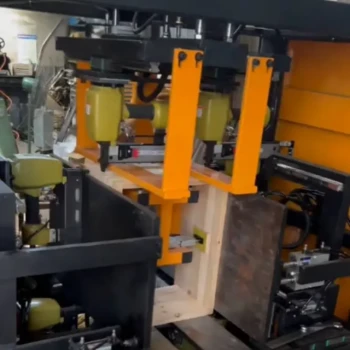
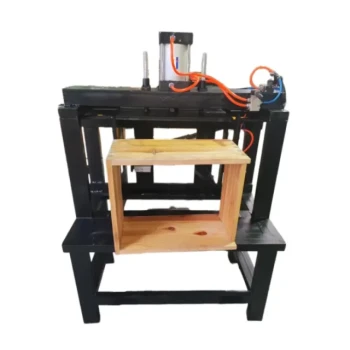
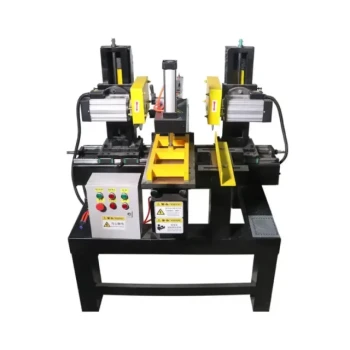
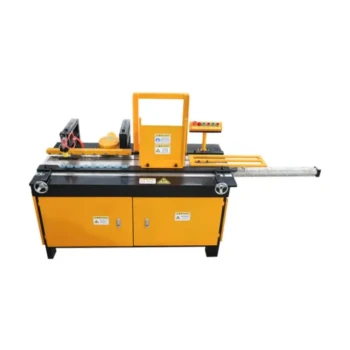
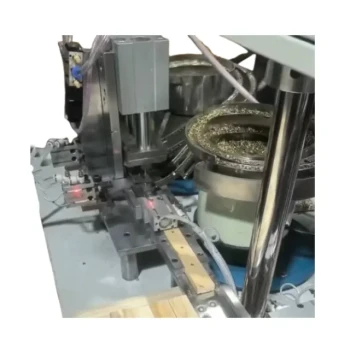
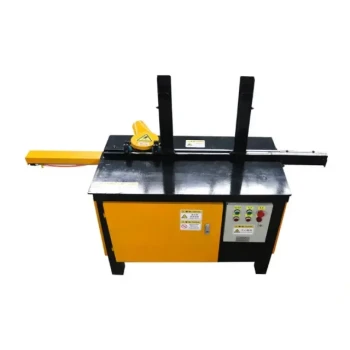
Automated beehive manufacturing equipment fundamentally transforms large-scale apiary operations by delivering rigorous standardization and high-precision engineering. By replacing variable manual construction with consistent mechanical production, these systems ensure universal component interchangeability, streamline complex logistics, and significantly improve colony health through superior thermal insulation.
Core Insight: In commercial beekeeping, consistency is the prerequisite for scalability. Automated manufacturing does not just produce boxes; it creates a standardized hardware ecosystem that allows for seamless mechanization while strictly adhering to the biological "bee space" required for colony survival.
Operational Efficiency and Standardization
For large-scale apiaries managing hundreds or thousands of colonies, the physical consistency of equipment is the single greatest factor in reducing labor costs and logistical friction.
Achieving Universal Interchangeability
Industrial-grade equipment produces components—such as bottom boards, supers, and frames—that are universally compatible. This ensures that any frame fits into any hive body across different apiary sites. This interchangeability eliminates the time wasted sorting or modifying ill-fitting parts during routine maintenance.
Streamlining Migration and Logistics
Commercial beekeeping frequently requires the migration of colonies to follow bloom cycles. Automated manufacturing ensures that hive dimensions are perfectly consistent, which facilitates stable stacking and transport. Uniform hives allow for denser packing and safer transit, minimizing the physical stress on the colony during moves.
Enabling Advanced Mechanization
Standardization is the foundation for further automation in the apiary. Hives produced with precise external dimensions are fully compatible with automated honey extraction machinery and maintenance tools. This compatibility prevents equipment jams and reduces the operational costs associated with manual adjustments.
Precision Engineering and Colony Health
Beyond operational logistics, the quality of the hive structure plays a critical role in the biological success of the bee colony, particularly regarding climate control and disease management.
Improving Thermal Insulation
High-precision manufacturing creates tighter joints and superior sealing compared to manual assembly. This structural integrity minimizes heat loss, which is critical for maintaining the colony's core temperature. Improved thermal insulation directly contributes to higher overwintering survival rates by reducing the energy bees must consume to generate heat.
Reducing Disease Risks
The precision of automated equipment effectively seals the hive against external elements. By preventing drafts and gaps, the equipment helps prevent the intrusion of pests and reduces the risk of disease transmission. A thermally stable and secure hive allows the colony to focus resources on brood rearing rather than repair or defense.
Optimizing Biological Space
Automated machinery ensures strict adherence to Langstroth specifications and biological "bee space" requirements. Precise internal dimensions prevent the creation of "burr comb" (unwanted wax bridges) and eliminate behavioral anomalies caused by irregular spaces. This creates a controlled environment where breeders can accurately evaluate biological traits without interference from faulty equipment.
The Risks of Inconsistency
While the investment in automation is significant, the cost of relying on non-standardized equipment in a large operation is often higher.
Incompatibility with Industrial Workflows
Manual or inconsistent manufacturing creates slight dimensional variances. In a large apiary, these variances compound, rendering hives incompatible with mechanized extraction lines. This forces operators to revert to manual processing, destroying the efficiency gains sought in commercial operations.
Compromised Colony Stability
Equipment that lacks high-precision sealing introduces environmental variables that undermine colony health. Gaps in the hive body lead to heat loss and pest intrusion, forcing the colony to expend vital energy on survival rather than production.
Making the Right Choice for Your Goal
To leverage automated manufacturing effectively, align the technology with your specific operational bottlenecks.
- If your primary focus is Logistics and Scale: Prioritize equipment that guarantees external dimensional consistency to maximize transport efficiency and compatibility with honey extraction lines.
- If your primary focus is Colony Health and Breeding: Focus on machinery that delivers high-precision joint construction to maximize thermal insulation and ensure strict adherence to biological bee space.
Automated manufacturing transforms the beehive from a simple shelter into a precision tool that stabilizes the biological environment and unlocks industrial scalability.
Summary Table:
| Key Benefit | Impact on Apiary Operations | Technical Advantage |
|---|---|---|
| Universal Interchangeability | Reduces labor costs and maintenance time | Standardized components (supers, frames, boards) |
| Logistical Efficiency | Safer, denser stacking during migration | Uniform external dimensions for transport |
| Thermal Insulation | Increases overwintering survival rates | High-precision joints and superior sealing |
| Biological Optimization | Prevents burr comb and behavioral anomalies | Strict adherence to Langstroth "bee space" |
| Mechanization Ready | Enables use of automated extraction lines | Compatible with industrial-grade machinery |
Maximize Your Apiary’s Potential with HONESTBEE
Transitioning to industrial-scale beekeeping requires more than just hives—it requires a precision-engineered ecosystem. HONESTBEE specializes in empowering commercial apiaries and distributors with high-performance solutions. From hive-making and honey-filling machines that ensure perfect standardization to a comprehensive range of beekeeping tools and essential consumables, we provide the hardware you need to eliminate logistical friction and improve colony health.
Ready to transform your production? Contact us today to discuss our wholesale offerings and discover how our specialized equipment and honey-themed cultural merchandise can drive your business growth.
References
- I.S. Minniakhmetov, D.V. Shelekhov. DEVELOPMENT OF BEEKEEPING IN BUZDYAK DISTRICT OF THE REPUBLIC OF BASHKORTOSTAN. DOI: 10.31563/1684-7628-2024-70-2-56-61
This article is also based on technical information from HonestBee Knowledge Base .
Related Products
- Automatic High-Speed Bee Hive Box Stapling Machine
- High-Efficiency Pneumatic Bee Hive Making Machine for Rapid Box Assembly
- Mini Desktop Bee Hive Frame Forming Making Machine
- HONESTBEE Top Bar & Bottom Bar Forming Machine | Bee Frame Machine
- Beehive Machine Double End Saw for Precision Hive Component Manufacturing
People Also Ask
- How is the Bee Box machine adjusted for different box sizes? Maximize Your Woodworking Versatility and Precision
- How is the Bee Box machine operated? Optimize Your Commercial Hive Production with Scalable Staffing Solutions
- How was the Bee Box machine designed? Industrial Engineering for High-Volume Beekeeping Production
- What is the production capacity of the Bee Box machine? Boost Output up to 1,000 Boxes Daily
- What are the power requirements and control system for the Bee Box machine? Optimize Your Apiary Equipment Production