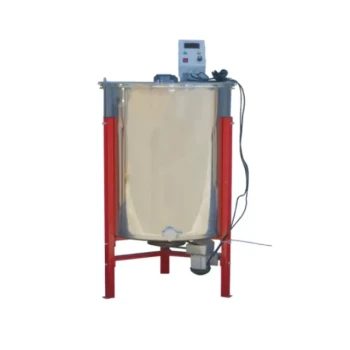
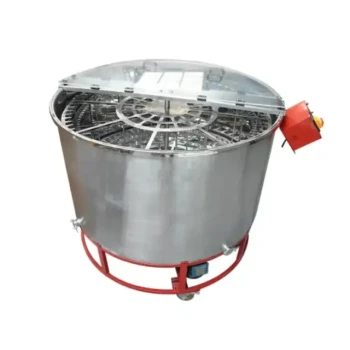
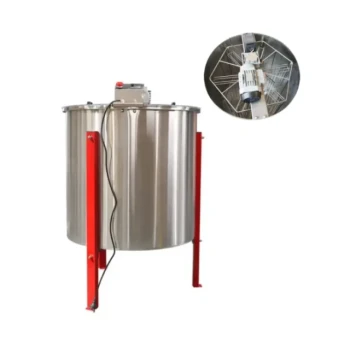
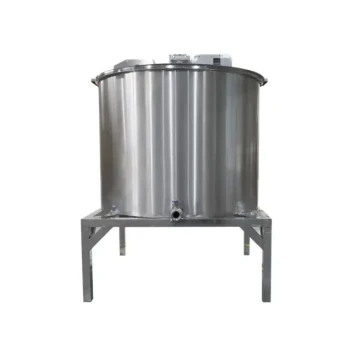
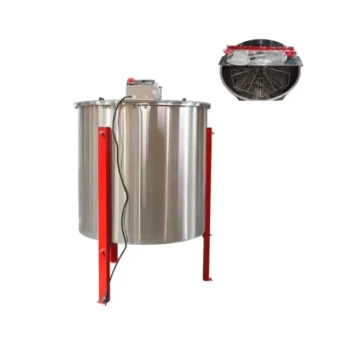
Centrifuge honey extractors vary primarily by their power source, construction material, and mechanical configuration. When selecting a unit, you will choose between manual or electric operation, bodies made of plastic or stainless steel, and basket designs that orient frames either radially or tangentially.
While the fundamental purpose of all centrifuge extractors is to preserve the wax comb for reuse, the specific variation you choose defines your workflow efficiency. Your decision ultimately relies on balancing the number of hives you manage against your desire for automation and durability.
Operational Power Sources
The most distinct variation involves how the centrifugal force is generated.
Manual Extractors
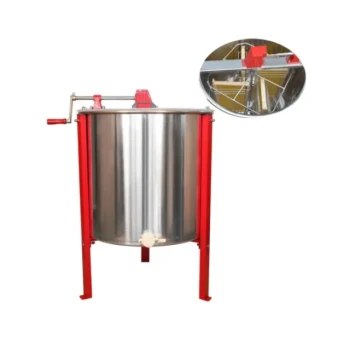
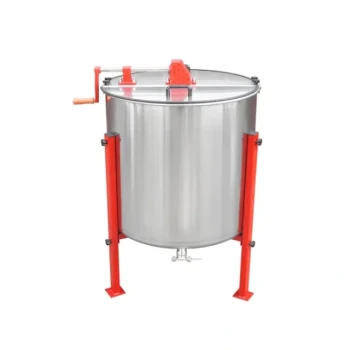
These units rely on a hand crank mechanism to spin the internal basket.
They are the most cost-effective option and offer total portability, as they require no electricity.
However, they are physically demanding and best suited for hobbyists managing a small number of hives.
Electric Extractors
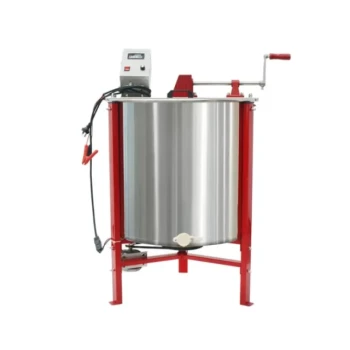
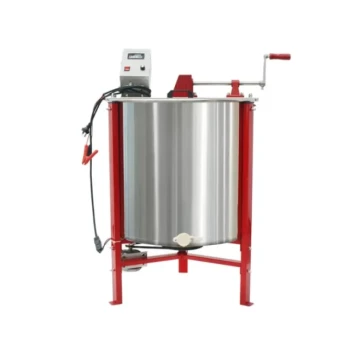
Electric models utilize a motor to spin the basket at consistent speeds.
This automation frees the beekeeper to uncap the next set of frames while the current batch spins, significantly increasing workflow speed.
They are generally more expensive but are essential for medium to large-scale operations.
Construction Materials and Capacity
The durability and scale of the machine are determined by what it is made of and how much it holds.
Stainless Steel vs. Plastic
Stainless steel is the industry standard for durability and hygiene.
It is easy to clean, resistant to rust, and typically lasts a lifetime, though it carries a higher price tag.
Plastic units are lighter and cheaper, making them an entry-level option, but they lack the long-term durability of metal.
Frame Capacity
Extractors are categorized by the specific number of frames they can hold simultaneously.
Small units typically hold 2 to 4 frames, aligning well with hobbyist needs.
Commercial units can hold dozens of frames at once, scaling up to meet high-volume production demands.
Mechanical Configurations
Beyond materials and motors, the internal basket design dictates how honey is physically expelled.
Tangential Extractors
In this design, the frames are positioned with the flat side facing the drum wall.
This method extracts one side of the frame at a time, requiring the operator to stop the machine and flip the frames halfway through.
Radial Extractors
Radial units position the frames like the spokes of a wheel, radiating outward from the center.
Centrifugal force pulls honey from both sides of the comb simultaneously, eliminating the need to flip frames.
This is generally considered the most efficient design for processing larger volumes of honey.
Understanding the Trade-offs
Every variation comes with a specific compromise between cost and labor.
Tangential extractors are usually less expensive than radial models, but they double the labor time because of the frame-flipping requirement.
Similarly, while plastic manual extractors offer the lowest barrier to entry, they often lack the stability and longevity required if your apiary expands.
Buying a unit that is too small for your hive count is a common error that leads to bottlenecks during harvest season.
Making the Right Choice for Your Goal
Selecting the correct variation depends entirely on your current scale and future growth plans.
- If your primary focus is budget and you have fewer than 5 hives: A manual, 2-frame tangential extractor in food-grade plastic or steel is the most logical starting point.
- If your primary focus is efficiency and you manage 10+ hives: An electric, radial stainless steel extractor is the necessary investment to minimize physical labor and time.
- If your primary focus is longevity: Prioritize stainless steel construction regardless of the power source to ensure the equipment survives decades of use.
Choosing the right extractor transforms the harvest from a tedious chore into a streamlined, rewarding process.
Summary Table:
| Variation Type | Options | Best For... |
|---|---|---|
| Power Source | Manual vs. Electric | Hobbyists vs. Commercial operations |
| Construction | Plastic vs. Stainless Steel | Budget-friendly vs. Long-term durability |
| Configuration | Tangential vs. Radial | Small batches vs. High-volume efficiency |
| Capacity | 2-4 Frames to 20+ Frames | Scale of apiary management |
Streamline Your Honey Harvest with HONESTBEE
Maximize your apiary's efficiency with professional-grade honey extraction technology. HONESTBEE specializes in catering to commercial apiaries and distributors, providing a comprehensive wholesale selection of honey-making machinery and beekeeping tools.
Whether you need high-capacity stainless steel radial extractors, honey-filling machines, or specialized hive-making equipment, our portfolio is designed to scale your business.
Ready to upgrade your production? Contact us today to learn how our hardware and industry consumables can support your growth!
Related Products
- electric honey extractor honey centrifuge 3 frame honey extractor stainless steel honey frame extractor
- Manual Hand Crank 4 Frame Honey Extractor Centrifuge for Beekeeping
- Professional 4 Frame Self Reversing Electric Honey Extractor for Beekeeping
- Electric 4 Frame Tangential Honey Extractor
- HONESTBEE 72 Frame Industrial Electric Honey Extractor for Beekeeping
People Also Ask
- What are the characteristics of electric honey extractors? Boost Your Apiary Efficiency with Automated Technology
- What are the disadvantages of using an electric honey extractor? Weighing Cost, Power, and Comb Safety
- What are the advantages of an electric honey extractor? Boost Efficiency and Scale Your Honey Production
- What are the technical advantages of electric honey extractors? Maximize Yield and Protect Your Bee Colony
- How does an electric honey extractor affect the quality of honey? Preserve Flavor & Purity with Precision Extraction