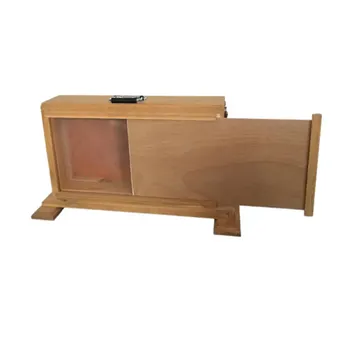
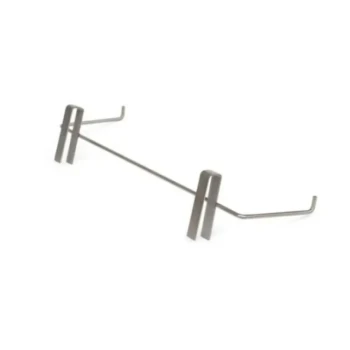
A modern movable-frame beehive is a stackable system of standardized boxes, frames, barriers, and covers. Its core components are the hive stand, bottom board, brood chamber, removable frames, honey supers, and protective covers. Optional parts—especially the queen excluder, entrance reducer, and frame foundation—add control over bee movement, ventilation, comb building, and colony management.
The key design principle is modular access: each frame can be removed, inspected, transferred, or extracted without dismantling the entire colony or destroying its comb.
How the Hive’s Modular Structure Works
Hive Stand: Stable Elevation and Protection
The hive stand supports the entire hive and raises it above the ground. This helps reduce exposure to dampness, standing water, vegetation, and some ground-dwelling pests.
Elevation also improves beekeeper access and can support better airflow beneath the hive. Stand designs vary according to climate, apiary layout, and the need for portability.
Bottom Board: Foundation and Entrance
The bottom board forms the lower floor of the hive and supports the brood chamber above it. Its front opening functions as the primary entrance and exit for foraging and returning bees.
Some bottom boards are fitted with screens or removable inserts for ventilation and monitoring debris, while solid versions offer different insulation and pest-management characteristics.
Brood Chamber: The Colony’s Core Living Space
The brood chamber, often called a brood box or deep box, houses the frames where the queen lays eggs and the colony raises young bees. It also contains pollen and food stores needed to sustain brood development and the colony’s basic population.
This section is normally kept available for colony growth rather than treated as the primary harvest area. Its size and number depend on the hive format and local management practices.
Frames and Foundation Enable Controlled Management
Movable Frames: Individual Inspection Units
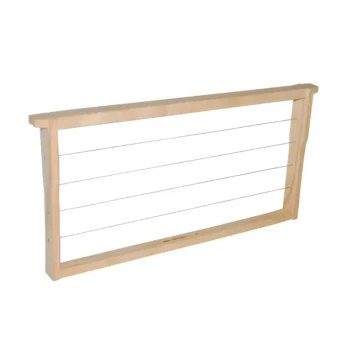
Removable frames support the comb inside the brood chamber and honey supers. Their parallel arrangement encourages bees to build comb in predictable locations while preserving working space between frames.
A beekeeper can remove individual frames to inspect brood development, confirm queen activity, assess food reserves, identify pests or disease, and evaluate colony strength.
Foundation: Guidance for Uniform Comb
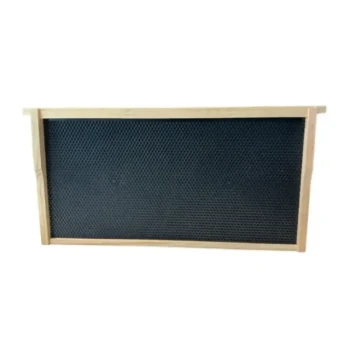
Frame foundation is a wax or plastic sheet that gives bees a starting pattern for comb construction. It helps guide the colony toward straight, consistent comb that fits standard frames.
Foundation is not the only possible approach, but it is valuable in standardized commercial systems because uniform comb improves inspection, interchangeability, and mechanical honey extraction.
Why Movable Frames Matter
The movable-frame principle separates colony management from hive destruction. Beekeepers can manipulate frames, split colonies, monitor swarming conditions, and apply health-management measures while preserving much of the existing comb.
The same design also permits frames from honey supers to be removed individually and processed with standard extraction equipment.
Honey Supers Provide the Harvest Area
Supers: Dedicated Space for Surplus Honey
Honey supers are additional boxes placed above the brood chamber. They contain removable frames where bees store surplus honey after the colony’s brood and essential food requirements are being met.
Supers may be shallow, medium, or deep depending on the hive system, beekeeper preference, lifting requirements, and extraction equipment.
Supers and Brood Boxes Serve Different Purposes
The brood chamber supports the colony’s reproduction and core food storage. Honey supers are normally managed as the principal harvest area, helping keep marketable honey separate from the brood nest.
This separation improves operational efficiency, but it depends on proper colony timing, adequate forage, and appropriate management rather than on the box alone.
Barriers and Entrance Controls Regulate Bee Movement
Queen Excluder: Optional Separation Between Zones
A queen excluder is a perforated grid placed between the brood chamber and honey supers. Its openings are large enough for worker bees to pass through but restrict the larger queen from entering the upper boxes.
This can help keep brood out of honey supers. However, it is a management option rather than an essential component of every hive, and its use must be matched to colony strength and local beekeeping practice.
Entrance Reducer: Access and Climate Control
An entrance reducer narrows the lower hive entrance. It can help vulnerable colonies defend against robbing or other intruders and may help manage airflow during colder conditions.
It should be treated as an adjustable accessory, not a permanent substitute for observing the colony’s ventilation and access needs.
Covers Protect the Hive Environment
Inner Cover or Crown Board: Separation and Ventilation
The inner cover, also called a crown board in some systems, sits above the uppermost box. It helps separate the bees from the outer roof and may include ventilation openings or ports for feeding equipment.
This layer can also reduce the likelihood that bees will firmly attach the outer cover to the upper frames with propolis. Its exact design varies by manufacturer and hive format.
Outer Cover: Weather Protection
The outer cover or telescoping roof protects the hive from rain, wind, sunlight, and temperature extremes. It typically overlaps the hive body to improve weather resistance.
A durable, weather-resistant cover is especially important for commercial apiaries, where equipment must withstand repeated handling and variable outdoor conditions.
Why Standardization Matters for Operations
Interchangeable Components Improve Efficiency
Standard dimensions allow compatible boxes, frames, covers, and accessories to be stacked, replaced, and reordered efficiently. This is central to the practical value of modular hive systems.
For distributors and resellers, compatibility is therefore a product requirement, not merely a convenience. A broad portfolio should clearly identify hive format, box depth, frame dimensions, and accessory compatibility.
Modular Equipment Supports Scalable Service
Standardized parts simplify inspection, maintenance, inventory planning, and replacement. Beekeepers can expand a hive by adding supers or replace damaged components without replacing the entire assembly.
For B2B buyers, dependable specifications, responsive technical support, and efficient fulfillment are as important as the individual component design.
Understanding the Trade-offs
More Access Requires More Management
Movable frames give beekeepers powerful control, but inspections require time, skill, and careful handling. Excessive or poorly timed intervention can disturb the colony and affect its organization.
The system improves decision-making only when the beekeeper uses that access appropriately.
Standardization Does Not Mean Universal Compatibility
Hive components may appear similar while differing in dimensions, frame capacity, box depth, or cover design. Mixing incompatible parts can create gaps, poor frame alignment, or equipment that cannot be used with existing extractors.
Purchasing decisions should therefore be based on verified measurements and system compatibility rather than general product labels.
Optional Components Have Context-Dependent Benefits
Queen excluders, entrance reducers, screened floors, and foundation each address specific management goals. None should be treated as universally necessary for every colony, season, or production system.
A practical product range should distinguish core structural components from optional management accessories.
How to Apply This to Your Project
The right configuration depends on whether the priority is colony development, honey production, standardized replacement, or scalable supply.
- If your primary focus is colony management: Prioritize a compatible stand, bottom board, brood chamber, movable frames, and suitable foundation or comb-management system.
- If your primary focus is honey production: Add correctly sized honey supers, standardized frames, and extraction-compatible equipment while preserving adequate brood-chamber capacity.
- If your primary focus is climate and colony protection: Select a durable outer cover and appropriate inner-cover ventilation, then use entrance reducers or screened floors according to local conditions.
- If your primary focus is distribution or resale: Build a clearly specified, full-spectrum portfolio with interchangeable components, verified dimensions, rapid response, and reliable order fulfillment.
A well-specified modular hive gives beekeepers controlled access to the colony while giving suppliers a scalable, serviceable, and compatible product system.
Summary Table:
| Component | Primary Function |
|---|---|
| Hive Stand | Elevates hive, reduces moisture & pest access |
| Bottom Board | Provides hive floor and entrance |
| Brood Chamber | Houses brood and food stores for colony growth |
| Movable Frames & Foundation | Enable inspection and organized comb building |
| Honey Supers | Storage area for surplus honey harvest |
| Queen Excluder | Keeps queen out of honey supers (optional) |
| Entrance Reducer | Controls entrance size for defense & climate |
| Inner Cover & Outer Cover | Ventilation and weather protection |
Ready to optimize your beekeeping operations? HONESTBEE offers a full spectrum of modular beehive components, from durable brood chambers to precision-made frames and accessories. Whether you're expanding an apiary or stocking a distribution network, we provide reliable supply, rapid fulfillment, and expert support. Contact us today to discuss your requirements and get a tailored quote.
Related Products
- Professional Observation Hive: The Ultimate Portable Solution for Beekeeping Education, Exhibitions, and Colony Displays
- Professional Grade Foldable Beehive Handles
- Assembled Wooden Bee Frames with Plastic Foundation for Durability and Convenience by HONESTBEE
- Heavy-Duty Stainless Steel Clip-On Frame Perch
- HONESTBEE Wired and Assembled Wooden Bee Frames Foundation for a Thriving Hive
People Also Ask
- How does transitioning to modern hives boost honey yield? Increase production and product quality for your commercial apiary
- How do Langstroth and Dadant standard beehives compare regarding brood chamber management and component compatibility? Find the Perfect Fit for Your Apiary
- What are the key operational differences and structural trade-offs between Langstroth beehives and top-bar beehives for apiary management? Discover which hive system fits your operational needs.
- Why are Langstroth beehives widely preferred for commercial honey production and equipment compatibility compared to alternative hive designs? Discover the advantages of standardized frames and scalable expansion for efficient beekeeping.
- What are the primary differences between Langstroth, horizontal top bar, and Warré hive box designs when selecting beekeeping equipment? Choose the Right Hive for Your Apiary