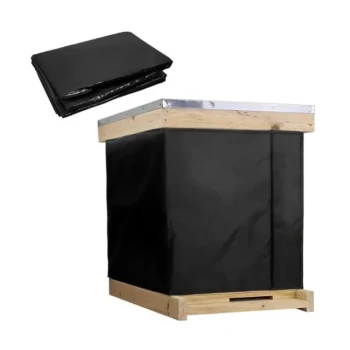
The primary functions of the beehive cover system are to separate the colony from the elements and to facilitate easy hive management. The inner cover sits directly atop the brood box to prevent bees from gluing the top shut with propolis, while the outer cover (often a telescoping cover) fits over everything to shield the hive from rain, wind, and weather.
The dual-cover system solves a critical mechanical problem in beekeeping: it provides a heavy-duty "roof" for protection without allowing the bees to permanently seal it to the hive body, ensuring you can always access the colony.
The Role of the Outer Cover
The outer cover is the first line of defense for the colony. Its design is relatively simple but essential for structural integrity.
Protection from the Elements
The outer cover acts as the roof of the hive. Its primary job is to protect the hive from the weather, preventing rain, snow, and direct sunlight from penetrating the colony.
The Telescoping Design
A common configuration is the telescoping cover. This design features a rim that hangs over the sides of the hive boxes, ensuring water drips away from the walls rather than seeping into the joints.
The Role of the Inner Cover
While the outer cover handles the exterior environment, the inner cover manages the internal mechanics of the hive. It acts as a buffer between the frames and the heavy outer lid.
Preventing Propolis Seals
The most critical function of the inner cover is to prevent the bees from completely sealing the box. Bees instinctively seal small gaps with propolis (a resinous glue).
If the outer cover were placed directly on the frames, the bees would glue it down tight. This would make removing the heavy lid difficult and disruptive. The lighter inner cover is easier to pry loose.
Facilitating Vertical Airflow
Inner covers often feature notches or holes that function as part of the hive's ventilation system. As cool air enters the bottom of the hive, hot air naturally rises.
These top-level openings allow that rising hot air to exit, ensuring a continuous vertical draft that regulates temperature and humidity.
Managing Traffic Flow
When equipped with an upper entrance or notch, the inner cover helps reduce traffic congestion at the main bottom entrance.
This provides an alternative route for forager bees. It allows them to enter and exit efficiently without fighting through the dense population in the lower brood nest.
Understanding the Trade-offs
While the two-cover system is standard, understanding why it is necessary helps you manage your equipment better.
The Risk of a Single Cover
Using only an outer cover might seem efficient, but it creates a maintenance nightmare. The propolis seal created by the bees can become so strong that removing the lid requires excessive force, which jars the colony and agitates the bees.
Ventilation vs. Insulation
The notch in the inner cover provides essential ventilation, but it must be managed. In extreme cold, excessive airflow can chill the cluster. Conversely, in high heat, a blocked notch can lead to dangerous overheating.
Making the Right Choice for Your Goal
To maximize the health of your apiary, verify your equipment matches your specific environmental needs.
- If your primary focus is Ease of Access: Ensure your inner cover is clean and placed correctly to prevent the outer cover from being propolized to the frames.
- If your primary focus is Temperature Regulation: Utilize inner covers with notches or upper entrances to facilitate the escape of hot air and improve vertical circulation.
By utilizing both covers correctly, you protect the physical structure of the hive while maintaining a stable internal climate for the bees.
Summary Table:
| Component | Primary Function | Key Features |
|---|---|---|
| Outer Cover | Weather Protection | Telescoping design, sheds rain/snow, structural shield |
| Inner Cover | Hive Management | Prevents propolis sealing, provides airflow, eases access |
| Ventilation Notch | Climate Control | Releases rising hot air, manages humidity, upper entrance |
| The Dual System | Colony Stability | Combines heavy-duty protection with easy maintenance |
Maximize Your Apiary Productivity with HONESTBEE
High-quality hive management begins with precision-engineered equipment. At HONESTBEE, we specialize in supporting commercial apiaries and distributors with a comprehensive range of professional-grade beekeeping tools and machinery.
Whether you need durable telescoping covers, specialized hive-making machines, or large-scale honey-filling equipment, our wholesale portfolio is designed to enhance your operational efficiency. From essential industry consumables to honey-themed cultural merchandise, we provide the full spectrum of solutions for the modern beekeeping industry.
Ready to scale your beekeeping business? Contact us today to explore our wholesale offerings and discover how our expertise can streamline your production.
Related Products
- Inner Beehive Cover for Beekeeping Bee Hive Inner Cover
- Professional Insulated Winter Hive Wrap for Beekeeping
- Telescopic Beehive Outer Cover Lid Roof with Galvanised Sheeting for Langstroth Hive and Beehive Outer Cover
- Professional Insulated Plastic Bee Hives
- Solid Bottom Board Australian Pine Wood Langstroth Bottom Board for Wholesale
People Also Ask
- What is the purpose of the inner cover in a beehive? A Key to Hive Health & Easy Management
- What is the function and placement of an inner cover in a beehive? Essential Hive Management Guide
- What is the purpose of the inner and outer covers in a beehive? Essential for Hive Health & Management
- What is a beehive's inner cover and how is it used? Essential Guide for Hive Insulation and Ventilation
- What is the purpose of an inner cover in a beehive? Essential for Hive Health & Easy Management