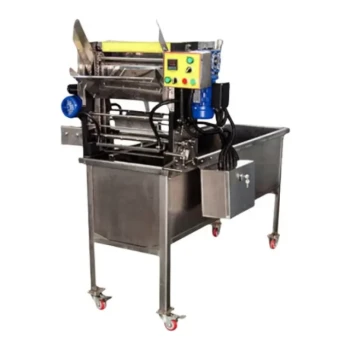
The automated packaging of honey relies on three primary machine categories. These are filling machines, which measure and dispense the liquid; sealing and capping machines, which secure the container to preserve freshness; and labeling equipment, which applies branding and regulatory information. Together, these systems form a cohesive production line that transforms bulk honey into a retail-ready product.
While filling machines often get the most attention for managing viscosity, the integrity of the final product depends equally on the sealing and capping stage. An airtight seal is the only barrier against oxidation, leakage, and fermentation, ensuring the honey maintains its quality from the factory to the consumer's pantry.
The Core Machinery Categories
To build an effective packaging line, you must understand the distinct role each machine plays in the process.
Filling Machines
These units are the starting point of the packaging line. Their primary function is to measure specific quantities of honey and pour them into containers with high precision.
Because honey viscosity can change with temperature, these machines must ensure consistent volume regardless of flow rate.
Sealing and Capping Machines
Once the container is filled, it moves immediately to sealing. This equipment applies caps, lids, or induction seals to the container.
The objective here is twofold: preventing physical leaks and creating an airtight barrier. This step is critical for maintaining freshness and extending shelf life.
Labeling Equipment
The final stage involves applying stickers or adhesive labels to the jar or bottle.
This machinery ensures that essential information—such as the brand name, weight, and nutritional details—is displayed clearly and professionally.
Adapting to Container Variations
Machines do not operate in a vacuum; they must be matched to the specific type of container you intend to use.
Handling Glass and Plastic
Honey is commonly packaged in glass jars (such as hive, hex, or Queenline styles) or plastic squeeze bottles.
Glass offers high transparency to showcase the honey’s color and creates an odorless barrier against moisture, preventing fermentation. However, your machinery must be calibrated to handle the fragility of glass or the flexibility of plastic squeeze bottles.
Flexibility for Different Sizes
Consumer demand has shifted toward smaller, more affordable sizes, such as 250ml containers, rather than standard 1L jars.
To remain competitive, many producers utilize automatic sealing machines that support multiple specifications. This allows a single facility to switch between serving budget-conscious consumers and bulk buyers without requiring entirely new equipment.
Understanding the Trade-offs
Investing in packaging machinery involves balancing speed, flexibility, and product integrity.
Efficiency vs. Sealing Quality
High-speed production is desirable, but it cannot come at the cost of the seal. If a machine caps a bottle too quickly without establishing an airtight lock, the honey becomes vulnerable to oxidation.
An imperfect seal also leads to leakage during transport, which is a primary cause of product loss and retail rejection.
Specialized vs. Versatile Equipment
Specialized machines often run faster but handle only one container type, such as a traditional Muth Jar.
Conversely, versatile machines that handle various bottle sizes offer greater market agility but may require more downtime for calibration when switching between formats.
Making the Right Choice for Your Goal
Selecting the right combination of machines depends on your specific product strategy and target market.
- If your primary focus is premium quality preservation: Prioritize sealing machines compatible with glass jars to prevent moisture ingress and fermentation.
- If your primary focus is market agility: Invest in automatic machines with multiple specifications to easily switch between 1L bulk sizes and smaller 250ml retail portions.
Your packaging line is not just about putting honey in a jar; it is a system designed to protect the flavor, texture, and value of your product.
Summary Table:
| Machine Category | Primary Function | Critical Benefit |
|---|---|---|
| Filling Machines | Precise measurement & dispensing | Consistent volume despite honey viscosity |
| Sealing & Capping | Applying lids or induction seals | Prevents oxidation, leakage, and fermentation |
| Labeling Equipment | Applying branding & regulatory info | Ensures professional presentation and compliance |
| Versatile Systems | Multi-specification support | Allows rapid switching between jar sizes (e.g., 250ml to 1L) |
Elevate Your Honey Production with HONESTBEE Professional Equipment
At HONESTBEE, we specialize in empowering commercial apiaries and distributors with high-performance machinery designed for the unique demands of honey. Whether you are scaling up for wholesale or looking to optimize your retail packaging, we offer:
- Precision Machinery: From high-viscosity filling machines to automated hive-making and honey-filling systems.
- End-to-End Solutions: A complete spectrum of beekeeping tools, specialized hardware, and essential industry consumables.
- Market Agility: Equipment tailored for both glass jars and plastic squeeze bottles to help you capture every consumer segment.
Ready to transform your bulk honey into a premium retail-ready product?
Contact HONESTBEE Today for a Professional Consultation
Related Products
- Automatic Single-Dose Snap & Squeeze Honey Sachets Packing Machine
- Fully Automatic Honey Filling Packaging Machine for Processing Line
- Precision Automated Packaging Turntable Honey Spoon Filling Sealing Packing Machine
- Honey Stick Filler Vertical Paste Sachet Packing Machine for Honey Sachets
- Economy Small Honey Filling Machine Honey Bottle Filler Packaging Machine
People Also Ask
- What are the advantages of honey sachet packing machines? Boost Efficiency & Unlock New Markets
- What are the main functions of a honey sachet packing machine? Boost Efficiency with Automated Precision
- How does an industrial-grade honey sachet packaging machine assist beekeepers in accessing public institution markets?
- Why is automated packaging machinery essential for scaling industrial honey production? Drive Commercial Scalability
- Why is it advantageous for apiaries to be located near honey processing centers? Boost Quality and Market Reach