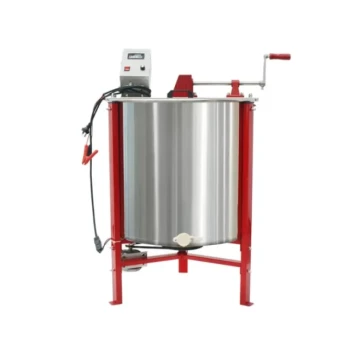
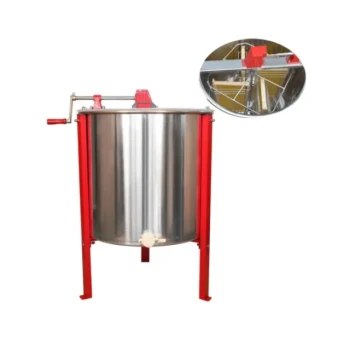
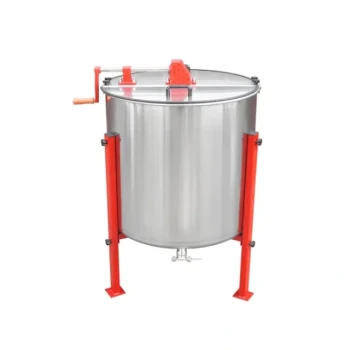
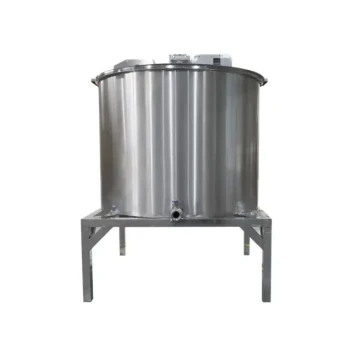
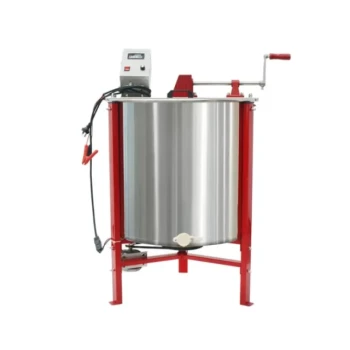
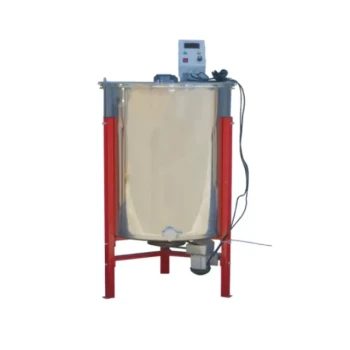
The primary advantages of utilizing a mechanized honey extractor are enhanced reliability, efficiency, and product consistency. Compared to manual techniques, mechanized extractors use controlled mechanical power to ensure a more thorough separation of honey from the comb. This significantly improves harvesting yields and allows beekeepers to produce high-quality honey that meets rigorous commercial standards.
The transition from manual to mechanized extraction represents a shift from labor-intensive craft to scalable production. The core value of mechanization is not just speed; it is the ability to maximize yield and economic output while minimizing contamination and structural damage to the honeycomb.
Maximizing Production Efficiency
Superior Separation and Yield
The most immediate benefit of a mechanized extractor is the thoroughness of separation. Manual squeezing or gravity draining often leaves significant amounts of honey behind.
Mechanized units utilize consistent power—often centrifugal force—to extract the maximum possible volume from the frames. This directly increases the yield per hive without requiring additional resources.
Reduction of Labor and Time
Manual extraction is physically demanding and time-consuming. Industrial-grade mechanized equipment drastically reduces processing time.
By automating the separation process, labor costs are minimized. This allows beekeepers to process larger harvests in shorter windows, optimizing the overall workflow of the operation.
Preserving Honey Quality and Chemistry
Protecting Nutritional Integrity
Manual handling often involves prolonged exposure or processing methods that can degrade the honey. Mechanized extraction is designed to operate efficiently at low temperatures.
This prevents the loss of heat-sensitive enzymes and prevents the elevation of hydroxymethylfurfural (HMF) levels. Consequently, the medicinal and nutritional profile of the honey is preserved more effectively than with traditional methods.
Hygiene and Impurity Control
Manual squeezing introduces a high risk of "secondary contamination," including contact with human hands or debris.
Mechanized extractors are closed systems that utilize filtration and processing equipment to remove impurities. This standardized process ensures the honey meets hygiene standards required for classification as premium natural honey.
Hive Health and Sustainability
Non-Destructive Extraction
One of the most critical technical advantages of centrifugal mechanized extractors is the preservation of the comb. Manual squeezing destroys the wax structure.
Centrifugal machines spin the honey out without damaging the underlying comb foundation. This allows the structural integrity of the beeswax to remain intact.
Energy Conservation for the Colony
Because the combs are preserved, they can be returned to the hive for reuse. This is a massive physiological advantage for the colony.
Bees do not have to expend energy and resources rebuilding wax foundations. Instead, they can focus immediately on honey production, significantly improving the efficiency of the entire beekeeping cycle.
Understanding the Trade-offs
Equipment Specificity
It is important to note that "mechanized" can refer to different technologies. While centrifugal separators preserve combs, mechanical presses utilize pressure to separate honey from wax.
While presses are more efficient than manual squeezing, they do not offer the same comb-preservation benefits as centrifugal machines. You must select the machine type that aligns with your goal of either maximizing wax production or maximizing honey turnover.
Initial Investment vs. Output
Mechanized equipment requires an upfront capital investment compared to the low cost of manual tools.
However, this cost is generally offset by the increased "economic output" mentioned in the primary reference. The return on investment is realized through higher consistency, better marketability, and the potential to produce value-added secondary products like beeswax creams and soaps.
Making the Right Choice for Your Goal
To determine if mechanized extraction is the right step for your operation, consider your specific production targets:
- If your primary focus is Commercial Scalability: Prioritize mechanized extraction to ensure consistent quality and meet hygiene standards required for market entry.
- If your primary focus is Hive Productivity: Choose centrifugal mechanized extractors to preserve combs, reducing the energy burden on your bees and speeding up the next production cycle.
- If your primary focus is Product Purity: Utilize mechanized filtration to minimize impurities and maintain the bio-active enzymes that define premium raw honey.
Mechanization transforms honey extraction from a bottleneck into a streamlined process that protects both the product's chemistry and the colony's future productivity.
Summary Table:
| Feature | Manual Extraction | Mechanized Extraction (Centrifugal) |
|---|---|---|
| Honey Yield | Low (Residual honey remains in comb) | High (Maximizes separation via centrifugal force) |
| Labor Intensity | High (Physically demanding) | Low (Automated & scalable) |
| Comb Integrity | Destructive (Squeezing destroys wax) | Non-destructive (Comb is preserved for reuse) |
| Hygienic Standards | Variable (Risk of manual contamination) | High (Closed-system processing) |
| Colony Recovery | Slow (Bees must rebuild wax) | Fast (Bees focus immediately on honey storage) |
Elevate Your Apiary's Performance with HONESTBEE
Transitioning from manual labor to professional-grade mechanization is the key to unlocking commercial success. At HONESTBEE, we specialize in empowering commercial apiaries and distributors with high-performance beekeeping tools and machinery. Whether you need advanced honey-filling machines, industrial hive-making equipment, or specialized honey extractors that preserve the integrity of your honey and colonies, we provide the complete wholesale solution.
Ready to maximize your yield and streamline your operations? Contact HONESTBEE Today to Explore Our Wholesale Catalog
References
- Joice J.I. Rompas, Ventje V. Memah. Development of Apis cerana District Extractor with innovation ofMachinery and Pest control in Kumelembuai Village. DOI: 10.20902/ijctr.2019.120619
This article is also based on technical information from HonestBee Knowledge Base .
Related Products
- Commercial Electric 12 Frame Honey Extractor Spinner Motorized Honey Extractor
- Stainless Steel 3 Frame Manual Honey Extractor Spinner for Bee Honey Extraction
- Stainless Steel Manual 8 Frame Radial Honey Extractor Machine for Beehives
- 2 Frame Stainless Steel Manual Honey Spinner Extractor for Beekeeping
- HONESTBEE 6 Frame Three Use Electric Honey Extractor for Beekeeping
People Also Ask
- Who are commercial honey extractors designed for? Scaling Your Industrial Beekeeping Success
- What is a commercial honey extractor? The Essential High-Volume Solution for Large Apiaries
- How is honey extracted commercially? Maximize Your Apiary's Efficiency and Honey Yield
- What are commercial honey extractors used for? Boost Your Apiary's Efficiency & Profitability
- What are the advantages of motorized extractors? Boost Honey Production and Save Time