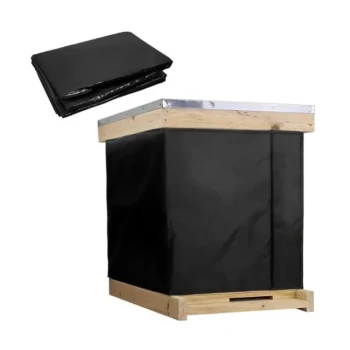
The primary benefit of insulating a beehive is the drastic reduction in the colony’s energy expenditure. By limiting heat loss, insulation allows bees to maintain the necessary internal warmth while consuming significantly less stored honey. This conservation of resources directly lowers the risk of starvation during long winters and results in a greater surplus of honey available for harvest in the spring.
Insulation does more than keep bees warm; it changes the colony's energy economy. By reducing the "fuel cost" of staying alive, bees can preserve their stores and reallocate energy toward early brood rearing and foraging, leading to a stronger colony start in the spring.
The Mechanics of Energy Conservation
Reducing Metabolic Cost
Bees generate heat by vibrating their flight muscles, a metabolic process fueled exclusively by honey. Insulation acts as a thermal barrier, slowing the rate at which this valuable heat escapes the hive.
Preventing Winter Starvation
When a hive is well-insulated, the colony burns through its food reserves at a much slower rate. This is critical for hives with limited honey reserves, as it stretches their food supply to last through the cold season.
Increasing Harvest Yields
Because the bees consume less honey to survive the winter, more frames remain untouched. This directly translates to higher honey yields for the beekeeper once spring arrives.
Temperature Regulation and Colony Health
Stabilizing the Brood Nest
To raise young bees, the colony must maintain the brood nest at a precise temperature range of 90-95°F (32-35°C). Insulation helps the colony reach and hold this temperature without exhausting the worker bees.
Buffering Against Temperature Swings
Insulation shields the hive from abrupt temperature fluctuations and extreme cold snaps. This stability prevents the "stop-start" stress that can weaken a cluster during variable weather.
Accelerating Spring Buildup
Colonies in insulated hives often begin brood rearing earlier in the season. Because they are less susceptible to late-season freezes, they can build up their population faster than uninsulated colonies.
Understanding the Trade-offs: Heat vs. Moisture
The Condensation Danger
The most critical risk in insulating a hive is trapping moisture produced by bee respiration. If warm, moist air hits a cold surface inside the hive, it condenses into water droplets. Cold, wet bees cannot survive.
The Ventilation Necessity
You must never completely seal a hive. Proper ventilation is required to allow moist air to escape before it condenses. A balance must be struck where insulation retains heat, but airflow removes dampness.
Monitoring Requirements
Insulated hives require vigilance. You must check for signs of mildew or wetness on the inner cover. Furthermore, insulation wraps must be removed as soon as the weather warms consistently to prevent overheating.
Making the Right Choice for Your Goal
When deciding how to configure your hives for winter, consider your primary objectives:
- If your primary focus is Colony Survival: Prioritize insulation to reduce the caloric burn rate, ensuring colonies with light food stores do not starve before the first bloom.
- If your primary focus is Honey Production: Use insulation to minimize winter consumption, maximizing the amount of overwintered honey left for early spring harvesting.
- If your primary focus is Colony Growth: Leverage insulation to maintain the 90-95°F brood temperature, encouraging earlier and more robust brood rearing.
Success in overwintering lies not in trapping heat, but in managing the delicate balance between thermal efficiency and moisture control.
Summary Table:
| Benefit Category | Primary Advantage | Impact on Colony |
|---|---|---|
| Energy Economy | Reduced metabolic cost | Bees consume less honey to generate heat |
| Survival Rate | Starvation prevention | Stretches food reserves through long winters |
| Honey Production | Higher spring yields | More surplus honey remains for the beekeeper |
| Colony Growth | Earlier brood rearing | Maintains 90-95°F for faster population buildup |
| Hive Stability | Thermal buffering | Protects against extreme temperature fluctuations |
Maximize Your Colony Success with HONESTBEE
At HONESTBEE, we understand that successful overwintering is the foundation of a productive season. As a dedicated partner to commercial apiaries and distributors, we provide more than just supplies—we offer professional-grade solutions to protect your investment. From high-efficiency insulation materials to advanced hive-making machinery and specialized beekeeping tools, our comprehensive wholesale portfolio is designed to enhance your operational efficiency.
Whether you are scaling your honey production or stocking essential consumables for your retail network, our expertise in beekeeping equipment ensures your colonies thrive and your yields grow.
Ready to upgrade your apiary’s performance? Contact us today to explore our full range of wholesale machinery and tools tailored for the professional beekeeping industry.
Related Products
- Professional Insulated Plastic Bee Hives
- Professional Insulated Winter Hive Wrap for Beekeeping
- Inner Beehive Cover for Beekeeping Bee Hive Inner Cover
- Stainless Steel Round Beehive Air Vents for Ventilation
- Metal Hive Feet Bee Hive Stand for Ant Protection
People Also Ask
- What are the advantages of plastic bee hives? Boost Efficiency & Durability for Your Apiary
- Are plastic bee hives any good? Unlock Durability & Efficiency for Your Apiary
- How do plastic bee hives compare to wooden hives in handling? Reduce Strain & Boost Efficiency
- Are plastic bee hives good? Durable, Low-Maintenance Hives for Modern Apiaries
- What are the disadvantages of plastic beehives? Key Operational and Environmental Risks Exposed