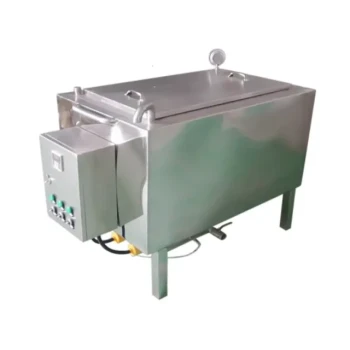
The primary functions of refining equipment in the deep processing of beeswax and propolis are to execute precise physical separation and purification. Through temperature-controlled heating, multi-stage filtration, and centrifugal separation, this machinery isolates raw materials from impurities and moisture. This process converts variable raw hive products into stabilized, high-purity materials required for sensitive applications in electronics, aviation, and pharmaceuticals.
Refining equipment serves as the critical bridge between raw agricultural by-products and industrial-grade materials, maximizing purity and safety while preserving essential bioactive compounds.
Achieving Purity Through Physical Processing
Temperature-Controlled Heating
The foundational function of this equipment is the careful application of heat. Unlike simple melting, this process is strictly regulated to remove moisture without degrading the material.
Precise temperature control ensures that the physical structure of the wax is altered enough to facilitate flow and filtration. This prevents the scorching of delicate compounds found in propolis.
Multi-Stage Filtration
Raw hive products contain significant debris, ranging from bee parts to environmental dust. Refining equipment utilizes a tiered filtration system to progressively capture these contaminants.
This step is essential for clarity and visual quality. It ensures the final product meets the aesthetic and textural standards required for cosmetics and fine chemicals.
Centrifugal Separation
To achieve the highest levels of purity, modern equipment employs centrifugal force. This function separates materials based on density, effectively pulling heavier impurities away from the valuable wax or propolis extract.
This mechanical separation is far superior to gravity settling. It is particularly effective at removing microscopic particulates that filtration alone might miss.
Critical Objectives for Beeswax Refining
Ensuring Physical Stability
For beeswax to be viable in industrial manufacturing, it must behave consistently. Refining equipment homogenizes the material, removing volatile elements that could cause structural failure.
This stability is a prerequisite for molding technologies. It allows the wax to be shaped into candles, cosmetic bases, or industrial components without cracking or warping.
Establishing Insulation Properties
The primary reference highlights that deep processing is vital for applications in electronics and aviation. Raw beeswax contains conductive impurities that compromise its natural insulating abilities.
Refining equipment eliminates these conductive elements. This transforms the wax into a reliable insulator suitable for high-tech circuitry and aerospace components.
Critical Objectives for Propolis Extraction
Preservation of Bioactive Compounds
While purification is the goal, the preservation of active ingredients is the constraint. Advanced processing equipment is designed to extract impurities without destroying the biological activity of the propolis.
This capability separates professional refining from manual extraction. It allows for the production of high-potency extracts demanded by the health supplement and pharmaceutical markets.
Removal of Hazardous Contaminants
Propolis collected by bees can inadvertently contain environmental pollutants. Industrial filtration systems are specifically engineered to address this safety hazard.
These systems can significantly reduce heavy metals, such as lead and mercury, by margins exceeding 24%. This function is non-negotiable for entering the food and pharmaceutical supply chains safely.
Understanding the Trade-offs
Processing Intensity vs. Yield
A common pitfall in deep processing is the loss of volume. As the equipment aggressively removes impurities and moisture to achieve high purity, the total weight of the saleable product decreases.
Operators must balance the need for "medical-grade" purity against the reduction in yield. Extremely high purity commands a higher price but leaves less material to sell.
Capital Cost vs. Operational Scale
Transitioning from manual extraction to deep processing equipment represents a significant capital investment. While it unlocks high-value markets (aviation, pharma), the return on investment relies on having a sufficient volume of raw material.
For smaller operations, the efficiency gains of centrifugal separation may not justify the upfront cost unless the goal is specifically to produce high-margin pharmaceutical ingredients.
Making the Right Choice for Your Goal
The selection of refining equipment should be dictated by the specific industry standards you intend to meet.
- If your primary focus is the Pharmaceutical or Food Industry: Prioritize equipment with advanced filtration capabilities specifically tested for heavy metal removal and bioactive preservation.
- If your primary focus is High-Tech Industrial Application: Focus on temperature control and centrifugal separation features that guarantee the dielectric (insulating) stability of the beeswax.
- If your primary focus is Cosmetic Manufacturing: Ensure the equipment features multi-stage filtration to achieve the high clarity and visual purity required for skincare products.
Deep processing is not merely about cleaning a product; it is about engineering a raw material to meet the exacting specifications of the modern market.
Summary Table:
| Refining Function | Key Mechanism | Industry Benefit |
|---|---|---|
| Temperature Control | Precise heating & moisture removal | Prevents scorching; ensures chemical stability |
| Multi-Stage Filtration | Tiered contaminant capture | Removes debris; achieves aesthetic clarity |
| Centrifugal Separation | Density-based mechanical force | Eliminates microscopic particulates & heavy metals |
| Bioactive Preservation | Cold-extraction/Low-heat tech | Retains potency for pharma & supplement markets |
| Dielectric Refining | Conductive element removal | Enhances insulation for aviation & electronics |
Elevate Your Hive Product Processing with HONESTBEE
Are you ready to transition from raw hive products to high-margin, industrial-grade materials? HONESTBEE empowers commercial apiaries and distributors with professional-grade refining machinery and deep-processing tools designed for the modern market.
Whether you are targeting the pharmaceutical, aerospace, or cosmetic industries, our comprehensive wholesale portfolio includes:
- High-Precision Refining Equipment: For superior beeswax insulation and propolis purity.
- Specialized Machinery: From hive-making to honey-filling and extraction.
- Essential Consumables: A full spectrum of beekeeping tools and hardware.
Partner with HONESTBEE to maximize your yield and reach elite markets. Contact us today for a custom quote and expert consultation!
References
- R.Jamolov B.Abduvaliyev Z.Ma'murova. DEVELOPMENT OF BEEKEEPING IN UZBEKISTAN AND ITS SIGNIFICANCE. DOI: 10.5281/zenodo.7398822
This article is also based on technical information from HonestBee Knowledge Base .
Related Products
- Beeswax Machine Press Embosser Wax Foundation Mold Printer Bee Hive Equipment Making Sheet
- Electric Flatting and Embossing Machine with Tray for Beekeeping
- Fully Automatic Beeswax Embossing Machine Foundation Mill
- Manual Beeswax Flat Sheet Machine for Beeswax Processing
- Electric Beeswax Flat Sheet Machine with Operating Tray for Wax Processing
People Also Ask
- What equipment is needed to make beeswax foundation? A Guide to DIY Wax Sheet Production
- What miscellaneous equipment is needed for making foundation? A Guide to the Essential Tools
- What miscellaneous equipment is useful when making beeswax foundation? Essential Support Tools for Beekeepers
- What specific equipment is required for making beeswax foundation? Essential Tools for High-Quality Production
- What is the recommended temperature for melting beeswax to make foundation sheets? Master the 70°C-80°C Ideal Range