Adding honey supers primarily serves to maximize honey production and stabilize colony population dynamics. During a major nectar flow, these vertical extensions provide essential physical volume for nectar storage while simultaneously reducing hive density. This intervention prevents the colony from becoming honey-bound, ensuring the workforce remains focused on collection rather than swarming.
By adding supers, you are not simply adding storage; you are manipulating the colony's biological instincts. The additional space inhibits the natural impulse to swarm by relieving congestion, ensuring the colony's energy is directed entirely toward resource accumulation rather than reproduction.
Maximizing Production Efficiency
Increasing Physical Storage Capacity
The most immediate objective of adding a honey super is providing the necessary volume for incoming resources. During a major flow, a strong colony can bring in several pounds of nectar daily.
Without vertical expansion, the hive lacks the physical cells required to cure and store this influx. Supers act as a dedicated warehouse, allowing the colony to capitalize on peak floral abundance.
Preventing Nectar Backfilling
If a colony lacks upper storage space, bees will store excess nectar in the brood nest. This is known as backfilling.
When nectar fills cells intended for eggs, the queen’s laying area is restricted. By providing supers, you ensure nectar moves up, keeping the brood nest open for the queen to maintain population strength.
Facilitating Efficient Extraction
In larger operations, supers serve to segregate the harvestable product from the biological core of the hive.
Using supers—often in conjunction with queen excluders—keeps the honey separate from brood (eggs and larvae). This allows for the use of industrial removal and extraction equipment without damaging the colony's future generation.
Colony Population Management
Inhibiting the Swarming Instinct
Swarming is the natural reproductive division of a colony, but it is detrimental to honey production because it depletes the workforce.
The primary trigger for swarming is overcrowding. When the bees feel physically constrained, they initiate swarm preparations. Adding supers expands the active area, diluting the population density and suppressing this instinct.
Relieving Brood Nest Congestion
Crowding in the brood nest stresses the colony and reduces efficiency.
Supers provide relief by drawing younger worker bees upward to process nectar and build comb. This migration relieves pressure on the lower brood boxes, allowing for better air circulation and thermoregulation.
Maintaining Foraging Motivation
A colony that perceives a lack of storage space will naturally throttle its foraging efforts.
By increasing the internal volume, you signal to the colony that there is ample room for growth. This helps maintain high foraging motivation, ensuring the field force continues to collect nectar at maximum capacity.
Understanding the Trade-offs
The Risk of Premature Expansion
While space is critical, adding supers too early can be detrimental. If the colony population is not large enough to occupy the new space, they may struggle to maintain hive temperature.
This thermal stress can slow down brood development. The objective is to add space just ahead of the bees' need—ideally two weeks before the flow—rather than leaving them with vast, empty caverns to heat.
Management of Queen Excluders
To strictly separate honey from brood, beekeepers often use queen excluders. While this ensures clean honey supers, it can essentially act as a barrier if not managed correctly.
If the excluder is added before the bees are accustomed to moving up, or if the worker population isn't robust, they may view the excluder as a "ceiling" and refuse to store honey above it. This leads to the very backfilling and swarming issues the super was meant to prevent.
Making the Right Choice for Your Goal
Effective supering is about timing and observation. Use the following guidelines to align your actions with your specific objectives:
- If your primary focus is Maximum Honey Yield: Prioritize adding supers (and potentially queen excluders) roughly two weeks before the nectar flow to ensure storage availability never bottlenecks collection.
- If your primary focus is Swarm Prevention: Monitor the brood nest for congestion and backfilling; add supers immediately if the queen's laying space is becoming restricted by nectar.
- If your primary focus is Extraction Efficiency: Utilize queen excluders once the population is robust to ensure honey frames are free of brood, streamlining the mechanical harvesting process.
Mastering the use of honey supers allows you to harness the colony's natural drive to hoard resources while suppressing its drive to divide.
Summary Table:
| Objective | Key Benefit | Impact on Colony |
|---|---|---|
| Storage Expansion | Provides volume for nectar | Prevents honey-bound brood nests |
| Swarm Prevention | Reduces hive congestion | Suppresses reproductive division instinct |
| Nectar Management | Prevents backfilling | Keeps queen's laying area open |
| Extraction Efficiency | Segregates honey from brood | Simplifies mechanical harvesting process |
| Foraging Motivation | Signals room for growth | Maintains high field force collection rates |
Scale Your Apiary Success with HONESTBEE
At HONESTBEE, we specialize in empowering commercial apiaries and distributors with the high-capacity tools needed to capitalize on every nectar flow. Whether you are looking to maximize yield with our precision honey-filling machines or expand your operation with durable hive-making machinery, we provide the full spectrum of professional beekeeping equipment.
Our value to you:
- Comprehensive Wholesale Offering: A one-stop shop for tools, machinery, and industry consumables.
- Industrial Efficiency: Equipment designed to streamline extraction and minimize labor costs.
- Cultural Merchandise: Unique honey-themed products to diversify your retail portfolio.
Ready to elevate your production efficiency? Contact us today to discuss your wholesale needs!
References
- Agnès Fortier, Pierre Alphandéry. L’autonomie entre marché, rapport à la nature et production de soi. Approche sociologique des pratiques apicoles. DOI: 10.4000/developpementdurable.14580
This article is also based on technical information from HonestBee Knowledge Base .
Related Products
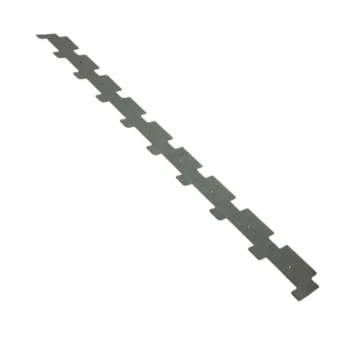
- Heavy Duty Castellated Iron Frame Spacer for Honey Supers
- Durable 16 Way Circular Bee Escape for Efficient Honey Harvesting
- Digital Honey Refractometer for Precision Measurement of Optimal Honey Quality
- Precision Honey Refractometer Instrument for Quality Assessment
- Professional Plastic Honey Dipper for Easy Honey Drizzling
People Also Ask
- What are honey super frames and what foundation options are available? Choose the Best Support for Your Bees
- What are the reasons and drawbacks of using nine frames in a ten-frame honey super? Boost Extraction Speed Today
- What are honey super frames and how many are needed per box? A Beekeeper's Essential Guide
- What are honey super frames and their foundation options? Choose the Best Support for Your Hive's Honey Production
- Why might a beekeeper use fewer than the standard number of frames in a honey super? Boost Extraction Efficiency