The primary technical advantage of the 10-frame Langstroth Hive lies in its adherence to the "bee space" principle and standardized modularity. By utilizing movable frames with precise dimensions, this system enables commercial operators to perform routine inspections, manage colony health, and harvest honey mechanically without destroying the critical honeycomb structure.
The Langstroth Hive is not just a container; it is an industrial tool engineered for scale. Its design transforms beekeeping from a subsistence activity into a high-efficiency production line by enabling the use of automated extraction machinery, simplifying transport logistics, and maximizing yield through non-destructive harvesting.
The Engineering of Efficiency
The Movable Frame System
The cornerstone of the Langstroth design is the movable frame. Unlike traditional fixed-comb hives, this system allows beekeepers to remove individual frames to inspect for pests, diseases, or the queen's status.
Crucially, this architecture respects "bee space"—the precise gap bees leave between combs. By maintaining this dimension, the design prevents bees from cementing frames together with propolis or burr comb, ensuring frames remain removable without damaging the colony structure.
Mechanized Extraction Compatibility
For commercial operations, manual harvesting is a bottleneck. The 10-frame Langstroth Hive is explicitly designed to be compatible with centrifugal honey extractors.
Because the frames are standardized and durable, they can be placed directly into high-speed machinery. This allows honey to be spun out without destroying the wax comb, allowing the beekeeper to return the empty comb to the hive for immediate refilling by the bees.
Yield Maximization
The ability to reuse drawn comb significantly boosts productivity. Bees consume a substantial amount of honey to produce wax; by preserving the comb, energy is redirected toward nectar storage.
Consequently, modern box hives like the Langstroth can achieve honey yields three to four times higher than traditional hives. Furthermore, the modular design allows beekeepers to add "supers" (additional boxes) to vertically expand the hive volume during heavy nectar flows, capturing the maximum amount of honey possible.
Logistics and Standardization
Interchangeability and Resource Reallocation
Standardization ensures that every component—frames, bottom boards, and boxes—is interchangeable between hives.
This allows for precise interventions, such as moving a frame of honey from a strong colony to support a weaker one. This flexibility is impossible in non-standardized systems and is critical for maintaining uniform colony strength across a commercial apiary.
Transport and Stacking Stability
Commercial beekeeping often involves migratory practices. The 10-frame Langstroth Hive features standardized external dimensions that facilitate stable stacking.
This uniformity is essential for loading hives onto transport vehicles securely. It maximizes space efficiency during transit and ensures the hives remain intact despite the vibrations and movements associated with road transport.
Integration with Automation
The manufacturing precision of these hives creates a foundation for downstream automation.
Because the physical dimensions are strictly controlled by hive-making machines, the equipment integrates seamlessly with uncapping machines and bottling lines. This reduces manual labor and streamlines the transition from raw hive product to shelf-ready goods.
Understanding the Trade-offs
While the Langstroth Hive is the industry standard for production, it requires a specific management approach.
Intensive Management Requirements
The system is designed for active, scientific colony management. It is not a "set and forget" system; to realize the high yields, beekeepers must perform regular inspections and manipulate the hive volume (adding/removing supers).
Infrastructure Dependence
To fully leverage the advantages of this hive, an operation requires supporting infrastructure. The benefits of the movable frame are best realized when paired with extractors and transport vehicles. Without this capitalization, the efficiency gains over simpler hive styles are less pronounced.
Making the Right Choice for Your Operation
The decision to adopt the 10-frame Langstroth standard depends on your specific production goals.
- If your primary focus is maximizing honey tonnage: This hive is essential because it supports frame reuse and centrifugal extraction, leading to 3-4x higher yields compared to traditional methods.
- If your primary focus is migratory beekeeping: The standardized, stackable rectangular design provides the stability and density required for efficient long-distance transport.
- If your primary focus is operational scalability: The interchangeability of parts allows you to standardize your inventory and automate your processing lines.
The 10-frame Langstroth Hive remains the definitive choice for professionals because it successfully bridges the gap between biological needs and industrial efficiency.
Summary Table:
| Feature | Technical Advantage | Commercial Benefit |
|---|---|---|
| Movable Frames | Respects "bee space" principle | Non-destructive inspections & queen management |
| Standardization | Interchangeable components | Seamless resource reallocation between colonies |
| Modular Design | Vertical expansion with supers | Maximizes honey storage during peak nectar flows |
| Mechanical Compatibility | Fits centrifugal extractors | High-speed harvesting & reuse of drawn comb |
| Rectangular Geometry | Uniform external dimensions | Stable stacking for efficient migratory transport |
Scale Your Apiary with HONESTBEE Precision Equipment
Maximize your honey production and operational efficiency with HONESTBEE, your dedicated partner in professional beekeeping. We specialize in serving commercial apiaries and distributors with a comprehensive wholesale portfolio designed for industrial scale.
From precision hive-making machines and automated honey-filling lines to a full spectrum of standardized Langstroth components and essential consumables, we provide the tools you need to transform your beekeeping into a high-efficiency production line.
Ready to upgrade your infrastructure? Contact us today to discuss how our wholesale solutions and specialized machinery can drive your business growth.
References
- Thomas E. Rinderer, Jeffrey W. Harris. Functionality of Varroa-Resistant Honey Bees (Hymenoptera: Apidae) When Used for Western U.S. Honey Production and Almond Pollination. DOI: 10.1603/ec13419
This article is also based on technical information from HonestBee Knowledge Base .
Related Products
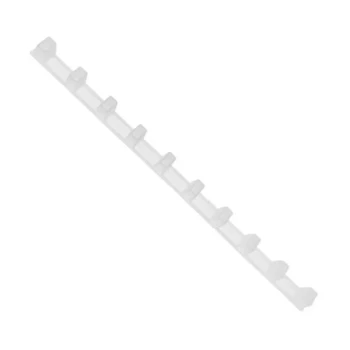
- Durable Plastic Frame Spacer
- Rapid Bee Feeder White Plastic 2L Round Top Feeder for 8 or 10-Frame Bee Hives
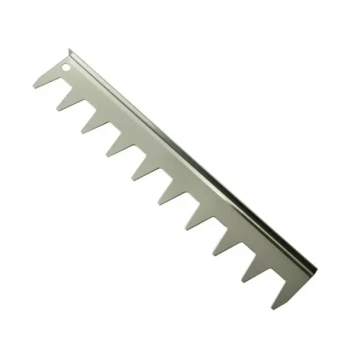
- Stainless Steel 9 Frame Hive Spacer Durable Precise for Commercial Beekeeping
- Long Langstroth Style Horizontal Top Bar Hive for Wholesale
- Wooden Bee Hive Frames for Beekeeping and Wholesale
People Also Ask
- Are plastic bee hive frames good? A Guide to Modern Durability vs. Natural Appeal
- Are plastic bee frames good? A Guide to Durability, Efficiency & Bee Acceptance
- What are the advantages of using Standard Langstroth 10-frame equipment? Scale Your Commercial Apiary Efficiency
- How do you clean plastic frames? A Gentle Guide to Preserving Your Frames
- How must plastic frames be prepared for bees? Expert Tips for 100% Acceptance & Success