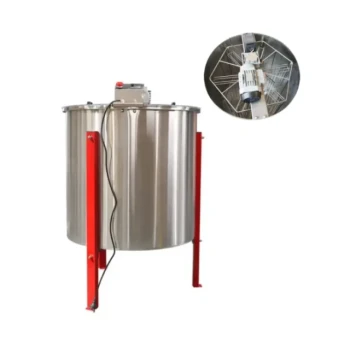
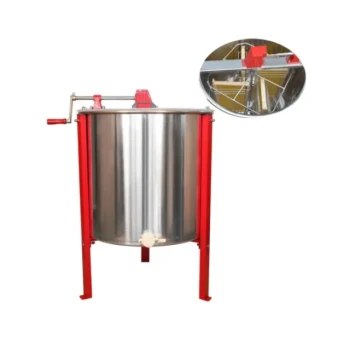
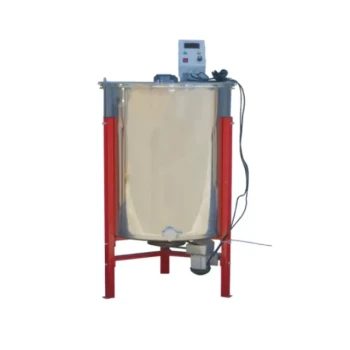
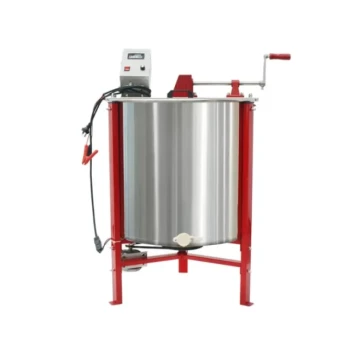
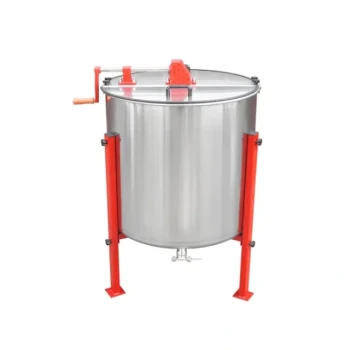
Honey extractors and storage tanks serve as the foundational equipment in the post-processing stage, acting as the primary mechanisms for separation and purification. Extractors utilize centrifugal force to harvest honey while preserving the honeycomb structure, whereas storage tanks function as passive clarification vessels, allowing impurities to separate via gravity before packaging.
Core Insight: The primary value of this equipment lies in non-invasive processing. By using physical force (centrifugation) and gravity (sedimentation) rather than heat or chemicals, these tools maximize production efficiency while preserving the honey's natural nutritional profile and visual clarity.
The Role of the Honey Extractor
The extractor transforms manual harvesting into a high-efficiency industrial process. Its design focuses on speed and the preservation of capital assets (the honeycomb).
Mechanism of Separation
Extractors operate on the principle of centrifugal force. By spinning the frames at high speeds, honey is forced out of the wax cells without the need to crush or destroy the comb structure.
Preservation of the Honeycomb
Because the comb remains intact during extraction, the frames can be returned to the hive for immediate reuse. This significantly increases efficiency, as bees can focus on refilling the comb rather than expending energy to rebuild wax structures.
Optimizing Recovery
Advanced setups often employ mini spinners alongside standard extractors. These specialize in recovering residual honey from wax cappings and debris, minimizing product loss and maximizing the commercial value of every harvest.
The Role of Storage Tanks
Once extracted, honey is rarely ready for immediate sale. Storage tanks serve a critical processing function known as resting and clarification.
Impurity Removal via Sedimentation
Storage tanks utilize physical sedimentation to purify the liquid. Over time, gravity causes air bubbles and wax particles to rise to the top while heavier impurities sink, allowing them to be skimmed or drained off.
Ensuring Visual Quality
This resting period is essential for achieving the clear, glass-like aesthetic consumers expect. By removing non-honey substances, the tanks ensure the final product is a high-purity liquid that meets strict visual standards.
Hygiene and Material Safety
Professional tanks are constructed from food-grade materials. This prevents chemical contamination during the resting phase and ensures the honey maintains its natural sensory characteristics without absorbing metallic or plastic flavors.
Understanding the Trade-offs
While these tools increase efficiency, they introduce specific operational requirements that must be managed to maintain quality.
Time vs. Clarity
The clarification process in storage tanks is passive and time-consuming. Rushing this stage limits the effectiveness of sedimentation, resulting in cloudy honey containing trapped air bubbles or fine wax debris.
Sanitation Demands
Extractors establish a semi-closed processing chain, but their complexity creates potential harbor points for bacteria. Without a rigorous rinsing and disinfection protocol supported by a sufficient water supply, residual honey can ferment, leading to microbial cross-contamination between batches.
Making the Right Choice for Your Goal
Selecting the right equipment configuration depends on balancing volume requirements with quality standards.
- If your primary focus is Production Speed: Prioritize extractors with high rotational capacity to maximize frame turnover and return empty combs to the hive quickly.
- If your primary focus is Product Purity: Invest in larger storage capacity to allow for extended sedimentation periods, ensuring a crystal-clear product without the need for excessive heating or filtering.
The ultimate goal is to mechanize the workflow enough to reduce labor costs while keeping the process gentle enough to preserve the honey's natural integrity.
Summary Table:
| Equipment Type | Primary Function | Core Mechanism | Key Benefit |
|---|---|---|---|
| Honey Extractor | Separation | Centrifugal Force | Preserves honeycomb for reuse; maximizes recovery speed. |
| Storage Tank | Clarification | Passive Sedimentation | Removes air bubbles and wax debris for a clear aesthetic. |
| Mini Spinner | Recovery | High-speed Spinning | Minimizes product loss by reclaiming honey from wax cappings. |
Elevate Your Apiary's Production with HONESTBEE
At HONESTBEE, we specialize in empowering commercial apiaries and distributors with professional-grade beekeeping solutions. Whether you are looking to scale your operations with high-capacity honey-filling machines or require durable, food-grade honey extractors and storage tanks, our comprehensive wholesale offering has you covered.
We provide the full spectrum of industry essentials—from specialized hardware and hive-making machinery to unique honey-themed cultural merchandise. Partner with us to streamline your workflow, reduce labor costs, and maintain the natural integrity of your harvest.
Ready to upgrade your equipment? Contact our experts today to discuss how our tailored solutions can grow your business.
References
- Rosa Romero-Franco. AF4EU Buzz: Unveiling Beekeeping Value Chain and Sustainable Agroforestry Practices in the EU. DOI: 10.30955/gnc2025.00078
This article is also based on technical information from HonestBee Knowledge Base .
Related Products
- HONESTBEE 72 Frame Industrial Electric Honey Extractor for Beekeeping
- Commercial Electric 12 Frame Honey Extractor Spinner Motorized Honey Extractor
- HONESTBEE 6 Frame Self Reversing Electric Honey Extractor for Beekeeping
- HONESTBEE 3-Frame Manual Acrylic Honey Extractor
- Stainless Steel Manual 8 Frame Radial Honey Extractor Machine for Beehives
People Also Ask
- What is the importance of balancing honeycomb frames within a honey extractor? Ensure Stability and Protect Machinery
- How is honey separated from the frames after they are uncapped? Efficient Extraction Methods for High Yields
- What are the main benefits of using a honey extractor? Maximize Yields and Protect Your Honeycomb
- What are the recommended methods for removing honey from the honeycomb? Top Extraction Techniques for Maximum Efficiency
- How do manual honey extractors compare to electric honey extractors? Choosing the Right Tool for Your Apiary Growth