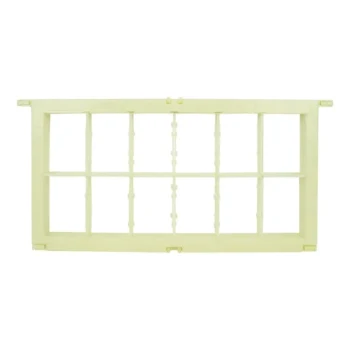
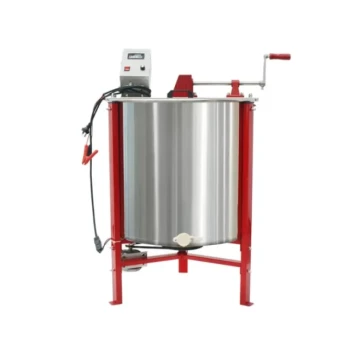
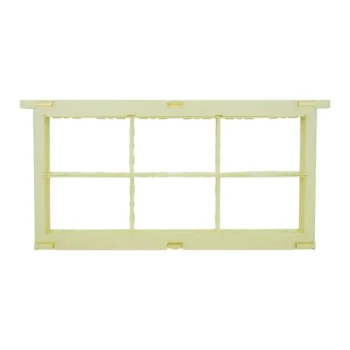
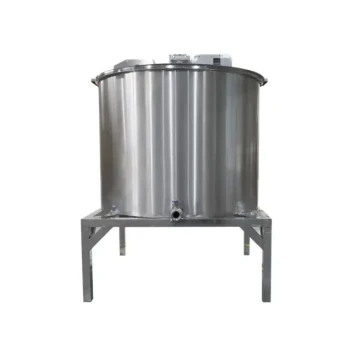
Mechanical honey collection frames are strictly seasonal tools, not permanent hive fixtures. They must be installed only after the colony has fully established its brood nest and secured sufficient honey stores for its own winter survival. Because the queen cannot lay eggs in these specialized mechanical cells, leaving them on year-round restricts colony growth and must be avoided by removing the frames immediately after the nectar flow ends.
Effective management requires viewing these frames as a "surplus-only" system. They are designed exclusively for harvesting excess honey and must never compete with the colony’s essential biological needs or winter preparations.
Timing the Installation
Establish the Brood First
Before introducing mechanical frames, you must ensure the colony has fully built out its standard brood frames.
The health of the colony depends on the queen's ability to lay eggs without restriction. Adding mechanical frames too early can limit the space available for population growth.
Securing Winter Reserves
Mechanical frames are intended solely for excess honey collection.
You must verify that the bees have already stored enough honey in standard frames to survive the coming winter. Only once these survival resources are secured should you add the mechanical frames to capture the surplus.
Biological Constraints and Removal
The Queen’s Limitation
A critical design feature of these frames is that the queen bee cannot lay eggs within the mechanical cells.
While this ensures pure honey extraction without brood contamination, it creates a "dead zone" for reproduction. If these frames occupy the hive when the colony needs to expand or reorganize for winter, they become a liability.
Post-Flow Removal
You must remove the frames as soon as the seasonal honey flow has ended.
Leaving them on during colder months or non-productive seasons prevents the colony from properly clustering or managing their space for winter insulation.
Operational Trade-offs and Best Practices
Managing Flow Volume
When it is time to harvest, avoid opening the entire frame mechanism at once.
A sudden release of honey can exceed the capacity of the collection tubes, leading to overflow and loss of product.
The Phased Opening Strategy
To ensure efficiency, utilize a phased opening strategy, such as draining only one-quarter of the frame at a time.
This allows you to accurately monitor drainage and prevents backlogs. It ensures the majority of the honey is captured smoothly without overwhelming the collection system.
Making the Right Choice for Your Goal
To maximize both colony health and harvest yield, apply these specific management rules:
- If your primary focus is Colony Health: Ensure standard deep frames are full of honey and brood before installing mechanical supers to guarantee winter survival.
- If your primary focus is Harvest Efficiency: utilize a phased opening method (25% at a time) to prevent tube overflow and minimize waste during extraction.
Mastering the seasonality of these frames ensures you harvest only the true surplus, keeping your colony strong for the next season.
Summary Table:
| Management Aspect | Best Practice & Requirement |
|---|---|
| Installation Timing | Only after brood nest is established and winter stores are secured |
| Usage Purpose | Strictly for surplus honey collection; never for primary storage |
| Biological Constraint | Queen cannot lay eggs in mechanical cells; avoid blocking growth |
| Removal Timing | Immediately after the nectar flow ends to allow winter clustering |
| Harvest Technique | Phased opening (25% at a time) to prevent tube overflow and waste |
Maximize Your Apiary's Potential with HONESTBEE
At HONESTBEE, we specialize in supporting commercial apiaries and distributors with high-performance beekeeping solutions. Whether you need specialized mechanical frames, industrial honey-filling machines, or robust hive-making equipment, our comprehensive wholesale portfolio is designed to scale your operations efficiently.
We provide more than just tools; we offer the expertise and essential consumables required to maintain thriving colonies and streamline your production. Contact us today to discover how our professional-grade equipment and machinery can enhance your harvest efficiency and grow your business.
Related Products
- Commercial Electric 12 Frame Honey Extractor Spinner Motorized Honey Extractor
- Professional Sectional Comb Honey Frame with 250g Cassette System for Beekeeping
- HONESTBEE 6 Frame Three Use Electric Honey Extractor for Beekeeping
- Professional 500g Sectional Comb Honey Frame System for Beekeeping
- Stainless Steel Manual 8 Frame Radial Honey Extractor Machine for Beehives
People Also Ask
- Who are commercial honey extractors designed for? Scaling Your Industrial Beekeeping Success
- What is a commercial honey extractor? The Essential High-Volume Solution for Large Apiaries
- How is honey extracted commercially? Maximize Your Apiary's Efficiency and Honey Yield
- What are commercial honey extractors used for? Boost Your Apiary's Efficiency & Profitability
- What are the advantages of motorized extractors? Boost Honey Production and Save Time