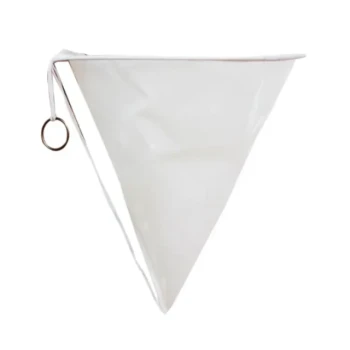
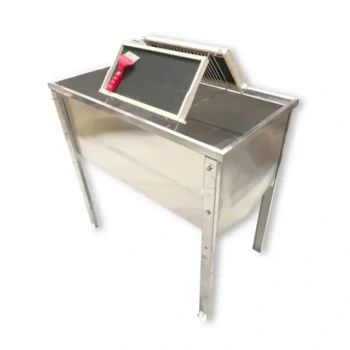
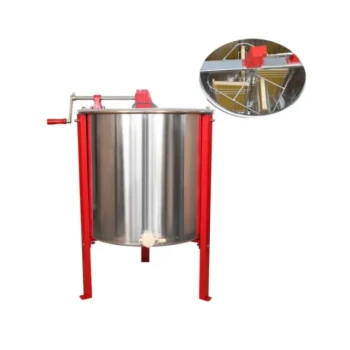
Selecting stainless steel filtration equipment for honey requires a focus on food-grade material integrity and multi-stage mesh precision. High-quality systems must utilize 304 or 316L stainless steel to withstand honey’s natural acidity while employing a tiered filtration approach that removes wax and debris without stripping the honey of its essential pollen content.
To maximize market value and ensure food safety, distributors must prioritize equipment that balances corrosion resistance with multi-stage filtration logic. This combination ensures the honey reaches commercial clarity standards while maintaining its nutritional integrity and physicochemical stability.
Material Integrity and Food Safety Compliance
The Necessity of High-Grade Stainless Steel
Honey is naturally acidic and high in sugar, which can cause inferior metals to leach ions into the product. Food-grade 304 or 316 stainless steel is the industry standard because it offers the chemical stability required to prevent metallic odors and heavy metal contamination.
Surface Finish and Hygiene
Professional-grade equipment features an industrial-grade smooth surface that is easy to disinfect and clean. This prevents the buildup of organic residues and ensures compliance with Good Beekeeping Practices (GAP) and international hygiene standards.
Corrosion Resistance and Longevity
The use of corrosion-resistant alloys prevents electrochemical reactions between the honey and the equipment. This durability is critical for B2B buyers who require high-uptime machinery with minimal maintenance requirements in demanding processing environments.
Precision Filtration and Product Quality
Multi-Stage Mesh Configuration
Effective filtration relies on a combination of different mesh sizes to remove impurities in stages. This tiered approach prevents system clogs by capturing large wax debris and bee remains first, followed by finer organic particles.
Balancing Clarity and Nutritional Value
The primary goal of filtration is to achieve commercial clarity without removing beneficial particles like pollen. High-precision systems allow for the removal of larval skins and wax while ensuring the final product retains its "natural" label and nutritional profile.
Prevention of Phase Separation
Quality filtration equipment prevents sediment formation and phase separation by ensuring the honey is physically homogenous. This consistency is vital for elevating honey to higher market grades and ensuring the accuracy of quality labels for the end consumer.
Understanding the Trade-offs
Filtration Speed vs. Particle Retention
Increasing filtration speed often requires higher pressure or larger mesh sizes, which can compromise the visual purity of the honey. Conversely, ultra-fine filtration can strip away pollen, potentially lowering the honey's market value in the "raw" or "natural" health segments.
Cost of 304 vs. 316 Stainless Steel
While 316 stainless steel offers superior corrosion resistance compared to 304, it comes at a higher price point. Distributors must evaluate the specific acidity levels of the honey being processed to determine if the additional investment in 316L is necessary for their clients' specific use cases.
Selecting the Right Equipment for Your Portfolio
Expert Sourcing for Distributors
For wholesalers and B2B resellers, the choice of equipment is as much about the supplier's capabilities as it is about the technical specs. Partnering with a provider that offers a full-spectrum product portfolio and ultra-fast delivery is essential for maintaining supply chain efficiency.
Recommendations Based on Business Goals
- If your primary focus is High-Volume Industrial Processing: Prioritize multi-stage, high-capacity systems with 316L stainless steel to ensure maximum durability and rapid order fulfillment for large-scale clients.
- If your primary focus is Premium "Raw" Honey Markets: Select equipment that features customizable fine-pore mesh sets, allowing producers to fine-tune the balance between clarity and pollen retention.
- If your primary focus is Operational Efficiency: Seek out "one-stop" sourcing partners who provide comprehensive technical support and rapid response times to minimize downtime for your end-users.
By aligning material science with precision engineering, distributors can provide filtration solutions that guarantee both product purity and long-term operational reliability.
Summary Table:
| Selection Criterion | Technical Focus | Commercial Impact |
|---|---|---|
| Material Grade | 304 or 316L Stainless Steel | Prevents corrosion and ensures food safety |
| Filtration Logic | Multi-stage tiered mesh | Removes debris while retaining pollen value |
| Surface Finish | Industrial-grade smooth polish | Simplifies cleaning and meets hygiene standards |
| Precision Control | Customizable pore sizing | Ensures consistency and prevents sediment |
| Durability | Corrosion-resistant alloys | Reduces maintenance costs and downtime |
Scale Your Beekeeping Distribution Business with HONESTBEE
Are you a distributor, wholesaler, or commercial apiary seeking reliable filtration solutions? HONESTBEE is your premier one-stop sourcing partner, offering a comprehensive full-spectrum product portfolio. From high-precision honey filtration systems and honey-filling machines to specialized hive-making hardware and essential consumables, we empower your business with premium trading services.
Why Partner with HONESTBEE?
- Deep Industry Expertise: Professional guidance to help you select the right equipment for any market segment.
- Supply Reliability: High-quality 304/316L stainless steel machinery that guarantees long-term operational uptime.
- Rapid Fulfillment: Ultra-fast delivery and efficient order processing to keep your inventory moving.
- Dedicated Support: Exceptional customer service with a focus on OEM/ODM support and healthy profit margins.
Ready to enhance your product offering? Contact HONESTBEE Today to discover how our wholesale solutions can streamline your supply chain and elevate your brand!
References
- R. S. S. Silva, Denise de Lima Belisario. Perfil socioeconômico e tecnológico dos apicultores do norte de Minas. DOI: 10.55905/revconv.17n.9-410
This article is also based on technical information from HonestBee Knowledge Base .
Related Products
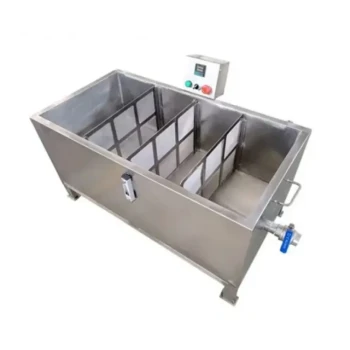
- Professional Stainless Steel Honey Filtering Machine with Water Bath Heating for Beekeeping
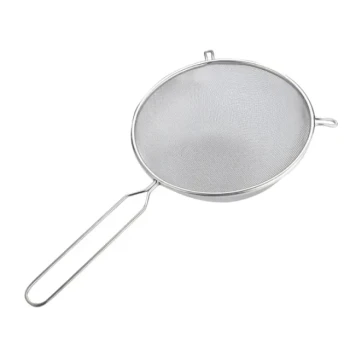
- Professional Stainless Steel Honey Filter with Support Handle
- Stainless Steel Triangle Support Honey Strainer and Filters
- Stainless Steel Double Layer Honey Strainer Sieve Filters
- Heavy Duty 304 Stainless Steel Honey Dipper
People Also Ask
- Why is filtering honey an important step in honey processing? Ensure Purity, Clarity & Marketability
- Is it necessary to filter honey after extraction? A Guide to Straining vs. Raw Honey
- What is the best way to filter honey? A Guide to Quality, Clarity, and Raw Preservation
- Why do people filter honey? For Clarity, Stability, and Consumer Appeal
- What are the benefits of using honey filters? Achieve Purity, Efficiency, and Market Appeal