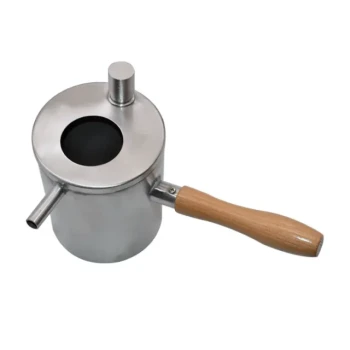
Processing beeswax cappings involves a staged technical approach that typically utilizes gravity draining or centrifugal force to recover honey, followed by controlled thermal melting to purify the wax. The standard methods rely on the physical principles of density separation—where lighter wax floats above heavier honey and impurities—and mechanical filtration to achieve a clean final product.
While thermal processing is necessary to render solid wax, superior results are achieved by first separating the bulk of the honey using "cold" methods. This two-step process preserves the culinary quality of the honey while ensuring the wax is free from organic debris and scorching.
Primary Separation Techniques
Before heat is applied, the majority of the honey should be removed from the cappings. This maximizes yield and protects the honey from heat damage.
Gravity Draining Systems
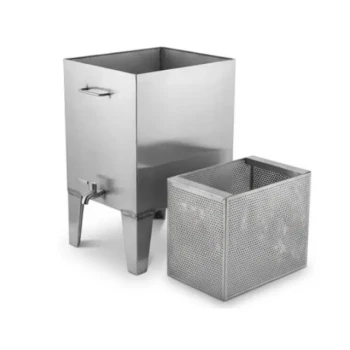
For smaller operations, the double bucket system is the standard low-tech solution. Cappings are placed in an inner bucket perforated with holes, which sits inside a solid outer bucket.
Gravity pulls the honey through the perforations, collecting it in the bottom container. Alternatively, a filter bag suspended over a clean vessel can achieve the same result.
Mechanical Spinning
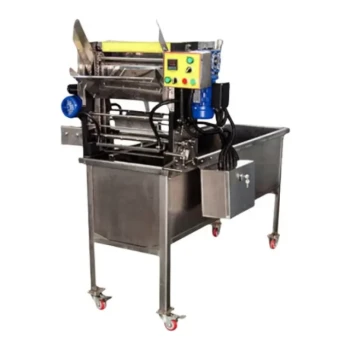
Commercial operations often utilize centrifugal force rather than passive gravity. A "spinner" mechanically rotates the cappings at high speed.
This method rapidly extracts honey from the wax matrix, significantly reducing processing time compared to gravity draining.
Thermal Processing for Wax Purification
Once the bulk of the honey is removed, the remaining wax cappings must be melted (rendered) to separate fine impurities and residual fluids.
The Double Boiler Method
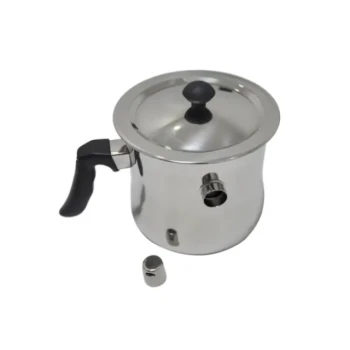
Direct heat should never be applied to beeswax due to its flammability and the risk of scorching. A double boiler uses water to provide gentle, indirect heat.
This method melts the wax slowly and evenly, preserving its color and chemical integrity.
Density Separation
During the melting process, a natural stratification occurs. Because beeswax is less dense than honey and water, the molten wax floats to the surface.
Any remaining honey, dirt, or "slumgum" (heavier impurities) sinks to the bottom. Once the mixture cools, the hardened wax cake can be easily lifted off the liquid and sediment below.
Electric Melters
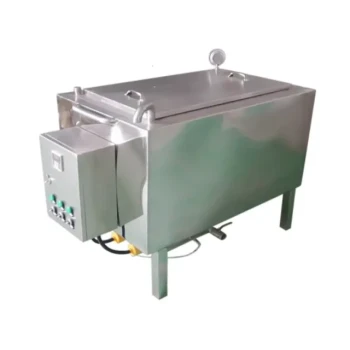
For larger batches, dedicated electric beeswax melters provide precise temperature control. These units are designed to handle significant volumes without the fluctuations associated with stovetop methods.
Achieving Final Purity
Melting separates the wax from fluids, but solid particulate matter often remains suspended in the wax.
Mechanical Filtration
To ensure high purity, the molten wax must be passed through a physical barrier. Standard practice involves straining the hot wax through a filter cloth or fine mesh.
This step catches fine debris, such as bee parts or propolis, that did not settle to the bottom during the density separation phase.
Understanding the Trade-offs
Selecting the right method requires balancing speed, cost, and material quality.
Heat vs. Honey Quality
While the primary reference notes that melting can separate honey from wax, doing so puts the honey at risk. Heating honey along with the wax can degrade its enzymes and flavor profile.
It is technically superior to drain or spin the honey "cold" first, and only use heat to render the wax after the honey is harvested.
Passive vs. Active Processing
Gravity draining is cost-effective but slow; it requires a warm environment and often needs to sit overnight for complete drainage.
Mechanical spinners offer speed and efficiency but introduce higher equipment costs and maintenance requirements.
Making the Right Choice for Your Goal
- If your primary focus is Honey Quality: Prioritize gravity draining or cold spinning to separate honey before any heat is applied.
- If your primary focus is Wax Purity: Ensure you utilize a double boiler system followed by fine mesh filtration to remove all particulate matter.
- If your primary focus is Commercial Volume: Invest in a mechanical spinner and an electric melter to maximize throughput and reduce labor time.
The most effective technical process is a hybrid approach: recover the honey cold, render the wax hot, and filter the final product for clarity.
Summary Table:
| Method | Equipment Type | Primary Advantage | Best Suited For |
|---|---|---|---|
| Gravity Draining | Double bucket / Filter bag | Preserves honey quality (cold) | Small-scale operations |
| Centrifugal Spinning | Mechanical Spinner | High-speed recovery & efficiency | Commercial apiaries |
| Double Boiler | Indirect heat source | Prevents scorching & discoloration | Quality-focused rendering |
| Electric Melter | Dedicated heating unit | Precise temperature control | Large-batch processing |
| Mechanical Filtration | Filter cloth / Fine mesh | Removes fine debris & propolis | Achieving final purity |
Maximize Your Harvest with HONESTBEE Professional Solutions
Efficiently processing beeswax cappings requires the right balance of speed and precision. HONESTBEE empowers commercial apiaries and distributors with high-performance beekeeping tools and machinery.
From honey-filling machines and specialized hive-making hardware to a full spectrum of industry consumables, we provide the end-to-end equipment you need to scale your operations. Whether you are looking for advanced rendering technology or essential hardware, our wholesale portfolio is designed to enhance your productivity and product quality.
Ready to upgrade your production line? Contact us today to discover how HONESTBEE can streamline your beekeeping business!
Related Products
- Manual Beeswax Flat Sheet Machine for Beeswax Processing
- Electric Commercial Beeswax Melter for Factory Use
- Steam Beeswax Melter Wax Warmer for Wax Processing
- Electric Beeswax Flat Sheet Machine with Operating Tray for Wax Processing
- Fully Automatic Beeswax Embossing Machine Foundation Mill
People Also Ask
- What is the primary function of the double-roller extrusion system? Master Precision Beeswax Foundation Production
- How do cultural merchandise processing machines contribute to the economic value chain? Boosting Apiary Profitability
- What are some practical tips for managing equipment and workspace when processing beeswax? Essential Studio Setup Tips
- How do specialized beeswax processing machines maximize the value of beekeeping by-products? Boost Your Apiary's ROI
- What role does beeswax processing equipment play in development of by-products? Turn Apiary Waste into High-Value Profit