The standard 10-frame Langstroth beehive is the foundational hardware for commercial beekeeping because it provides a strictly standardized physical environment that supports infinite vertical expansion. Structurally, it allows the hive volume to grow in lockstep with the colony, while operationally, it ensures that management protocols, equipment, and data collection remain consistent across widely scattered apiary sites.
The Core Insight Commercial scalability requires hardware that prioritizes interchangeability over novelty. The Langstroth system transforms beekeeping from a subsistence activity into a modern farming industry by establishing a uniform ecosystem where every frame, box, and tool is compatible, enabling mechanized workflows and precise data comparison.
Structural Advantages: The Power of Modularity
Infinite Vertical Expansion
The primary structural benefit of the Langstroth design is its ability to accommodate colony growth without changing the hive's footprint.
As the bee population increases or nectar flow intensifies, beekeepers can simply stack additional hive bodies (supers) on top of the existing structure. This eliminates the need to transfer the colony to larger quarters, reducing stress on the bees and labor for the keeper.
The "Bee Space" Protection
Standardized Langstroth hives incorporate a scientifically precise structural gap known as "bee space" between components.
This design prevents bees from sealing frames together with propolis or building burr comb in the walkways. Consequently, frames can be moved freely without crushing the bees or damaging the honeycomb, preserving the colony's structural integrity.
Interchangeable Movable Frames
The internal architecture relies on a movable-frame design that is consistent across the industry.
Because every frame fits every box, beekeepers can easily swap resources—such as brood, honey, or pollen—between strong and weak hives. This modularity is essential for replacing damaged parts efficiently without disrupting the rest of the hive.
Management Advantages: Efficiency and Standardization
Uniform Operational Workflows
The 10-frame standard ensures that management procedures can be replicated exactly across different apiary sites.
Beekeeping crews do not need to adapt to different equipment configurations, allowing for the rapid implementation of commercial workflows. This consistency streamlines training and daily operations, making large-scale management feasible.
Mechanized Honey Extraction
The standardized dimensions of the frames support industrial-grade processing.
Frames are compatible with high-speed centrifuges and uncapping machines, allowing for mechanized honey extraction. Unlike traditional methods, this process harvests the honey without destroying the comb, allowing the frames to be returned to the hive for immediate reuse.
Precision Disease and Pest Control
The movable-frame structure facilitates rapid, regular visual inspections of the brood chamber.
Beekeepers can easily access the core of the colony to detect early signs of pests like Varroa mites or diseases like American Foulbrood (AFB). This accessibility enables fine-tuned health interventions, which are critical for maintaining stock levels in a commercial enterprise.
Data and Economic Stability
Comparable Data Analysis
Standardized equipment creates a baseline for accurate data collection.
Because the physical variables of the hive are constant, beekeepers can accurately compare colony weights, honey yields, and nutritional impacts across different locations. This turns observational data into actionable business intelligence.
Economic Scalability
By increasing the production efficiency of individual units, the Langstroth system supports the transition to an industrial scale.
The system facilitates artificial swarming and breeding programs, stabilizing the economic output of the enterprise. It provides the technical basis required to turn unpredictable gathering into predictable production.
Understanding the Trade-offs
The Weight Factor
While the 10-frame design is the commercial standard, it poses physical challenges. A fully laden 10-frame deep box is significantly heavy, which can lead to fatigue or injury for apiary workers during manual inspections and harvesting.
Biological vs. Industrial Needs
The Langstroth hive prioritizes management efficiency and standardization, which sometimes treats the colony more like livestock units than a natural organism. Beekeepers must balance the convenience of frequent inspections with the potential disruption to the colony's internal climate and stress levels.
Making the Right Choice for Your Goal
The 10-frame Langstroth is not just a box; it is a management philosophy based on interchangeability.
- If your primary focus is Rapid Commercial Scaling: Adopt the 10-frame standard to maximize compatibility with industrial extraction machinery and hired labor pools.
- If your primary focus is Data-Driven Optimization: Use the standardized modularity to control variables, allowing for precise tracking of nutritional supplements and yield comparisons.
Ultimately, the Langstroth hive is the industry standard because it removes hardware variables, allowing you to focus entirely on the biology of the bees and the logistics of the business.
Summary Table:
| Feature | Advantage for Commercial Apiaries |
|---|---|
| Modularity | Infinite vertical expansion without disturbing colony footprint |
| Standardization | Universal part interchangeability across all apiary sites |
| Mechanization | Compatibility with high-speed extractors and uncapping machines |
| Health Control | Rapid visual inspection of movable frames for pest management |
| Scalability | Streamlined workflows for hired crews and industrial-scale data comparison |
Scale Your Commercial Apiary with HONESTBEE
Maximize your production efficiency and operational consistency with industry-standard hardware. At HONESTBEE, we specialize in supporting commercial apiaries and distributors with a comprehensive wholesale portfolio.
Our value to you includes:
- Precision Machinery: High-capacity honey-filling and hive-making machines.
- Premium Tools: The full spectrum of 10-frame Langstroth-compatible equipment.
- Reliable Consumables: Essential industry supplies to keep your colonies thriving.
- Cultural Merchandise: Unique honey-themed products to diversify your brand.
Whether you are expanding a large-scale operation or stocking a distribution network, our expertise ensures you have the tools to succeed.
Contact HONESTBEE Today for Wholesale Inquiries
References
- Jon Zawislak, Neelendra K. Joshi. Comprehensive Survey of Area-Wide Agricultural Pesticide Use in Southern United States Row Crops and Potential Impact on Honey Bee Colonies. DOI: 10.3390/insects10090280
This article is also based on technical information from HonestBee Knowledge Base .
Related Products
- Durable Plastic Frame Spacer
- Rapid Bee Feeder White Plastic 2L Round Top Feeder for 8 or 10-Frame Bee Hives
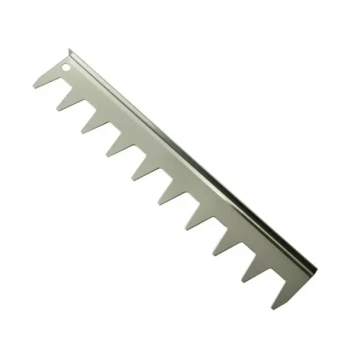
- Stainless Steel 9 Frame Hive Spacer Durable Precise for Commercial Beekeeping
- Wooden Bee Hive Frames for Beekeeping and Wholesale
- JZBZ Langstroth Queen Rearing Frame for Beekeeping
People Also Ask
- Are plastic bee hive frames good? A Guide to Modern Durability vs. Natural Appeal
- Are plastic bee frames good? A Guide to Durability, Efficiency & Bee Acceptance
- What are the advantages of using Standard Langstroth 10-frame equipment? Scale Your Commercial Apiary Efficiency
- How do you clean plastic frames? A Gentle Guide to Preserving Your Frames
- How must plastic frames be prepared for bees? Expert Tips for 100% Acceptance & Success